Upgrade Your Business with Custom Lighting Solutions— Smart Design, LED Retrofits & Expert Installation
At RJ & Son Electric we design custom lighting solutions that fits how your business looks, reduces energy costs, and supports the people who work and visit there. That means selecting the right fixtures, programming sensible controls, and positioning light for comfort, compliance, and brand impact. From LED panels and high bays to daylight-harvesting and networked controls, this guide walks through how commercial lighting design and LED retrofit projects work, the real benefits to expect, and which solutions suit offices, retail, industrial sites, and exteriors across Suffolk County. Each section includes practical checklists and examples so owners and facilities teams can compare options, estimate ROI, and plan upgrades that deliver measurable operational value. Keywords like custom commercial lighting, commercial lighting design services, and smart commercial lighting systems remain integrated for usefulness and search ability.
What Are the Benefits of Custom Commercial Lighting for Your Business?
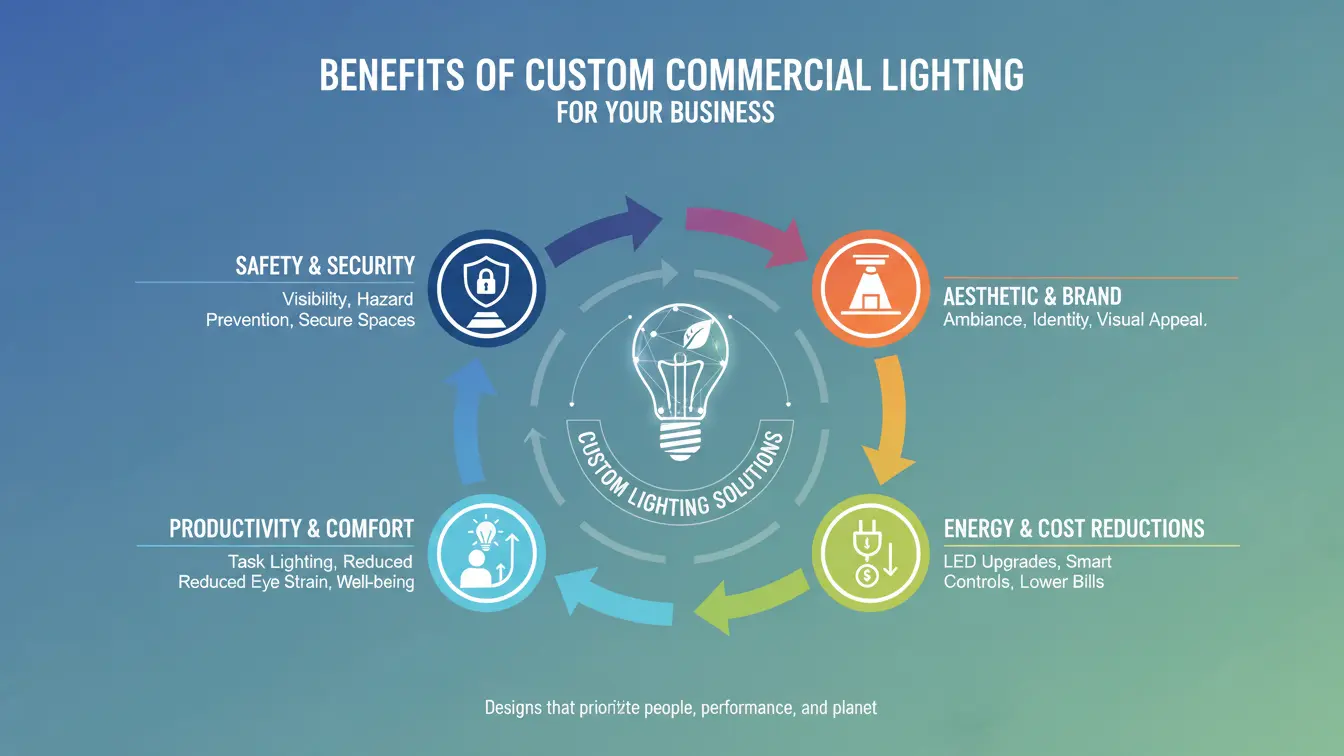
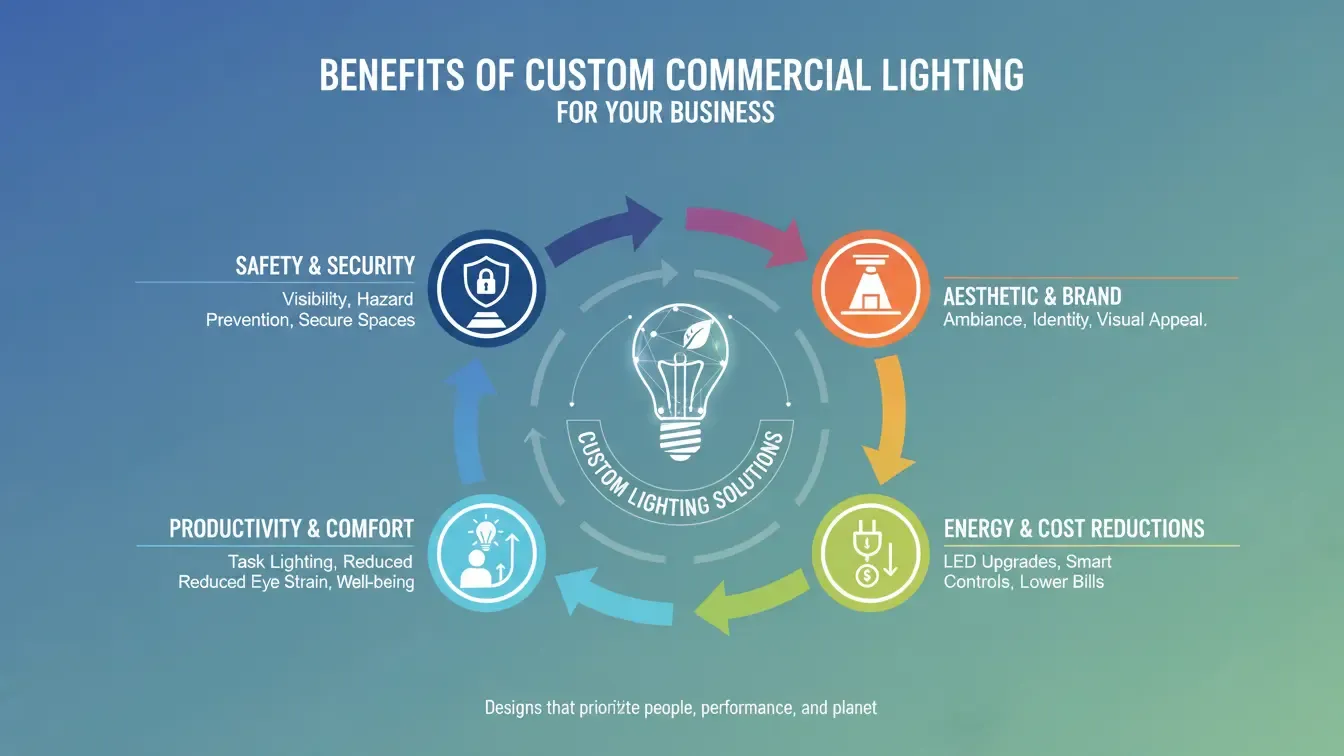
Custom commercial lighting aligns fixtures, controls, and layout with your operational needs and brand goals. The right design improves visibility, cuts energy use, and shapes how customers and staff experience the space. Technically, that means specifying target lumen levels, appropriate color rendering (CRI), and zoning, then adding controls to eliminate wasted runtime. The outcome: lower operating costs, improved occupant comfort, and systems that meet commercial code. Below are the primary outcomes a focused lighting program delivers — each links a design decision to measurable business value.
Custom commercial lighting delivers several measurable benefits for businesses:
- Aesthetic and brand differentiation: Use color temperature and accent lighting to craft the look you want and reinforce your identity.
- Energy and operational cost reductions: Modern LED fixtures with controls reduce kilowatt-hours and cut maintenance visits.
- Improved productivity and occupant comfort: Proper task and ambient lighting lowers eye strain and supports employee performance.
- Enhanced safety and security: Well-placed interior and exterior illumination reduces slips, trips, and security blind spots.
Designs that prioritize people — not just energy savings — also support occupant health and comfort.
Human-Centered Commercial Lighting for Health & Comfort
This study describes converting a warehouse into a commercial kitchen using Human-Centered Lighting principles. Designers ran point-light calculations for artificial lighting in the kitchen and emphasize providing lighting that minimizes disruption to circadian rhythms to protect occupant health.
Commercial lighting design in human-centered lighting concept, 2023
Combined, these benefits can increase revenue potential and lower long-term costs — and they change how customers perceive your brand.
How Does Custom Lighting Enhance Business Aesthetics and Brand Image?
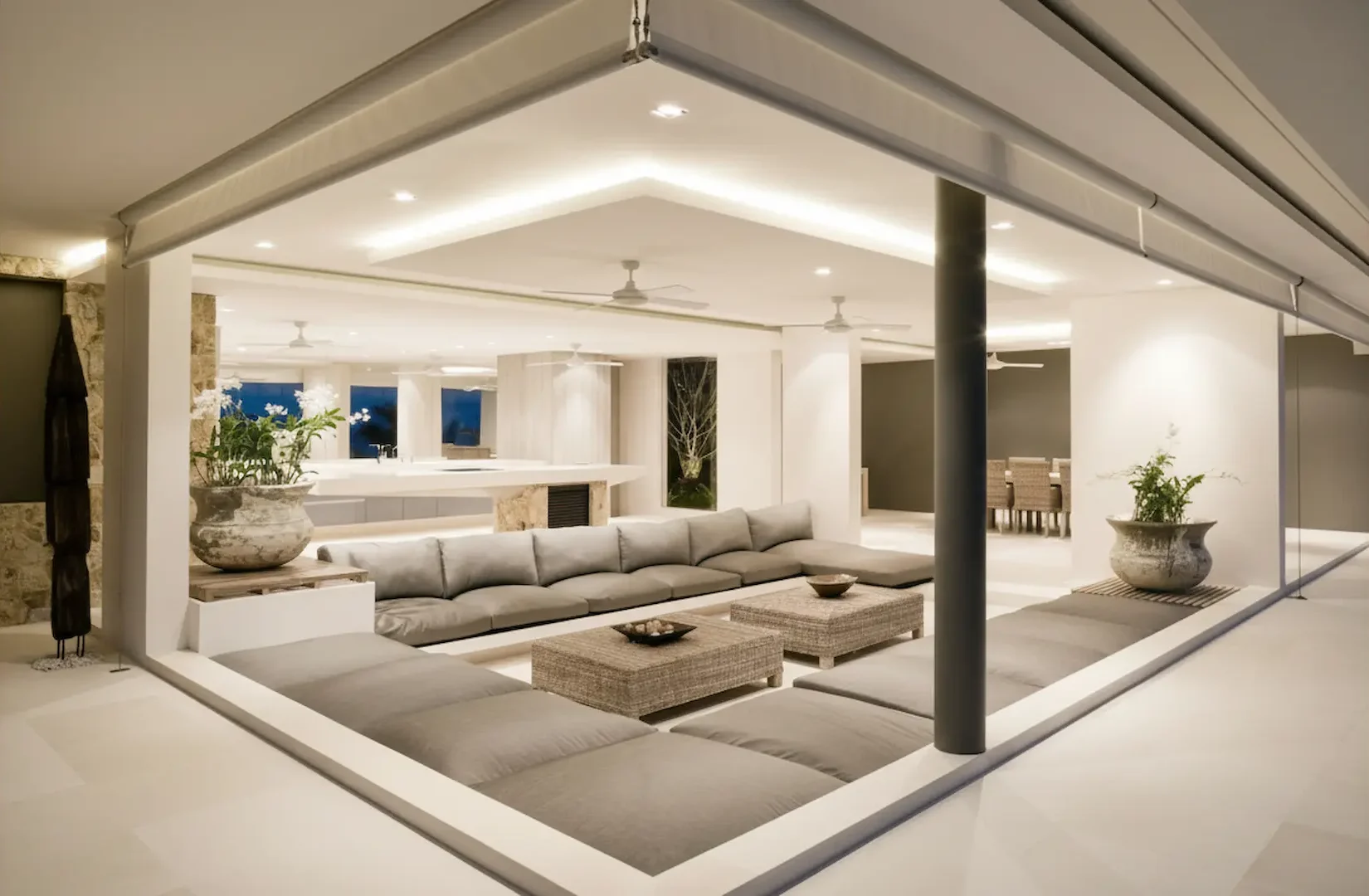
Custom lighting shapes atmosphere by tuning color temperature, beam control, and layered lighting to match your brand and merchandising goals. Warmer tones and soft accents create a welcoming hospitality feel; cooler, high-CRI light reveals product detail in retail. Track systems and adjustable accent fixtures create focal points that guide customers and increase dwell time, improving perceived product quality. Understanding these approaches helps you specify retail and hospitality lighting that supports brand positioning and encourages buying behavior.
In What Ways Does Energy-Efficient LED Lighting Reduce Operational Costs?
LED lighting reduces operating costs because it delivers more lumens per watt, lasts far longer than traditional lamps, and lowers maintenance needs. LEDs convert a higher share of electricity into usable light and typically dim slowly over many thousands of hours, so you replace lamps less often and avoid unexpected downtime. Paired with occupancy sensors and dimming controls, LEDs save still more by cutting run-time when areas are empty or daylight is available. These predictable savings make LED retrofits a common recommendation for commercial teams and create a clear path to quick payback.
Beyond day-to-day savings, maintaining operation during outages matters. Properly installed backup power — including generators and transfer switches — protects critical systems. A professional generator transfer switch installation is a practical step toward reliable energy resilience for your facility.
How Does RJ & Son Electric Deliver Expert Business Lighting Design Services?
Our commercial lighting services begin with a site visit and finish with a commissioned system that meets your energy, aesthetic, and operational goals. We perform site surveys, build photometric models, specify fixtures (from troffers to high bays), and design control strategies to meet lumen and CRI targets. RJ & Son Electric provides licensed Master Electrician oversight and local Suffolk County experience to ensure installations meet code, secure permits, and minimize business disruption. When you’re ready, we offer consultations and site surveys to translate energy savings and ROI into a clear project plan.
The step-by-step process below shows how a typical commercial lighting project moves from planning to handoff.
- Site survey and needs assessment: We document existing lighting, electrical capacity, and your business objectives.
- Design and specification: Photometric layouts, fixture schedules, and control strategies are produced to hit performance targets.
- Installation and code compliance: Licensed electricians handle wiring, mounting, and required inspections.
- Commissioning and training: We tune systems, set schedules, and train staff on controls and maintenance.
This workflow sets clear expectations for each phase and prepares your team for the steps that follow.
What Is the Step-by-Step Process for Custom Commercial Lighting Design and Installation?
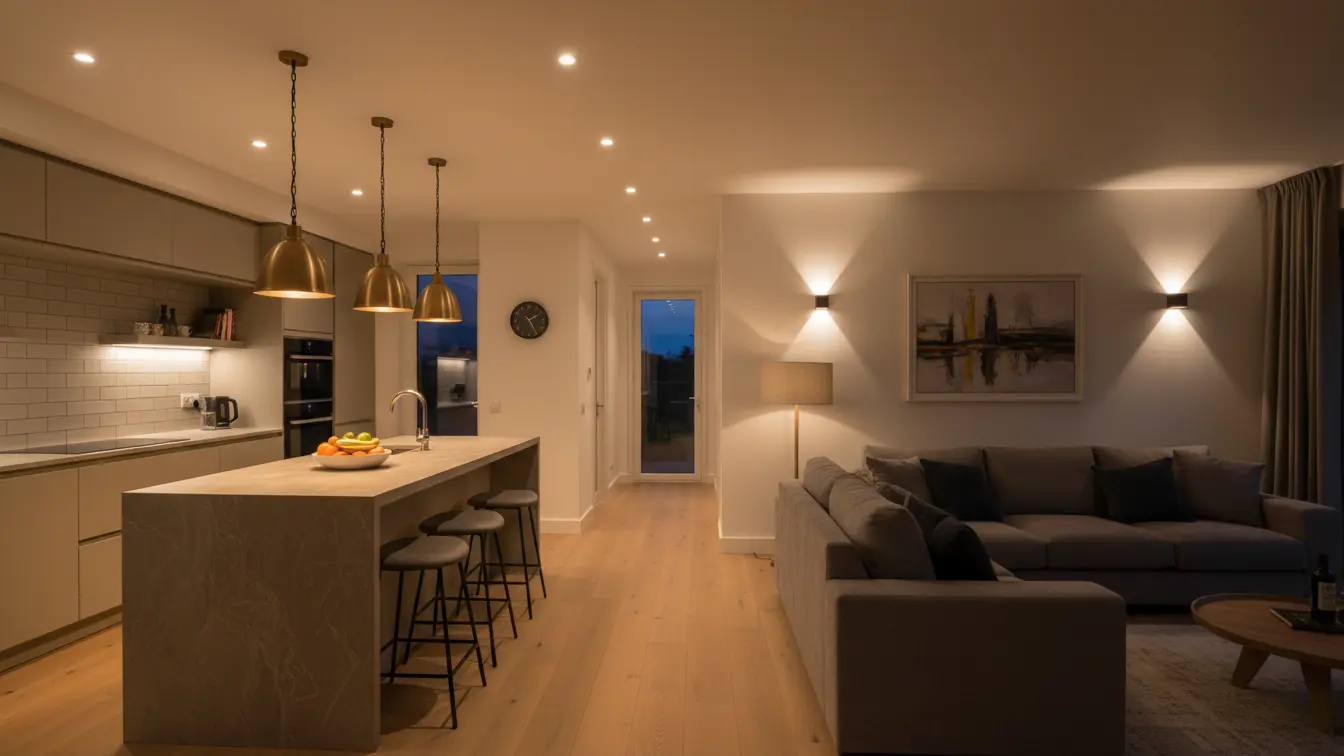
Practical projects start with data: measure lux levels, inventory fixtures, and identify control points so decisions are evidence-based. Designers then build photometric models and select fixtures (LED panels, troffers, downlights, high bay LEDs) to meet uniformity, glare, and CRI requirements. Installation by licensed electricians includes wiring, mounting, and integrating controls, followed by commissioning to confirm the system meets specifications. Finally, a maintenance and training plan keeps performance consistent and simplifies future upgrades — making the system cost-effective over its lifetime.
Why Choose a Licensed Master Electrician for Your Suffolk County Business Lighting?
Hiring a licensed Master Electrician protects your project with code knowledge, permit handling, and insured workmanship. Commercial lighting often requires coordination with local authorities, complex wiring, and integration with other building systems — and experienced electricians prevent costly rework. Our Suffolk County experience helps speed approvals and reduces downtime so you see savings sooner. Licensed professionals also supply the documentation needed for utility incentives and for long-term maintenance plans.
Which LED Lighting Solutions Are Ideal for Commercial Spaces?
Choosing the right LED solution depends on fixture type, lumen output, and how the space is used. LED panels and troffers deliver even ambient light for offices; track spots and directional fixtures highlight retail displays; high bay LEDs provide the high lumen output required in warehouses and industrial settings. Matching the fixture to the application gives the best balance of efficiency, visual performance, and lifecycle cost.
The table below compares common LED fixture types by lumen output, typical application, cost range, and expected energy savings to help guide selection.
Introductory comparison of LED fixture types:
| Fixture Type | Typical Application | Typical Lumens | Cost Range | Typical Energy Savings |
|---|---|---|---|---|
| LED Panel/Troffer | Offices, conference rooms | 3000–6000 lm | Moderate | High (vs fluorescent) |
| Track Lighting / Spot | Retail displays, galleries | 1000–3000 lm per head | Moderate | Medium–High |
| High Bay LED Fixtures | Warehouses, manufacturing | 15,000–40,000 lm | Higher | Very High |
What Are the Advantages of LED Lighting for Offices, Retail Stores, and Industrial Facilities?
LED advantages differ by sector: offices benefit from uniform panels and lower energy bills; retail gains from high CRI and directional accenting that improve merchandising; industrial sites need rugged high-bay fixtures with high lumen output for safety. In every case, pairing the right fixture with appropriate controls reduces maintenance, improves customer or tenant experience, and raises safety. Those vertical-specific benefits help decide whether to retrofit existing fixtures or perform full replacements.
How Do LED Retrofit Services Improve Existing Commercial Lighting Systems?
LED retrofit services evaluate your current fixtures and controls, then upgrade systems with lamp-to-lamp replacements, troffer retrofits, or full fixture swaps to capture energy and maintenance savings with minimal disruption. Our retrofit checklist includes inspecting fixture condition, checking ballast compatibility, confirming ceiling access, and planning control integration — plus payback estimates based on actual run hours. Retrofits can be staged by zone to keep operations moving while you realize incremental savings, and commissioning verifies the new system meets the design targets. Understanding tradeoffs helps you choose the approach that minimizes downtime and optimizes lifetime cost.
Economic considerations — especially in industrial settings — are central when evaluating retrofit options.
Industrial Lighting Retrofit: Energy Savings & Cost Analysis
Rising energy costs and more efficient lighting alternatives are forcing factories and plants with HID systems to consider retrofits. The choice is often complex from an economic standpoint, and useful information can be hard to find.
Cost–benefit analysis of retrofit of high-intensity discharge factory lighting with energy-saving alternatives, DJ Preston, 2013
After reviewing LED options, businesses ready for a hands-on retrofit can request an energy-savings estimate. RJ & Son Electric offers LED retrofit and commercial installation services with Master Electrician oversight and local Suffolk County support to turn fixture choices into project scope and realistic savings projections.
How Can Smart Custom Lighting Solutions Transform Your Business Environment?
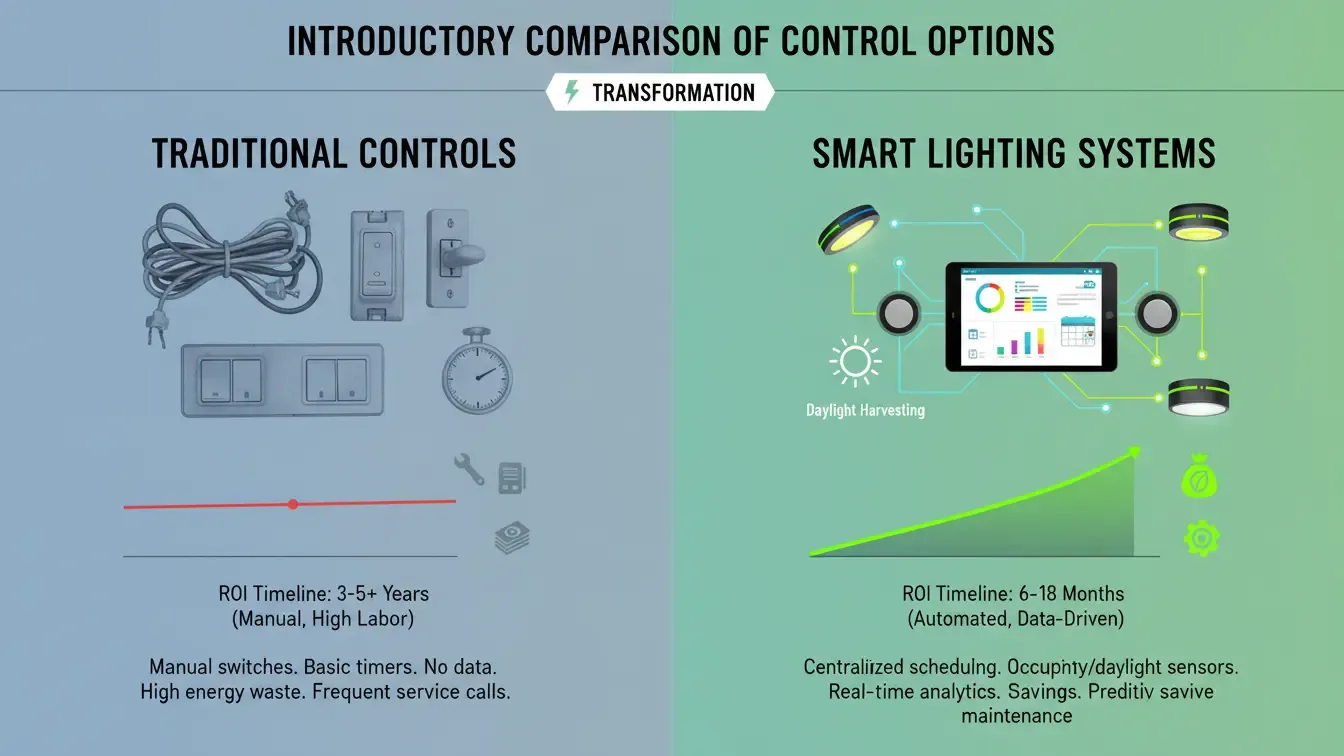
Smart commercial lighting combines sensors, centralized controls, and analytics to cut energy, improve comfort, and give facilities teams clear operational data across zones and schedules.
In practice, smart systems use occupancy sensors to eliminate wasted lighting, daylight harvesting to dim when natural light is sufficient, and centralized management to run scenes, schedules, and analytics that reveal runtime and maintenance needs.
The business benefits include lower utility bills, fewer service calls, and the flexibility to adapt lighting quickly for events or seasonal changes.
The list below summarizes core smart features and the advantages they provide for commercial operations.
- Centralized scheduling and scenes: Simplifies daily operations and adapts lighting for different business modes.
- Occupancy sensing: Cuts wasted energy by switching or dimming lights in unoccupied areas.
- Daylight harvesting: Keeps target lux while using natural light to reduce artificial lighting.
These capabilities support analytics-driven decisions and lead into a simple comparison of control options and typical ROI timelines.
Introductory comparison of control options:
| Control Option | Feature | Benefit | Typical ROI Timeframe |
|---|---|---|---|
| Occupancy Sensors | On/off or dimming based on presence | Reduces wasted runtime | 6–18 months |
| Daylight Harvesting | Photocell adjustments to maintain lux | Lowers artificial lighting use | 12–36 months |
| Centralized Management | Remote scheduling and analytics | Operational insights and reduced maintenance | 12–24 months |
What Are the Features and Benefits of Custom Lighting Solution Controls and IoT Integration?
Smart controls provide scene-setting, scheduling, BACnet/DALI interfaces, and cloud analytics that pair operational control with ongoing efficiency gains.
Scenes and schedules let managers tune lighting for shifts, events, or seasonal daylight changes, while integration with building management systems (BMS) consolidates monitoring and maintenance tasks.
IoT integration delivers runtime, energy use, and sensor activity data that helps facilities teams reduce outages and plan targeted replacements.
Seen this way, smart lighting becomes a continuous-improvement tool rather than a one-time upgrade.
How Do Occupancy Sensors and Daylight Harvesting Optimize Energy Use?
Occupancy sensors and daylight harvesting save energy by only powering lights when needed and dimming in response to available daylight; correct placement and configuration are essential to realize those savings.
Passive infrared and ultrasonic sensors work well in enclosed offices and restrooms, while dual-technology sensors perform better where motion is varied. Daylight harvesting uses photocells or image-based sensors to hold work-surface lux at target levels and shift loads when natural light is available.
Careful sensor zoning and calibration create predictable savings and preserve occupant comfort — a core part of practical office and retail lighting design.
As businesses modernize, electrical infrastructure needs often expand beyond lighting. Many commercial sites now add electric vehicle charging for employees and customers. For professional EV charger installation, licensed electricians ensure a safe, code-compliant setup that meets new power demands.
What Types of Custom Office and Retail Store Lighting Designs Are Available in Suffolk County?
In Suffolk County we install layered office systems and flexible retail track solutions that respond to storefront orientation, window daylighting, and local community character.
Common design approaches include layered lighting — ambient, task, and accent — for offices, and directional accenting with pathway lighting in retail to guide shoppers and highlight merchandise.
Local factors like window placement and street-facing storefronts influence fixture selection and control strategies. The brief examples below show popular design choices businesses in the area often use.
Office and retail lighting options in practice:
- Layered office lighting: Ambient LED panels paired with adjustable task fixtures to reduce glare and improve focus.
- Retail accent systems: Track lighting with adjustable spots to highlight product displays and signage.
- Storefront and window strategies: Tunable color temperature and dimming to balance daylight and interior presentation.
How Is Retail Store Lighting Designed to Enhance Customer Experience and Sales?
Retail lighting uses contrast, accenting, and pathway illumination to draw attention to priority merchandise, create focal points, and guide customers toward high-margin areas.
In practice, designers select track systems with adjustable beam angles and high-CRI LEDs for accurate color, then layer accents over displays to elevate perceived product quality. Pathway lighting and illuminated signage act as visual cues that reduce decision fatigue and increase dwell time, which can improve conversion. Coordinating fixture selection with merchandising plans delivers the best visual impact and energy efficiency.
Research supports that well-planned retail lighting can influence shoppers’ mood and buying behaviour.
Retail Lighting Design: Influencing Consumer Mood & Behavior
This paper examines lighting’s role in creating atmosphere and how that atmosphere influences consumer mood and purchasing behaviour. It discusses the concept of ‘atmosphere’ within retail design and the relationship between lighting and customer experience.
Retail design: lighting as an atmospheric tool, creating experiences which influence consumers’ mood and behaviour in commercial spaces, K Quartier, 2008
What Are the Best Practices for Custom Office Lighting to Boost Productivity?
Best practices focus on correct lux levels, glare control, tunable color temperature, and sensible zoning to support focus, collaboration, and video calls.
Provide even ambient light with targeted task-area lighting where needed, specify low-glare diffusers, and offer personal or area controls so occupants can adjust lighting to their needs.
Match color temperature to the task — cooler light for focused work and warmer tones for collaborative or lounge areas — to support circadian comfort and occupant satisfaction.
These steps reduce complaints and absenteeism and can improve measurable productivity over time.
How Does Exterior Commercial Lighting Improve Security and Curb Appeal?
Exterior lighting serves two roles: improving curb appeal through architectural and landscape illumination, and increasing security by removing dark spots and supporting surveillance systems.
Strategic uplighting, path lights, and targeted floodlighting boost visibility, deter unauthorized activity, and make your property more welcoming after dark.
Choose weather-rated fixtures and correct mounting to reduce maintenance and keep performance consistent.
The table below outlines common exterior fixtures, their purposes, coverage, and maintenance notes to help prioritize investments.
Exterior lighting comparison:
| Solution | Purpose | Coverage | Maintenance Considerations |
|---|---|---|---|
| Wall packs | Perimeter illumination | Broad area near building | Periodic lens cleaning, robust housing |
| Landscape uplights | Architectural accenting | Focused highlighting of features | Low-voltage wiring, seasonal adjustments |
| Security floodlights | Deterrence and surveillance support | Wide-angle, high-intensity | Higher energy use, requires reliable mounting |
What Are Effective Landscape Lighting Solutions for Business Properties?
Good landscape lighting uses low-voltage path lights, uplights for façades, and well-placed bollards to create a layered exterior that guides visitors, enhances curb appeal, and reinforces brand identity after dark.
The key is balancing accent intensity with spill control to avoid glare and light trespass while highlighting the architectural features that matter most.
Durable fixtures with appropriate ingress protection ratings reduce upkeep and keep the site looking consistent through the seasons.
Smart landscape lighting also improves wayfinding and safety, complementing security lighting strategies.
How Does Security Lighting Protect Commercial Facilities?
Security lighting protects facilities by illuminating entries, parking areas, and blind spots to reduce theft opportunities and improve CCTV image quality through consistent lighting.
Best practices include mounting fixtures to minimize shadows, using motion activation where appropriate, and aligning lighting with surveillance zones for layered deterrence.
Choosing reliable fixtures and following a maintenance schedule keeps lighting effective and avoids false negatives in monitoring systems.
When placement and controls are done right, security lighting deters incidents and supports faster incident response. For code-compliant installations and durable solutions, consider professional electrical panel upgrades. Suffolk County businesses can request a quote from RJ & Son Electric — a licensed, insured Master Electrician service experienced in combining curb appeal with effective security.
Frequently Asked Questions
What factors should I consider when choosing commercial lighting fixtures?
Start with the space’s function: what tasks happen there, the look you want, and your energy goals. Check required lumen output, color temperature to match your brand, CRI for accurate color, and the fixture’s energy use and maintenance profile. Also confirm compatibility with your existing electrical and control systems. If you’re unsure, consult a lighting designer or licensed electrician to align performance and aesthetics.
How can I ensure my commercial lighting design complies with local codes?
Work with a licensed Master Electrician who understands local code requirements and the permit process. A thorough site assessment and securing the proper permits before work begins reduce legal and safety risks. Keep inspection records and maintain systems per local regulations to ensure ongoing compliance.
What role does lighting play in employee productivity and well-being?
Lighting affects mood, focus, and comfort. Correct light levels and low glare reduce eye strain and fatigue, while tunable color temperatures can support circadian rhythms — brighter, cooler light for focused work and warmer tones for collaborative or relaxing spaces. Well-designed lighting helps reduce absenteeism and improves overall satisfaction.
What are the cost implications of upgrading to smart lighting systems?
Smart lighting requires upfront investment in fixtures, controls, and installation, but typically delivers long-term savings through reduced energy use and maintenance. Automated controls, occupancy sensors, and daylight harvesting lower utility bills, and analytics help optimize lighting across your facility. Include incentives and reduced labor costs when you calculate ROI.
How can I measure the ROI of my commercial lighting investment?
Calculate total project costs (fixtures, controls, installation, and any electrical upgrades) and compare them to estimated annual savings from reduced energy and maintenance. Track utility bills before and after installation, and factor in indirect benefits like improved productivity or customer experience. Use those figures to estimate payback period and long-term value.
What maintenance practices are recommended for commercial lighting systems?
Schedule routine inspections, clean lenses, and replace failing components promptly. Check control systems and sensors regularly to ensure correct operation. Keep service records and adjust maintenance intervals as fixtures age. A preventive maintenance plan extends system life and preserves energy savings.