How smart lighting design and professional installation transform your home
Lighting design begins with clear choices: the right fixtures, layered light, and precise installation. Together those decisions change how a room looks, how you use it, and how it feels. This guide walks homeowners through why custom lighting design outperforms quick store buys, which types of lighting work together, and what to expect from a licensed installer. If you’re dealing with uneven illumination, unnecessary energy use, or fixtures that clash with your decor, a custom lighting design plan lines up placement, fixtures, and controls with your daily routines and design goals. We also cover smart lighting and LED upgrades, practical installation tips for Suffolk County, and simple maintenance steps to keep your system running smoothly. Keywords like custom lighting, lighting installation, residential custom lighting design, and smart lighting integration appear naturally so you can plan and speak confidently with designers and electricians.
Why choose custom lighting design for your home?
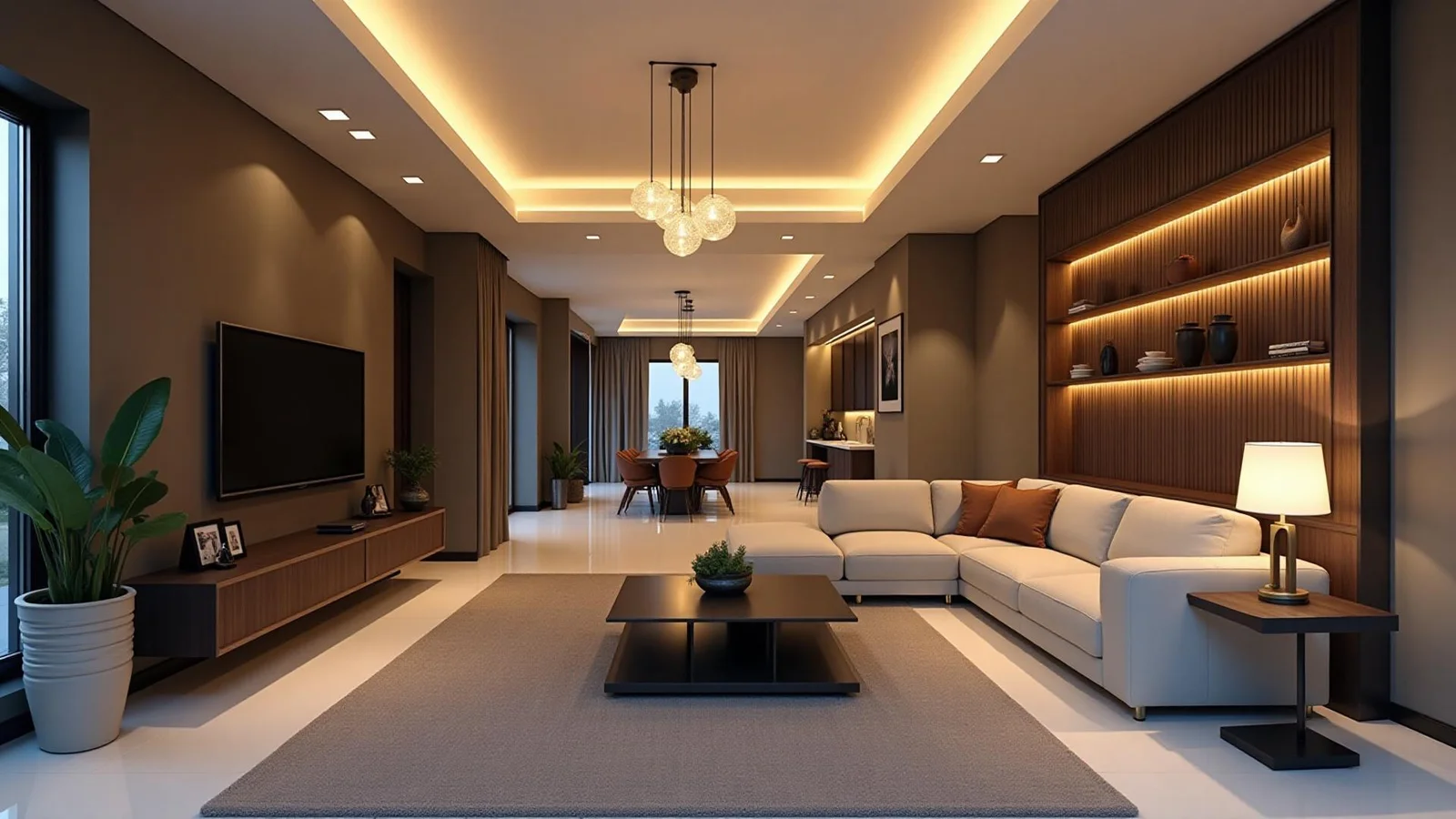
Custom lighting design is about making each room work for how you live and for the home’s architecture. Rather than expecting one overhead fixture to do everything, a layered approach blends ambient, task, and accent lighting so brightness matches the activity—reducing glare, improving comfort, and setting the right mood. The benefits are practical and visible: clearer task lighting in kitchens and home offices, cozier living spaces, and highlighted architectural details that raise perceived value. Homeowners choose custom lighting design for tailored ambiance, measurable LED energy savings, and a cohesive look that off‑the‑shelf fixtures rarely deliver. Below we outline the core benefits and examples to help you prioritize for your project.
Balancing technical performance with how a space feels is central to good lighting design—and recent research backs up that dual focus.
Sustainable Lighting Design: Balancing Efficiency & Human Experience
This study looks at lighting’s dual role in sustainable lighting design: measurable performance and the human experience of a space. Lighting isn’t just numbers—it shapes perception, mood, and a sense of place. The research recommends weighing energy metrics alongside user comfort, combining efficiency goals with design strategies that support spatial identity. The takeaway: truly sustainable lighting design pairs objective performance with human‑centered choices.
Spatial Lighting Considerations to Develop Sustainable Lighting Design, P Lotfabadi, 2025
Custom lighting design delivers clear homeowner advantages:
- Control over mood and ambiance: Layered, tunable lighting shifts from bright task light to soft scenes without changing fixtures.
- Improved functionality: Focused task lights reduce shadows and eye strain for cooking, reading, and hobbies.
- Lower energy use: LED fixtures and smart controls save power through dimming and scheduling.
- Added home value: Thoughtful lighting design highlights finishes and staging, boosting curb appeal.
- Consistent, personalized style: Custom fixture choices and placement create a unified look that fits your home.
Those points explain why an integrated lighting design plan matters. Next we’ll dig into specific advantages and practical examples.
What are the benefits of custom home lighting design?
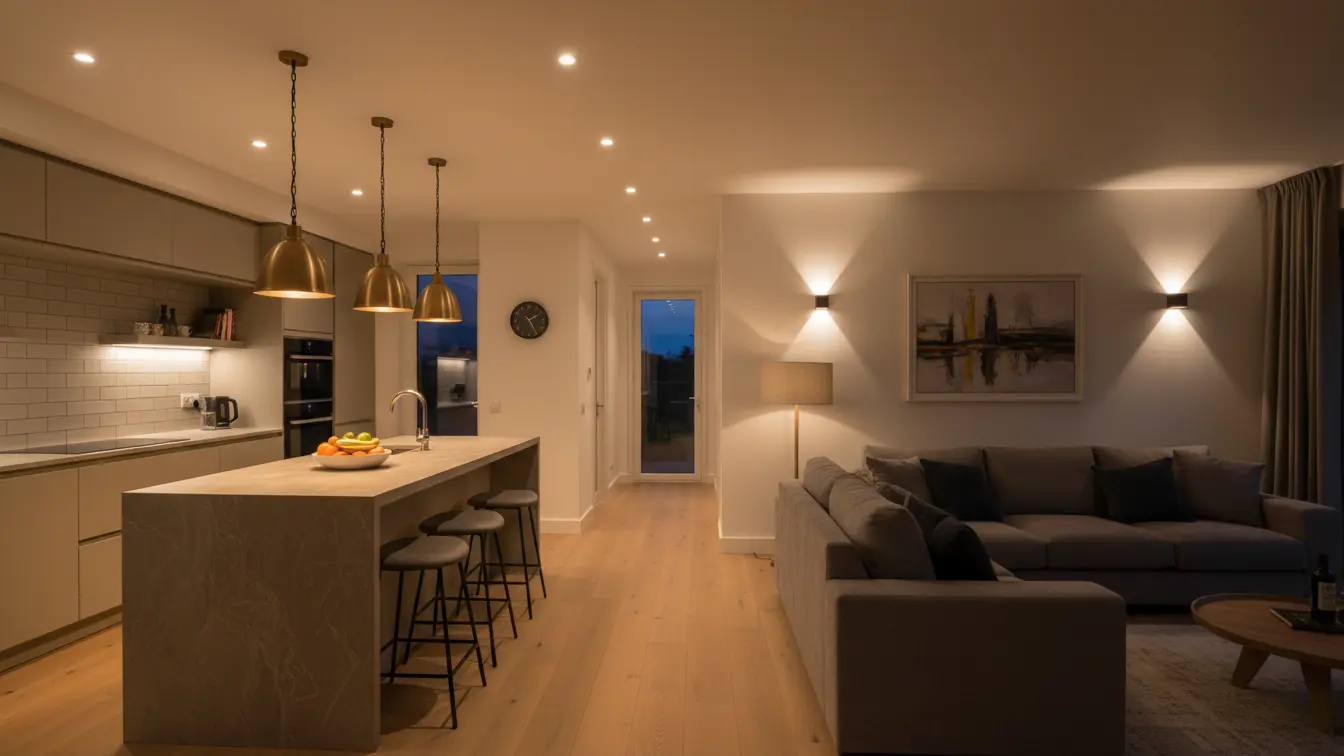
A custom lighting design plan makes daily life better and improves long‑term home performance by matching light to tasks, surfaces, and rhythms. For example, a kitchen that combines recessed ambient fixtures, under‑cabinet task lighting, and pendant accents becomes safer, more efficient, and more attractive. Custom lighting design can include circadian‑aware solutions—tunable white options that support daytime alertness and nighttime rest. Choosing LEDs and good drivers reduces maintenance and operating costs. Understanding these benefits helps you set priorities for fixtures, control strategies, and budget during the first lighting design meeting.
How does custom lighting design increase home value?
Custom lighting design can raise both perceived and market value by improving curb appeal, staging, and finish quality. Architectural lighting that defines entryways, staircases, and landscaping makes listings and showings more compelling. Energy‑efficient LEDs and smart controls add ongoing utility savings that appeal to buyers. Market data shows energy upgrades and polished finish work often lead to stronger offers—especially when lighting design emphasizes renovated kitchens and baths. Because light interacts with finishes and layout, a coordinated lighting design plan usually delivers more return than sporadic fixture swaps.
What types of custom lighting design enhance residential spaces?
Good residential lighting design relies on four complementary layers: ambient, task, accent, and decorative. Ambient light gives overall illumination through recessed cans or ceiling fixtures. Task lighting serves work zones—under‑cabinet LEDs, pendants over islands, or desk lamps. Accent lighting highlights art or textures with track lights or adjustable recessed trims. Decorative fixtures—chandeliers or statement pendants—add character. Layering these elements creates flexible scenes and consistent color rendering throughout your home.
The table below compares these core lighting design types by typical fixtures, recommended rooms, and the intended mood or function to help you decide what to prioritize.
| Lighting Type | Typical Fixtures | Recommended Rooms |
|---|---|---|
| Ambient | Recessed lighting, flush mounts, troffers | Living room, hallway, bedroom |
| Task | Under-cabinet LEDs, pendant over island, desk lamps | Kitchen, home office, workshop |
| Accent | Track lighting, adjustable recessed trims, picture lights | Galleries, living room focal walls |
| Decorative | Chandeliers, pendants, statement sconces | Dining room, entry, master bedroom |
This comparison shows how each layer supports both function and atmosphere in lighting design. Next we’ll match those layers to typical rooms and share practical do’s and don’ts.
How do ambient, task, and accent lighting transform rooms?
Ambient light establishes the room’s baseline, task lighting sharpens visibility where detail matters, and accent lighting sculpts shape and texture to direct attention. In kitchens, pairing recessed ambient fixtures with bright under‑cabinet LED strips reduces countertop shadows and improves safety. In living rooms, dimmable ambient light plus lower‑level accents creates a comfortable media environment without eye strain. Bedrooms benefit from bedside task lights and soft ambient sources for winding down. When choosing fixtures, plan for dimmers, multiple control zones, and high CRI so colors and finishes read naturally—improving your overall lighting design.
What are luxury and architectural lighting solutions in Suffolk County?
Luxury and architectural lighting design use custom fixtures, continuous concealed runs, and precise aiming to realize design intent. Typical solutions include cove lighting, linear architectural LEDs, wall‑wash systems for masonry, and specification‑grade downlights with adjustable beams. Early coordination with architects and designers lets crews embed junction boxes, drivers, and control wiring during construction and avoids retrofit compromises. Local projects must also address coastal conditions—exterior‑rated fixtures, humidity‑resistant choices, and landscape coordination to smooth indoor‑outdoor transitions. Professional installers manage these site‑specific needs during planning for the best result.
How does the custom lighting design and installation process work?
The process begins with a site consultation, moves through lighting design and specification, and finishes with licensed installation, testing, and handoff. During the site visit, designers and electricians measure the space, review existing wiring, and map activities to build a lighting design plan and fixture schedule. The design phase sets fixture types, color temperatures, dimming strategies, and placement diagrams for permits when needed. Licensed electricians handle wiring, mounting, driver installation, and control integration, then test systems and walk you through scenes and operation. Below is a concise, step‑by‑step outline for a typical lighting design project.
Follow these numbered steps for a typical custom lighting design project:
- Consultation & assessment: Site visit, measurements, activity mapping, and a first look at budget.
- Design & specification: Lighting design plan, fixture selection, control diagrams, and permit‑ready documentation.
- Permits & prewiring: Submit permits if required, perform rough‑in wiring, and mark fixture locations during construction.
- Installation & commissioning: Final fixture installation, control programming, safety testing, and a homeowner walkthrough.
This sequence keeps timelines predictable and deliverables clear for your lighting design project. The next section explains how licensed electricians keep work safe and code‑compliant throughout.
When you’re ready to move from planning to booking, RJ & Son Electric offers local consultations and lighting design installation across Suffolk County from a licensed, insured Master Electrician. They focus on clean, safe, and honest electrical work with transparent pricing and clear communication, so scheduling a lighting design consultation or requesting a quote is simple. RJ & Son Electric also provides 24/7 emergency service for urgent electrical issues that could affect timelines. Homeowners can consider that local reputation when choosing an installer for their lighting design needs.
What are the steps from lighting design consultation to installation?
The timeline from lighting design consultation to installation typically covers discovery, approval, procurement, and on‑site work with clear milestones. During discovery, the installer documents room use, fixture preferences, and special needs like landscape lighting or EV charger coordination. After you approve the lighting design, procurement secures fixtures, drivers, and controls—ordering long‑lead items early to avoid delays. On site, the team wires, mounts, adjusts trims, and programs controls, then runs safety tests and photometric checks before handoff. Expect regular updates on timing, responsibilities, and inspections so the project closes with working scenes and documentation for future maintenance.
How do licensed electricians ensure safe and efficient lighting design?
Licensed electricians follow the National Electrical Code (NEC) and industry best practices from groups like NECA to keep every lighting design safe. They do circuit load calculations, inspect connections, confirm proper grounding, and add GFCI protection where needed. Installers use quality fixtures, compatible drivers, and tested dimmers to avoid flicker and premature failures. Testing includes measuring voltage at fixtures, verifying circuit integrity, and documenting as‑built wiring for future troubleshooting. These steps reduce fire risk, extend component life, and help installations pass local electrical inspections.
How can smart lighting systems elevate your living space?
Smart lighting design ties controls, schedules, sensors, and voice or app interfaces together to deliver convenience, energy savings, and adaptable scenes. Integration links fixtures and controls to hubs or apps that run automations, occupancy sensing, and coordinated scenes across rooms. The main benefits are reduced energy use through sensors and schedules, lifestyle gains from remote control and presets, and wellness support from tunable white or circadian settings. The table below compares common smart control options by benefit and complexity to help you choose the right level of integration for your lighting design.
Smart control options compared by benefit and complexity:
| Control Option | Primary Benefit | Typical Complexity |
|---|---|---|
| Dimmers & Scenes | Create moods and recall setups | Low – familiar tech |
| Schedules & Timers | Reduce runtime with automation | Low–medium |
| Occupancy/Vacancy Sensors | Cut wasted runtime automatically | Medium |
| Voice & App Integration | Remote access and hands‑free control | Medium–high |
What are the advantages of smart lighting integration?
Smart lighting design delivers three practical advantages: convenience through remote control and automation, better energy management with scheduling and sensors, and wellness support with tunable white options. For example, scheduled landscape lighting cuts overnight runtime while occupancy sensors lower usage in seldom‑used rooms. Scenes let you recall layered combinations for entertaining, daily routines, or a security presence while away. Together, these features make smart integration a high‑value upgrade that balances comfort and efficiency.
How do smart lighting controls improve energy efficiency?
Smart controls save energy by dimming, switching off lights when rooms are empty, and matching lumen output and color temperature to the task instead of overlighting. Sensor strategies like occupancy detection and daylight harvesting can reduce lighting energy consumption significantly compared with always‑on systems. Dimming reduces power draw nonlinearly, and scheduled scenes stop unnecessary nighttime illumination. Pairing smart controls with LED upgrades multiplies savings because LEDs dim efficiently and use less baseline power—shortening retrofit payback. For more on energy efficiency, see the U.S. Department of Energy and ENERGY STAR.
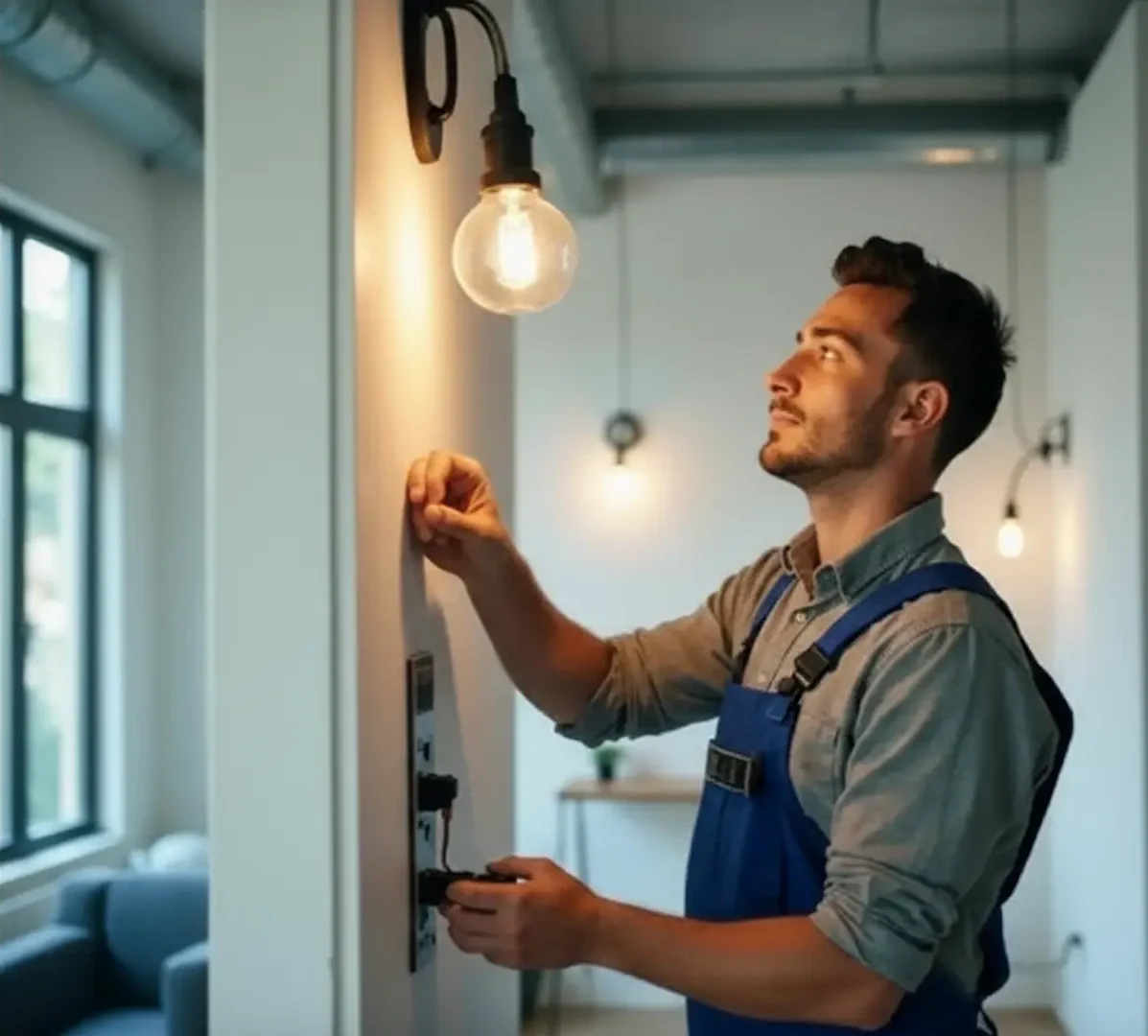
If you upgrade to smart systems, RJ & Son Electric can integrate controls and coordinate with your existing wiring and smart‑home platform. Their licensed electricians handle sensor placement, driver compatibility, and commissioning so scenes and schedules work as intended. Professional integration reduces compatibility issues and delivers reliable long‑term operation for your smart lighting design.
Best practices for residential lighting design and installation in Suffolk County
Best practices combine code compliance, site‑specific planning, and trade coordination to produce durable, weather‑appropriate, and visually consistent results. Local installers should consider coastal exposure when specifying exterior fixtures, use corrosion‑resistant components for underground landscape runs, and follow municipal permitting and inspection rules. Planning also includes checking electrical panel capacity, dedicating circuits for lighting, and choosing dimmers and drivers proven to work with LEDs. Adhering to these practices reduces callbacks and keeps lighting design systems reliable for years.
The following checklist highlights installation best practices for lighting design:
- Confirm permits and inspections: Verify local requirements before work begins.
- Specify exterior‑rated fixtures: Use wet‑ or damp‑rated fixtures for coastal and outdoor locations.
- Plan for service access: Locate drivers and junctions in accessible, ventilated areas.
- Coordinate with other trades: Align lighting rough‑ins with carpentry and HVAC schedules.
Following this checklist streamlines projects and prevents common issues. The next section explains how local knowledge improves outcomes for your lighting design.
How does local expertise enhance lighting design project outcomes?
Local electricians know Suffolk County permitting, common home construction types, and supplier networks that speed procurement and inspections. That regional experience helps anticipate climate‑driven fixture needs, recommend trusted exterior products, and solve typical mounting or socket issues for neighborhood home styles. Familiarity with inspection practices shortens approval cycles and keeps projects on schedule. Hiring a licensed Master Electrician from the area ensures the team understands both regulatory and environmental factors that affect the long‑term performance of your lighting design.
What are common lighting design and installation services offered?
Lighting electricians typically handle recessed and decorative fixture installs, under‑cabinet and task lighting, outdoor landscape and security lighting, LED retrofits, panel checks for new circuits, and smart control integration. Each service answers a homeowner need—recessed lighting evens ambient light, landscape lighting improves curb appeal and safety. Professionals advise when a retrofit is adequate and when rewiring or panel upgrades are required for added load. Using a single licensed provider simplifies coordination and preserves warranty and workmanship accountability for your lighting design.
Beyond lighting, many electricians offer broader electrical services like generator transfer switch installation so your home stays powered during outages. These upgrades improve overall resilience and safety.
How to maintain and upgrade your custom lighting design over time?
Regular maintenance and targeted upgrades keep systems performing, protect efficiency gains, and safeguard your investment in lighting design. Routine tasks include checking trim seals on exterior fixtures, cleaning lenses to preserve output, monitoring driver temperatures and mounting torque, and keeping control firmware current. Consider LED upgrades when fixtures show color shift, drivers fail, or energy and quality goals justify replacement. Scheduling periodic electrical inspections and keeping warranty documentation with your installer helps systems run reliably and simplifies future upgrades. The table below compares retrofit options and maintenance intervals to help plan replacements.
Before the table: this comparison helps decide between targeted retrofits and full fixture replacement for your lighting design.
| Upgrade Option | Typical Lifespan | Outcome |
|---|---|---|
| LED Retrofit (lamp/driver swap) | 5–15 years depending on drivers | Quick energy and lifespan gains |
| Full LED Fixture Replacement | 10–25 years | Best long‑term reliability and warranty coverage |
| Driver Replacement | 3–10 years | Restores dimming and performance |
| Routine Maintenance | Monthly to annually | Preserves output and reduces failures |
When should you consider LED lighting upgrades?
Consider LED upgrades when lamps or drivers fail frequently, color rendering varies across fixtures, or energy and ROI calculations support replacement. Modern LEDs deliver substantial energy savings over incandescent or fluorescent sources, with higher CRI and tunable white options for better ambiance and wellness. Payback depends on use and electricity rates, but kitchens, outdoor lighting, and high‑use areas usually return value sooner. Upgrading by circuit or room spreads cost while maximizing immediate benefits for your lighting design.
How to schedule lighting maintenance and repairs?
For service, RJ & Son Electric provides local support in Suffolk County from licensed, insured Master Electricians offering fast diagnostics and reliable electrical repairs. They provide transparent pricing and clear communication to help you decide on LED upgrades, smart control commissioning, or emergency responses. Choosing a nearby installer shortens response times and improves coordination with inspections. For more on local repair services, see Local Electrical Repair Services That Save You Money.
- Prepare fixture documentation and photos before you call.
- Ask about response times and emergency availability.
- Request written estimates that separate materials and labor.
Following these steps makes maintenance and repairs more predictable. For direct assistance, you can contact RJ & Son Electric.
Frequently asked questions
What are the key considerations when planning a custom lighting design?
Start with how you use the room, the home’s architecture, and your style preferences. Map activities to determine which lighting layers you need—ambient, task, or accent—and think about controls and energy targets. Working with a professional helps align aesthetics and function so the final lighting design plan fits both your lifestyle and technical requirements.
How can I ensure my custom lighting design is energy efficient?
Prioritize LEDs, which use less power and last longer. Add smart controls such as dimmers and occupancy sensors to reduce runtime, and use daylight harvesting where possible to take advantage of natural light. Regular cleaning and periodic checks also help maintain efficiency. For more on energy efficiency, refer to the EPA Energy Efficiency guidance.
What maintenance is required for custom lighting systems?
Keep fixtures clean, watch for flicker or color shifts that indicate driver or lamp issues, and inspect wiring and connections periodically. Schedule professional electrical inspections as needed to catch problems early and ensure safe, reliable operation.
Can I integrate smart lighting with my existing fixtures?
Often yes—many smart solutions allow retrofitting with smart bulbs or smart switches that control existing fixtures. Compatibility varies, so consult a professional to choose the best approach and avoid common pitfalls when mixing new controls with legacy wiring.
What are the benefits of using a professional for custom lighting installation?
Professionals bring lighting design expertise, safety practices, and code knowledge. They ensure proper installation, reduce electrical risk, and can advise on energy‑efficient and smart options. Hiring a licensed electrician saves time and protects your investment.
How do I choose the right fixtures for my custom lighting design?
Match fixtures to each room’s function and desired mood. Pick fixtures that complement your home’s architecture and pay attention to color temperature and brightness to create the intended atmosphere. A lighting designer can help select fixtures that balance performance and style for your custom lighting design.