Energy‑Efficient Lighting : Brighten Your Suffolk County Home or Business — Save Energy and Money. Switching to energy‑efficient lighting cuts electricity use, lowers monthly bills, and means fewer bulb changes by turning more power into light and less into heat. This guide walks you through how efficient lighting works, why LEDs lead the pack, and the practical factors to consider — lumens, color temperature, controls, and fixture fit — when upgrading lighting across Suffolk County. If rising utility costs or frequent bulb replacements are on your mind, a well‑planned lighting upgrade can deliver meaningful kWh savings, simpler upkeep, and noticeably better light. Inside you’ll find clear technology explanations, a short selection checklist, differences for homes versus businesses, realistic LED savings, advice on professional installation, and local rebate options. For broader efficient‑home guidance, see Energy.gov’s Efficient Home Design.
What Is Energy‑Efficient Lighting and Why It Matters
Energy‑efficient lighting gives you the light you need while using far less electricity, mainly by producing more lumens per watt. That lowers operating costs, shrinks your carbon footprint, and often improves comfort and safety. For example, LED upgrades commonly cut lighting energy use by 50–80% compared with incandescent bulbs — delivering fast payback and much easier maintenance.
LED Lighting Efficacy: Energy Savings & Performance
The shift from incandescent, fluorescent, and high‑intensity discharge lamps to LEDs is driven by energy savings and lower lifecycle cost. Modern LEDs outperform conventional sources in efficacy and continue to improve in efficiency and reliability.
LED lighting efficacy: status and directions, PM Pattison, 2018
When planning an energy‑efficient lighting upgrade, these are the primary benefits to weigh.
- Lower energy consumption and smaller electric bills for both homes and businesses.
- Longer service life and reduced maintenance because LEDs last far longer than older lamps.
- Improved light quality and color rendering for safer, more comfortable spaces.
Next, we’ll explain how LED technology delivers those benefits and look at other efficient options.
How LED Technology Improves Efficiency
LEDs use semiconductor diodes that convert a larger share of electricity into visible light instead of heat. Typical LED products now deliver about 80–160 lm/W compared with roughly 10–17 lm/W for incandescent bulbs, which is why LEDs save so much energy. Their directional light also reduces waste in recessed, task, and outdoor fixtures. With lifespans measured in tens of thousands of hours and gradual lumen depreciation, LEDs dramatically reduce replacement and labor costs, making retrofit or full‑fixture replacement decisions easier.
Other Energy‑Efficient Lighting Choices
LEDs are the first choice for most projects, but you may still encounter compact fluorescent lamps (CFLs) and efficient halogen replacements. CFLs improved efficiency over incandescents but contain mercury and don’t match LEDs for lifespan or dimming performance; specialty halogens can offer superior color rendering but at lower efficacy. Always look for ENERGY STAR certified products when you want verified efficiency and quality.
An at‑a‑glance comparison of common bulb types:
| Bulb Type | Typical Power (Watts) | Estimated Lifespan | Typical Annual Energy Cost* |
|---|---|---|---|
| Incandescent / Halogen | 40–75 W | 750–2,000 hours | High |
| CFL | 9–15 W | 8,000–15,000 hours | Moderate |
| LED | 6–15 W (equiv) | 25,000–50,000+ hours | Low |
*Annual cost varies with hours of use and local electricity rates; LEDs generally offer the lowest operating cost.
Key Factors When Choosing Energy‑Efficient Lighting
Choose energy‑efficient lighting by measurable performance (lumens and watts), appearance (color temperature and CRI), control options (dimming and sensors), and whether new bulbs or fixtures will work with your existing hardware. These choices determine how a space looks and how much you’ll save. Use a short checklist to compare products and set priorities before buying.
Consider this checklist when evaluating energy‑efficient lighting:
- Lumens: Select bulbs by lumens to achieve the brightness you want — not by watts.
- Color temperature (K): Match the Kelvin value to each room’s purpose (warmer for living spaces, cooler for work areas).
- Dimmability and compatibility: Verify that fixtures and drivers are compatible with your dimmers or sensors.
- Lifespan and warranty: Choose products rated for long life and consistent lumen maintenance.
Those criteria connect directly to how lumens, watts, and color temperature shape both appearance and energy use, which we detail next.
Lumens, Watts, and Color Temperature — What They Mean for Your Space
Lumens measure visible light output, watts measure energy use, and color temperature (kelvins) describes whether light appears warm or cool. Choosing by lumens ensures rooms are bright enough; selecting the right watts and color temperature balances energy use with the room’s mood. For example, kitchens and work areas often benefit from 3,000–4,000 K (neutral to cool white), while living rooms and bedrooms usually feel best at 2,700–3,000 K for a warm, relaxed ambiance. The table below offers quick room‑based guidance.
| Metric | Definition | Practical Recommendation |
|---|---|---|
| Lumens | Brightness output | Kitchen: 4,000–8,000 total lumens; Bedroom: 1,500–3,000 lumens |
| Watts (LED equiv) | Power used | Choose LEDs that deliver required lumens at lower watts; check lm/W |
| Color Temperature (K) | Color appearance | 2,700–3,000 K for warm; 3,500–4,000 K for task areas |
With those metrics set, adding smart controls is a natural next step to increase savings and convenience.
How Smart Controls Boost Energy Savings
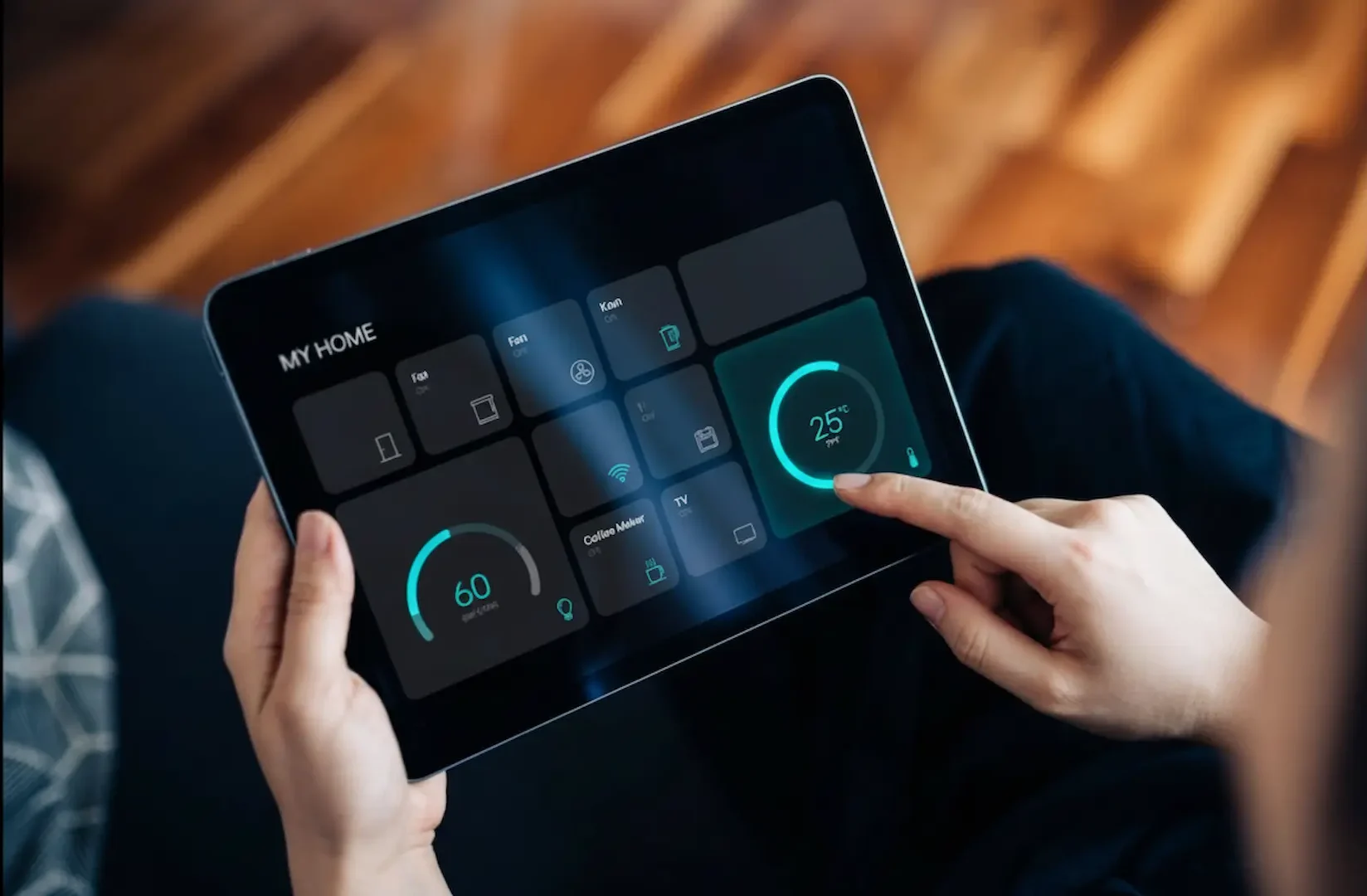
Smart lighting — dimmers, occupancy sensors, and scheduling — reduces wasted run time so lights are on only when needed. Dimmable LEDs with scene controls cut average wattage and extend lamp life, while occupancy/vacancy sensors work especially well in closets, restrooms, and storage areas. Pairing efficient LEDs with smart controls can increase total savings from a typical 50–80% up to roughly 70–90%, depending on usage patterns. That makes smart controls a key part of any effective lighting strategy.
Residential vs. Commercial Energy‑Efficient Lighting Needs
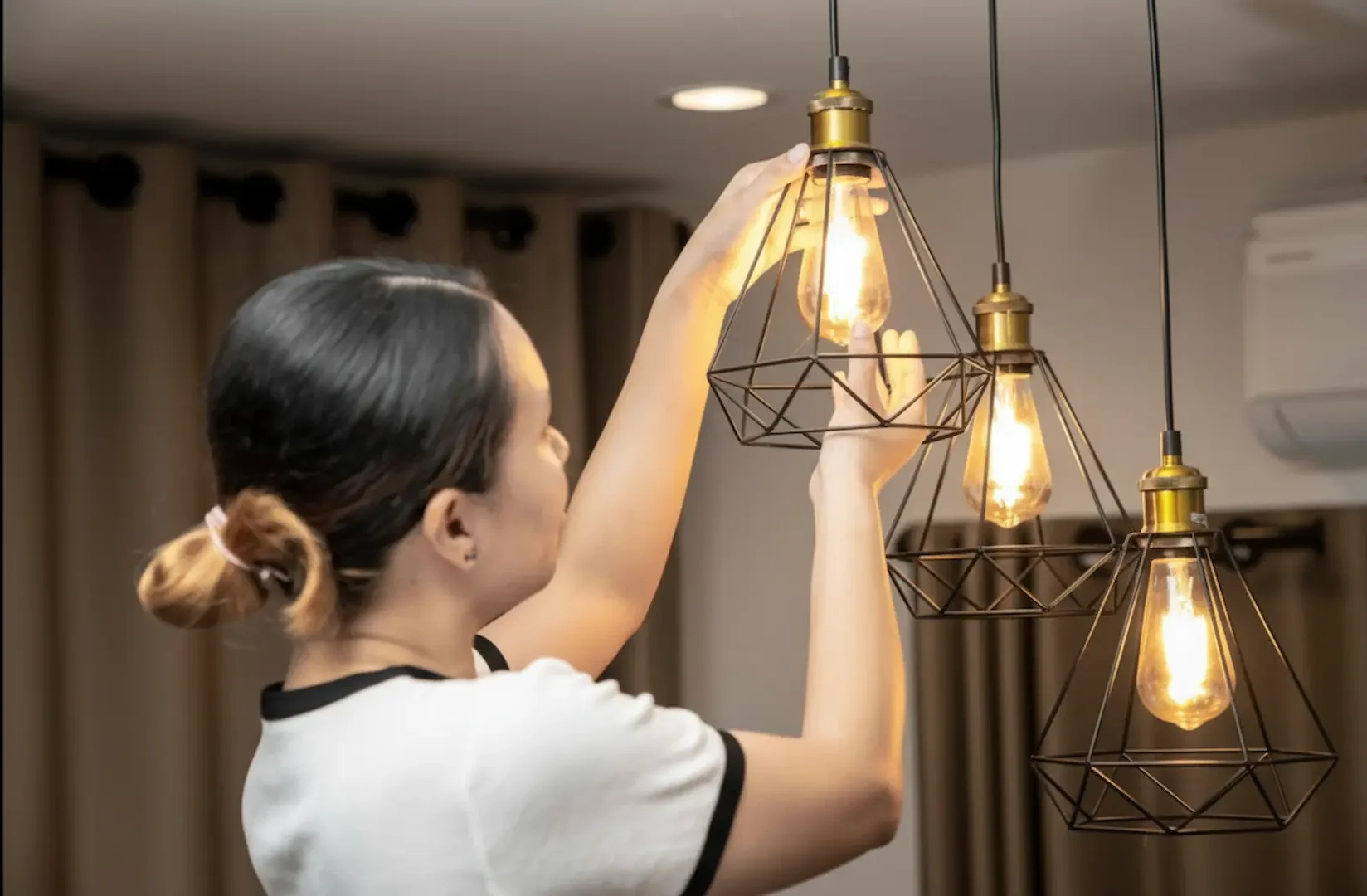
Homes tend to prioritize appearance, comfort, and local control; commercial projects focus on energy density, even illumination, maintenance, and code compliance. Residential installs commonly combine decorative fixtures, recessed cans, and under‑cabinet task lighting. Commercial retrofits target troffer replacements, high‑bay fixtures, and parking lot luminaires where long operating hours yield the fastest ROI. Homeowners upgrade for comfort and convenience; facility managers look to lifecycle cost and scalability. Learn more about how local experts transform your home’s lighting.
Best Residential Energy‑Efficient Lighting is LED Upgrades
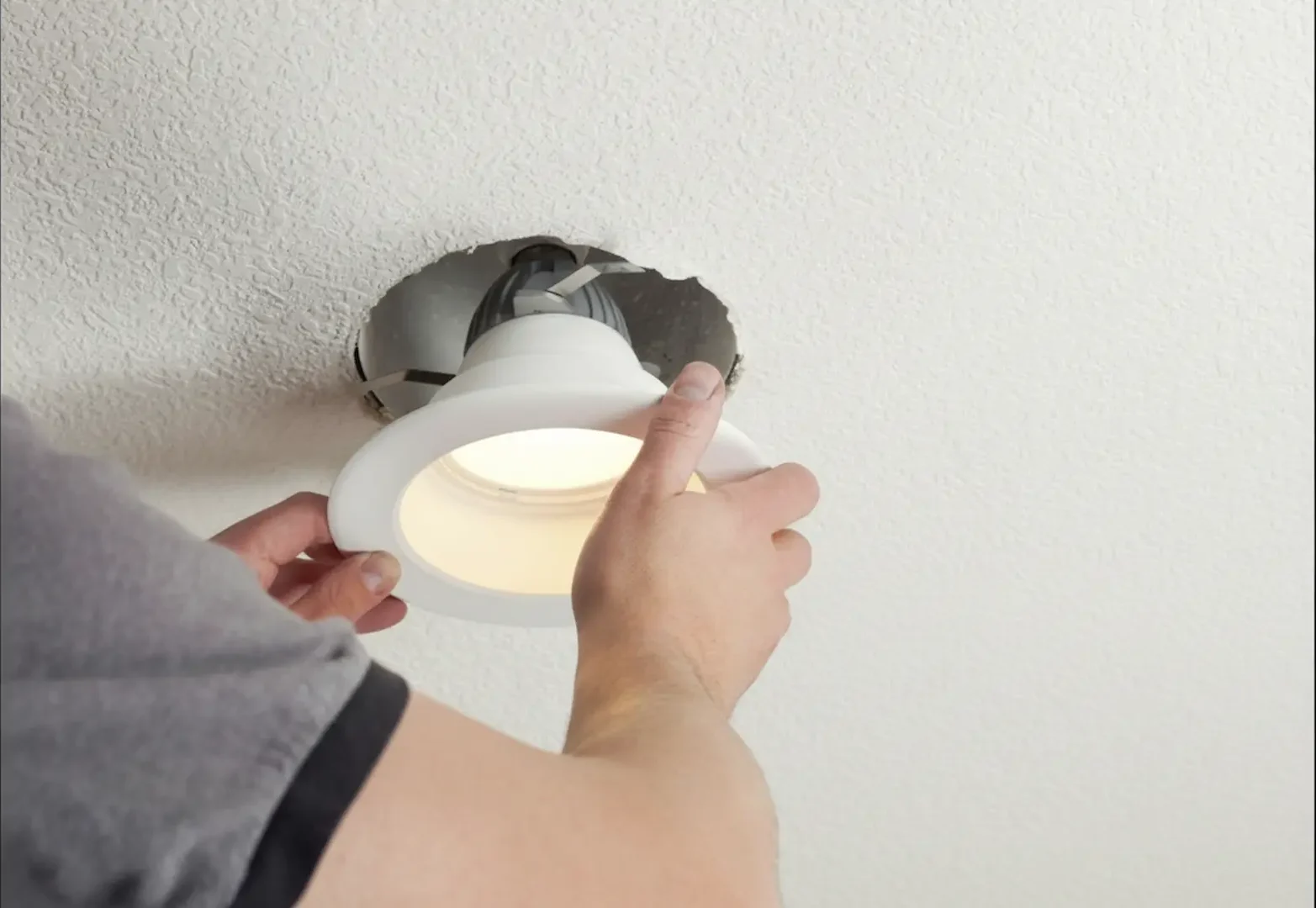
Homeowners often get the most value from recessed can retrofit kits, LED replacement bulbs, under‑cabinet strips for task lighting, and LED landscape fixtures. Retrofit kits help with ceiling thermal performance, while integrated LED fixtures offer longer life. Always confirm dimmer compatibility and choose color temperatures that suit each room. We also provide professional ceiling fan installation to improve comfort and efficiency.
Commercial Solutions That Maximize Savings
For businesses, the biggest savings come from upgrading high‑use fixtures identified in an energy audit: swapping troffers for LED panels, installing high‑bay LEDs in warehouses, and upgrading parking lot luminaires. Audits pinpoint which systems will pay back most quickly. Networked daylighting and occupancy zoning can reduce operating hours across a facility, and lower maintenance often justifies a higher upfront fixture cost. For full commercial electrical services, including lighting, contact us. See how we can transform your business with custom lighting solutions.
Commercial Lighting Retrofit: Cost‑Benefit & Energy Savings
Studies of industrial lighting retrofits show how replacing older metal halide and high‑pressure sodium systems with modern alternatives affects pricing, labor, energy use, and payback. These analyses report expected savings, payback periods, net present value, and changes in lumen output for different retrofit options.
Why Upgrade with RJ & Son Electric for Energy‑Efficient Lighting?
Upgrading to energy‑efficient lighting delivers clear financial and operational gains — lower bills, less maintenance, better light, and improved curb appeal. Hiring a licensed local electrician ensures fixtures are specified, installed, and tested correctly. RJ & Son Electric performs LED upgrades and energy‑efficient lighting installations across Suffolk County, offering inspections, tailored recommendations, and rebate‑eligible proposals. We work under a licensed Master Electrician, carry insurance, provide transparent pricing, and offer 24/7 emergency service. Choosing a local, credentialed installer reduces the risk of compatibility issues and code violations.

How Much Can LED Lighting Save You?
Swapping incandescents or older fluorescents for LEDs typically cuts lighting energy use by 50–80%. For example, replacing ten 60 W incandescent bulbs (600 W total) with LED equivalents that draw 60 W total saves 540 W while the lights are on. Over time that adds up to significant dollar savings, and high‑use commercial sites or busy household areas see the fastest payback.
Reliable backup power matters to many property owners. A generator transfer switch installation provides a safe, code‑compliant way to connect a backup generator during outages.
LEDs: Longer Life and Lower Maintenance
LEDs are commonly rated for 25,000–50,000+ hours — far longer than the roughly 1,000 hours for incandescents and 8,000–15,000 hours for CFLs. That extended life greatly reduces bulb changes and labor costs for homes and businesses, lowering total cost of ownership and minimizing downtime.
Research supports the long‑term economic advantages of LED durability and points toward practical lifetime targets for consumers.
LED Lamp Durability & Life Cycle Cost Analysis
This analysis models LED lifetimes and optimal replacement timing from a least life‑cycle‑cost perspective. While results carry statistical uncertainty, they point to an optimal lifetime near 25,000 hours and emphasize that durability is most valuable in high‑use settings.
Optimal durability in least life cycle cost methods: the case of LED lamps, JL Richter, 2019
That reliability and reduced service burden lead naturally into why professional installs matter for safe, code‑compliant projects.
The Professional Energy‑Efficient Lighting Installation Process
A typical professional energy-efficient lighting upgrade follows a clear workflow: site assessment, a proposal with options, scheduling and installation, and final testing with a customer walkthrough. The assessment records existing fixtures and run hours; the proposal compares alternatives and recommends controls. Installation focuses on correct wiring and thermal management, and post‑install testing verifies light levels and circuit operation. Knowing the process helps you decide between DIY swaps and hiring a licensed electrician for a complete, code‑compliant upgrade.
How RJ & Son Electric Keeps Your Upgrade Safe and Code‑Compliant
We prioritize safety and code compliance by performing thorough inspections, checking load and panel capacity, ensuring proper wiring and grounding, and following local electrical codes under a licensed Master Electrician. For details on relevant safety codes, see the NFPA codes and standards. Our checks cover panel compatibility, selecting rated fixtures, and testing dimmers and sensors to reduce problems. We also recommend robust surge protection to protect your lighting investment. Always choose products with recognized safety certifications, such as those from UL Solutions. We commonly work with trusted brands like Square D by Schneider Electric for panel components and use reliable Siemens power panels. For circuit protection, we rely on manufacturers like Eaton. Licensed, insured workmanship reduces liability and ensures installations meet local requirements, which in turn enhances your home’s safety. Learn more about how local electrical repair enhances your home’s safety.
What to Expect During Your Energy-Efficient Lighting Appointment
On installation day, the technician will review the scope, access work areas, remove old fixtures, install new LEDs, and perform testing. The job typically ends with a walkthrough. Our techs protect your home, label circuits, and show you how new controls work. Please clear fragile items and provide access to speed the visit. We’ll flag any required permits or unexpected electrical repairs. For dependable service that saves you money, see our local electrical repair services.
Many homeowners are also adding other electrical upgrades. For example, professional EV charger installation is increasingly common and requires licensed electrical work to ensure safe, reliable performance.
Using Local Energy‑Efficient Lighting Rebates and Incentives in Suffolk County
State and utility rebate programs can lower the installed cost of lighting retrofits with per‑fixture or per‑project incentives. Eligibility usually depends on project scope and product specifications. Working with an installer who understands local rebate rules makes pre‑approval and paperwork much easier so you receive incentives without the hassle. The table below summarizes common rebate types, typical eligibility, and how a qualified installer can help.
Rebate programs and installer assistance overview:
| Program Type | Typical Eligibility | Typical Incentive / How RJ & Son Electric Helps |
|---|---|---|
| State energy programs (e.g., NY programs) | Commercial and residential upgrades meeting spec | Per‑fixture incentives or project rebates; installer verifies product eligibility and assists paperwork |
| Utility rebate programs | Customers of local utilities with qualifying equipment | Upfront or post‑install rebates; installer can perform pre‑inspection and submit required forms |
| Commercial retrofit incentives | Large projects with energy savings estimates | Higher incentives tied to measured kWh savings; installer prepares technical documentation and savings calculations |
Understanding how rebates affect net cost makes it easier to estimate payback and ROI for an LED project.
New York State and Utility Rebates That Support Energy-Efficient Lighting
New York programs and local utility incentives often cover LED upgrades, controls, and whole‑building retrofits. Many require approved product lists or pre‑approval. Installers like RJ & Son Electric can help identify qualifying programs, confirm fixture requirements, and prepare paperwork to speed approvals — especially for larger commercial projects.
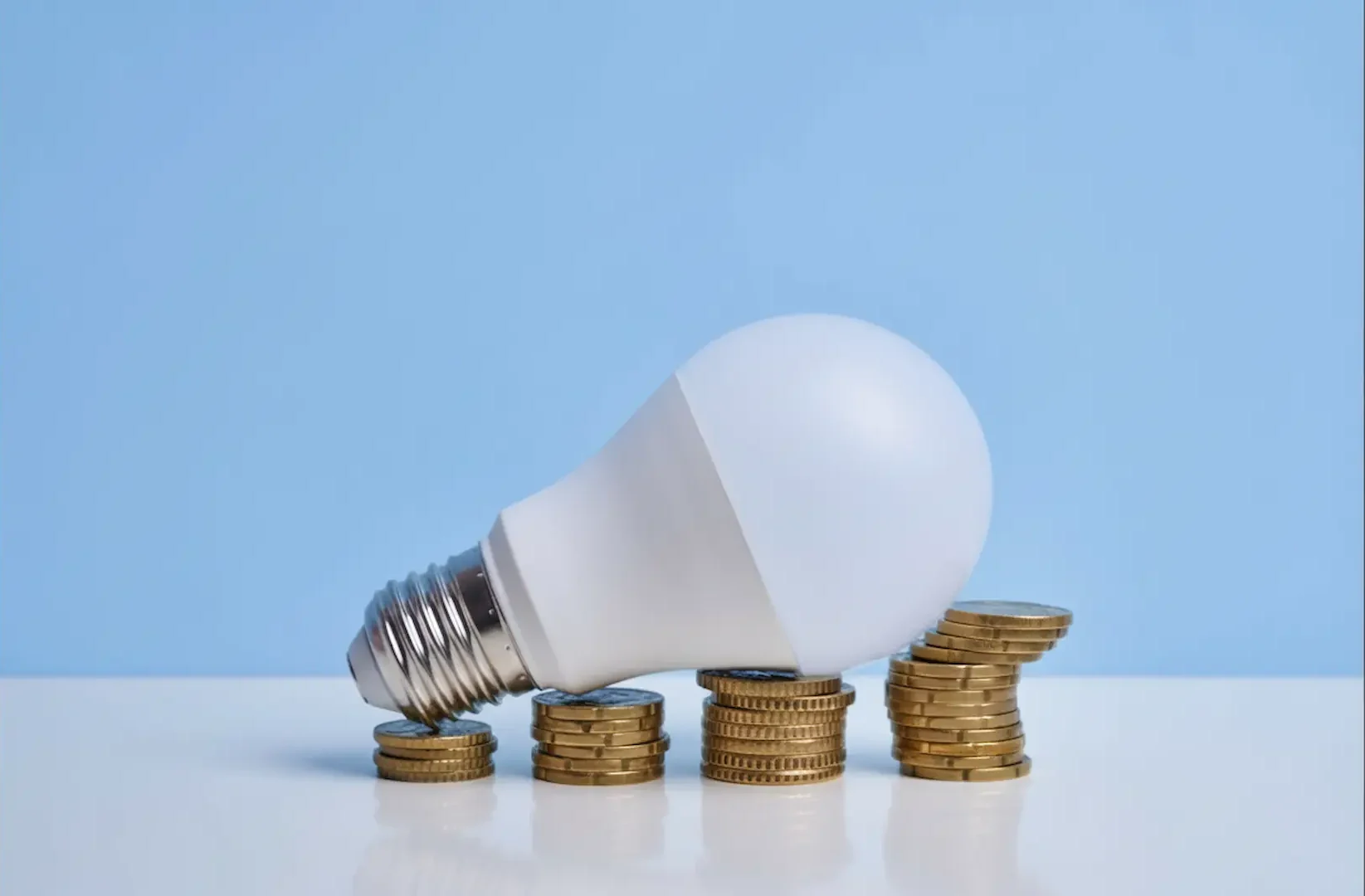
How Rebates Change the Cost of LED Installation
Rebates reduce installed cost through per‑fixture or per‑project payments, shortening payback and improving ROI. Installers who provide incentive‑aware estimates show both gross and net pricing and explain the documentation steps needed to secure payments. For help finding rebate‑eligible options and an accurate, incentive‑aware estimate, contacting a local licensed installer will simplify the process and maximize project value.
- Request an assessment from a qualified local electrician to identify eligible fixtures and controls.
- Obtain an incentive‑informed proposal that lists approved products and estimated net cost.
- Let the installer handle paperwork and post‑install verification to secure rebate payments.
Following these steps makes it easier to capture available incentives and complete a lighting upgrade that fits your performance and budget goals.
Frequently Asked Questions
What are the environmental benefits of using energy‑efficient lighting?
Energy‑efficient lighting, especially LEDs, uses less electricity and therefore reduces greenhouse gas emissions. Longer LED life also means fewer bulbs in landfills, which lowers overall environmental impact. For more detail, see the EPA’s resources on energy efficiency.
How can I determine the right color temperature for different rooms?
Match color temperature to each room’s function. For cozy living areas, choose warmer light (2,700–3,000 K). For task areas like kitchens and offices, select neutral to cool light (3,000–4,000 K) for clearer visibility and focus.
Are there any safety concerns with installing energy‑efficient lighting?
Energy‑efficient lighting is safe when installed correctly. Improper installation can create electrical hazards, so always confirm fixture compatibility and follow local electrical codes. Hiring a licensed electrician reduces these risks. For additional safety guidance, consult the Electrical Safety Foundation International (ESFI) and the CPSC’s electrical safety guides.
What are the common misconceptions about LED lighting?
Two common misconceptions are that LEDs are always too cold and that they’re prohibitively expensive. Modern LEDs are available in a wide range of warm color temperatures, and while upfront costs can be higher, their long life and low energy use usually result in a lower total cost of ownership. Most LEDs are also dimmable when matched with compatible controls.
How do I maintain my energy‑efficient lighting fixtures?
Maintenance is straightforward: dust fixtures periodically and keep LEDs clear of insulation or obstructions that could cause overheating. Watch for flicker or unexpected dimming, which can signal a problem, and follow manufacturer care instructions.
Can energy‑efficient lighting improve property value?
Yes. Buyers and tenants value energy‑saving features because they reduce operating costs and improve comfort. Modern, efficient lighting can make a property more attractive and may increase resale value.
What should I consider when retrofitting existing energy‑efficient lighting systems?
Check fixture compatibility, the brightness you need (lumens), and the expected energy savings. Decide whether the work is a DIY swap or requires a professional, and research available rebates. A knowledgeable installer can help evaluate options and manage rebate paperwork.