Knowing how to spot and address common electrical issues in commercial buildings keeps your operation safe and running. Electrical problems interrupt work, create safety risks, and lead to unexpected expenses. This guide walks through the typical electrical faults we see in businesses, how they affect operations and code compliance, and practical steps to restore service. You’ll find diagnostic tips, preventative maintenance advice, panel upgrade considerations, wiring hazard checks, and backup power options. We also explain when to call a licensed electrician and how a maintenance contract can protect your facility and reduce downtime.
What Are the Most Frequent Common Electrical Issues in Commercial Buildings?
Commercial properties commonly experience electrical problems that threaten safety and uptime: overloaded circuits, frequent breaker trips, flickering lights, intermittent outlets, hot or burning panels, and partial or full outages. Each symptom points to different causes—overdrawn loads, loose connections, or failing equipment. Identifying the cause early shortens repair time and helps prioritize action. The table below helps facilities staff match symptoms to likely causes and take safe initial steps before a licensed technician arrives.
The table summarizes immediate actions and the recommended service for permanent repair, helping your team triage safely and preparing technicians for a faster diagnosis.
| Issue | Likely Cause(s) | Immediate Actions | Recommended Service |
|---|---|---|---|
| Frequent breaker trips | Overloads, short circuits, worn or faulty breakers | Turn off nonessential equipment, reset one breaker at a time | Load study, breaker testing/replacement, panel assessment |
| Flickering lights | Loose connections, failing fixture, utility voltage fluctuation | Record when it happens, avoid touching fixtures, switch off affected circuits | Fixture repair, wiring inspection, utility coordination |
| Burning smell / hot panel | Loose lug, overloaded bus, arcing | Evacuate if there’s smoke, shut the main if safe, restrict access | Infrared scan, torque connections, repair or refeed circuits |
| Dead outlets / intermittent power | Loose neutral/ground, damaged receptacle | Label and stop using the outlet, provide temporary power if needed | Receptacle replacement, wiring continuity testing |
| Full or partial outages | Utility failure, service disconnect, main breaker fault | Contact the utility, check upstream status, activate backup plan | Emergency repair, generator start/transfer switch service |
Why Do Circuit Breakers Trip Frequently: Addressing Common Electrical Issues?
Circuit breakers trip for a few straightforward reasons: overcurrent from too many loads, short circuits, or the breaker itself failing. In office settings, high-draw equipment or a single faulty device often triggers trips. Non-technical staff can unplug suspicious equipment and reset the breaker, but if trips continue, schedule a professional load calculation or breaker replacement. Electricians perform load testing and may recommend load balancing, dedicated circuits, or panel upgrades to fix the root cause.
Understanding why breakers fail reduces downtime and lowers safety risks.
Improving Commercial Reliability Through Breaker Root-Cause Analysis
Air circuit breakers (ACBs) are critical protection devices. Inspecting their mechanical components can prevent failures. The linked study describes methods for identifying and eliminating ACB failure modes to improve reliability at critical sites. Reliability assessment and improvement of air circuit breaker (ACB) mechanism by identifying and eliminating the root causes, SB Rane, 2016
Tracking breaker behavior gives technicians useful data for diagnostics and long-term fixes.
What Causes Flickering Lights: A Frequent Electrical Problem in Commercial Spaces?
Flicker can come from fixture problems (Failing ballasts or loose sockets), building wiring issues (loose neutrals or overloaded circuits), or utility voltage swings. Note the timing and scope of the flicker—single fixtures versus groups—so electricians can narrow the cause. Any signs of arcing, discoloration, or heat require immediate professional inspection because loose connections are a fire risk.
Those observations help technicians choose the right testing tools and focus their inspection.
How Can Businesses Diagnose and Repair Electrical Problems Efficiently?
Efficient commercial troubleshooting follows a clear, safety-first process: triage hazards, isolate systems, use proper instruments, and document everything to minimize downtime. Start with safety checks, de-energize circuits where needed, and apply lockout/tagout procedures. Then perform targeted tests—voltage readings, thermal scans, and continuity checks. Electricians can complete load studies and insulation resistance tests. These steps produce a prioritized repair list and verification records that support compliance and preventative maintenance.
Follow this workflow for faster fault resolution:
- Perform safety triage and isolate loads.
- Verify de-energization with tools; apply lockout/tagout.
- Use diagnostic instruments (multimeter, infrared camera) to locate hotspots and measure voltages.
- Apply temporary mitigations; schedule permanent repairs with an electrician.
- Re-test systems and document results for compliance.
This sequence gives non-electrician staff clear triage steps and hands the detailed testing and repairs to licensed professionals.
Only call emergency electrical services when danger signs are present—don’t wait for convenience. Proper triage and diagnostics help determine that need.
What Are the Steps in Troubleshooting Common Electrical Issues?
Troubleshooting common electrical issues follows these stages: triage, isolation, measurement, diagnosis, repair, and verification. Non-technical staff handle initial triage and isolation; technicians take over for branch isolation and instrument testing (voltage, current, resistance). Advanced diagnostics can include infrared thermography and power-quality analysis. After repairs, technicians confirm results with load testing. Closeout should include documentation and a follow-up schedule.
Documented verification makes repairs lasting and informs future upgrades or maintenance planning.
When Should You Call an Emergency Commercial Electrician for Urgent Electrical Problems?
Call an emergency commercial electrician immediately for sparks, burning odors, exposed wiring, electrical shocks, or a sudden critical power loss—these are severe electrical problems that threaten life and property. Emergency electricians will triage the hazard, de-energize circuits, apply temporary measures, and stabilize the site so permanent repairs can be scheduled. Expect on-site diagnostics, temporary fixes, and a plan for follow-up repairs. Having a pre-established service provider shortens response time and cuts operational risk during urgent failures.
Knowing when to call emergency help also guides your preventative maintenance and backup-power decisions.
What Preventative Maintenance Practices Reduce Electrical Failures in Businesses?
Preventative maintenance cuts failures, extends equipment life, and reduces unplanned outages by catching issues before they escalate. Key practices include panel and breaker inspections, thermal imaging to find loose terminations, testing GFCIs/AFCIs, and keeping generators ready. A written maintenance contract turns reactive repairs into predictable upkeep, lowers long-term costs, and helps ensure NEC compliance. The checklist below highlights recurring tasks that deliver the biggest reliability gains.
A regular checklist focuses teams on high-impact work and creates clear deliverables for service contracts.
- Panel and breaker visual inspection: Look for discoloration, corrosion, loose covers, and proper labeling.
- Thermal imaging of panels and feeders: Find hotspots that indicate loose lugs or overloaded conductors.
- Test GFCI/AFCI and emergency lighting: Verify protection devices and exit lighting function as required.
- Inspect wiring raceways and conduit: Check for physical damage, rodent activity, or moisture intrusion.
Performing these tasks on schedule reduces emergencies and builds a solid maintenance program.
How Often Should Commercial Electrical Systems Be Inspected for Common Electrical Issues?
Inspection frequency depends on building type, electrical load, and operational risk. Retail and office buildings commonly benefit from annual inspections; industrial sites or high-occupancy facilities may need biannual or quarterly reviews. Higher loads, critical equipment, older infrastructure, or frequent system changes mean inspections should be more frequent. Typical inspections include panel checks, breaker torque, thermal scans, receptacle and switch testing, and emergency lighting checks. Agree on a cadence that fits your risk profile and include it in your maintenance contract.
Put inspection frequency in writing as part of your service agreement.
What Are the Benefits of Regular Commercial Electrical Maintenance for Preventing Problems?
Regular maintenance delivers operational, financial, and safety benefits: fewer outages, lower emergency repair costs, better energy performance, and clearer documentation. Preventative work exposes degrading components before they fail, minimizing interruptions and improving safety. Financially, predictable maintenance replaces unpredictable emergency spending and helps with capital planning. Those advantages make maintenance contracts a smart investment.
Understanding these benefits helps facilities prioritize budgets and adopt proactive service models.
RJ & Son Electric offers preventative maintenance plans for commercial customers, including scheduled inspections, thermal imaging, and prioritized repair workflows to reduce downtime and maintain code compliance. Our licensed Master Electrician team in Suffolk County, NY, provides detailed inspection reports and coordinates repair scheduling as part of maintenance agreements to improve system reliability.
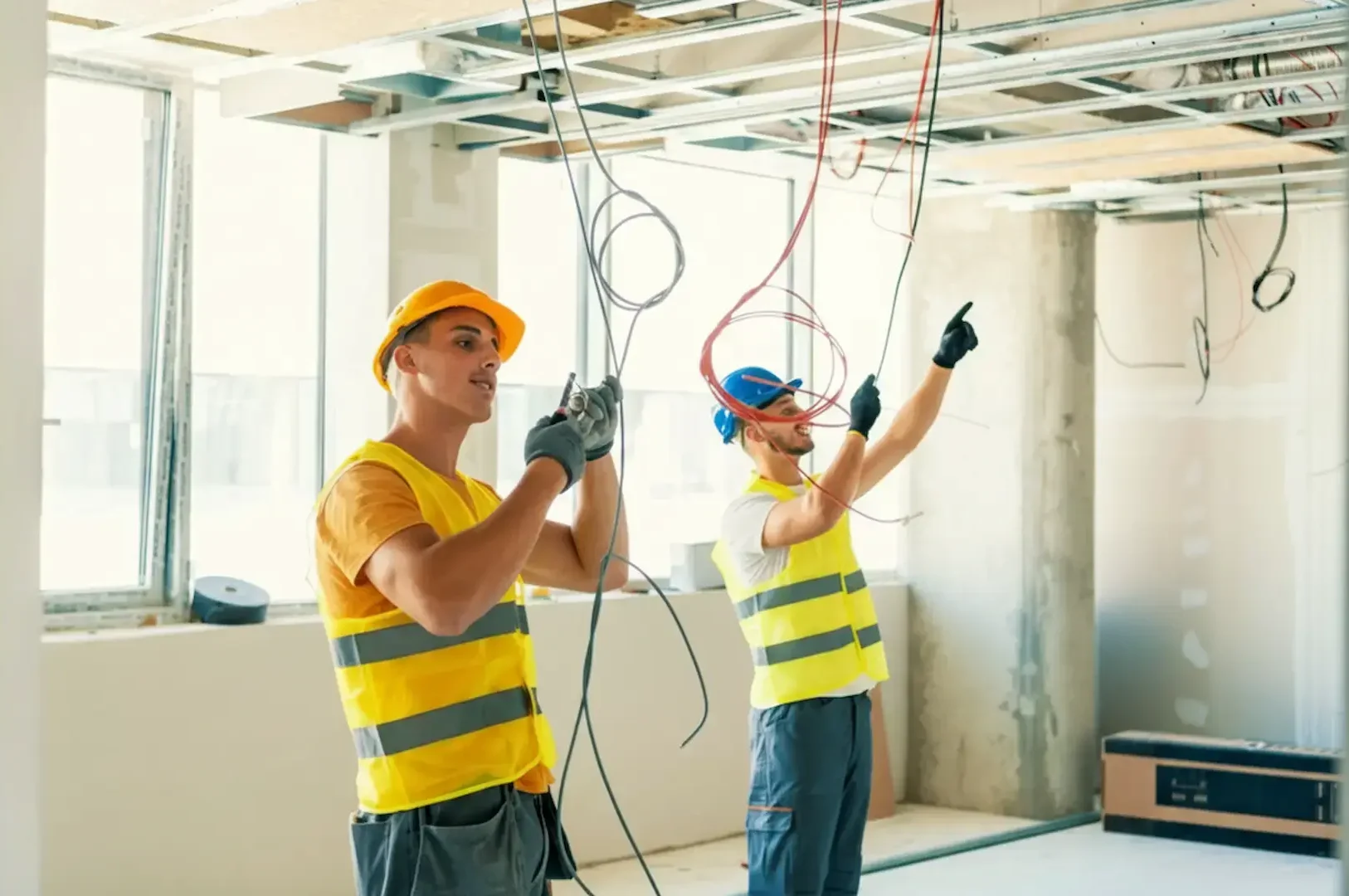
How Do Commercial Electrical Panel Upgrades Improve Business Safety and Efficiency by Addressing Common Electrical Issues?
Upgrading commercial electrical panels increases capacity, replaces aging components, and improves reliability with modern breakers and better circuit organization. New panels resolve common electrical issues such as insufficient bus capacity, obsolete fuse panels, and failing breakers that lead to overloads and fire hazards. The table below compares panel types, typical capacities, signs you need an upgrade, and the business benefits. Modern panels also make it easier to add loads and install surge protection, often using ENERGY STAR certified components when appropriate.
Use this comparison to estimate safety and operational gains and plan a formal site assessment.
| Panel Type | Typical Capacity | Signs You Need One | Business Benefit |
|---|---|---|---|
| Main lug / small commercial panel | 100–225 A | Repeated trips, warm cover, limited breaker space | Relieves overloads quickly and improves safety |
| Bolt-on breaker commercial panel | 225–400 A | Buzzing, aging breakers, incomplete labeling | Better reliability and cleaner circuit organization |
| Service entrance / switchgear | 400 A+ | Frequent service-side faults, growing load centers | Scalable capacity and reduced downtime for critical loads |
This comparison helps clarify upgrade options and points you to an on-site assessment and practical upgrade plan.
When Is a Commercial Electrical Panel Upgrade Necessary to Resolve Persistent Electrical Problems?
Consider a panel upgrade when load growth exceeds capacity, breakers are deteriorating, or aging equipment creates safety concerns. Common signs include repeated trips, buzzing or excessive heat, no spare breaker space, or the need to add high-demand equipment like new HVAC or EV chargers. A on-site assessment will evaluate load and service capacity and recommend solutions—sub panels, main breaker replacement, or higher-rated switch gear—and outline permitting and installation steps.
The assessment determines whether a simple breaker repair or a full panel replacement is the best long-term solution.