Two Suffolk County homeowners can ask for an electrical panel upgrade and receive very different quotes. That does not necessarily mean one electrician is overpriced or the other is inexpensive. The projects may not actually include the same work.
A panel replacement, electrical service upgrade, subpanel installation, meter-related work, and repair of existing panel equipment can all be described casually as a "panel upgrade," even though the electrical scope can be very different.
This guide explains what can make panel quotes vary, how to compare them, and why the right electrical solution should be based on the actual condition and power needs of the property rather than automatically moving every home to 200-amp service.
Looking for current panel-upgrade price ranges?
See the 2026 planning ranges above.
For a quote on your property, call
(631) 833-7663.
Why Can Electrical Panel Quotes Be So Different?
The first question is whether the contractors are actually quoting the same project.
A quote can change because of:
Panel vs. Service Work
Replacing the interior distribution panel is not necessarily the same project as changing the property's electrical service.
Existing Equipment
Meter equipment, service conductors, grounding, existing wiring, panel condition, and previous electrical work can affect the scope.
Electrical Demand
The loads the home currently uses and any significant new equipment being planned can affect whether additional capacity is necessary.
Accessibility
Panel location, service routing, finished construction, exterior access, and other site conditions can change the amount of work involved.
Utility Involvement
A true electrical service change can involve PSEG Long Island requirements that do not apply to every panel-related repair or replacement.
Project-Specific Requirements
Inspection, permit, equipment, and other requirements vary depending on the actual scope and property.
Panel Replacement and Service Upgrade Are Not the Same Thing
This is one of the most important distinctions when comparing electrical quotes.
| Electrical Work | What It Generally Means | Why Cost Can Differ |
|---|---|---|
| Panel repair | Correcting a specific panel, breaker, connection, or related electrical problem when focused repair is appropriate | The work may be limited to the identified problem rather than replacement of the entire panel |
| Panel replacement | Replacing the electrical distribution panel when its condition or project requirements justify replacement | Equipment, breakers, existing circuits, grounding, access, and related electrical conditions can affect scope |
| Subpanel installation | Adding additional circuit-distribution space where appropriate | Feeder routing, equipment location, circuits, and access affect the project |
| Service upgrade or service change | Changing the electrical service supplying the property | Can involve utility coordination, service equipment, inspection documentation, and additional work beyond the interior panel |
A subpanel does not create additional utility service capacity. It can provide additional circuit distribution, but whether the property has enough electrical capacity still depends on the existing service and electrical loads.
Does Every Panel Replacement Require a Service Upgrade?
No.
A property may need panel-related work without needing additional electrical service capacity.
The correct scope depends on:
- The condition of the existing panel.
- The existing electrical service.
- The loads the property needs to support.
- The equipment being installed.
- The condition of related electrical equipment.
- The reason the project is being considered.
This distinction matters because a true service upgrade can involve a broader and more expensive scope than replacing panel equipment alone.
For more help deciding which type of project may apply, read: Electrical Panel Repair vs. Upgrade in Suffolk County .
Does a 100-Amp Service Automatically Need to Be Upgraded?
No.
A 100-amp electrical service is not automatically unsafe or inadequate simply because a house is older or newer electrical equipment is available.
The appropriate service capacity depends on the electrical demand the property actually needs to support.
That means a decision should consider:
- Existing household electrical loads.
- Heating and cooling equipment.
- Electric cooking and water heating where applicable.
- EV charging.
- Workshops or other significant loads.
- Planned renovations or additions.
- The electrical service already available.
One home may be adequately served by its existing capacity while another may have a legitimate reason to increase service capacity.
Does an EV Charger Automatically Require 200-Amp Service?
No.
An EV charger installation is a reason to evaluate electrical capacity, not an automatic reason to replace the panel or install 200-amp service.
The project depends on:
- The charging equipment selected.
- The charging output being planned.
- Existing household loads.
- Available panel and circuit space.
- Existing service capacity.
- The installation route.
If the existing electrical system can support the planned charger, a service upgrade may not be necessary.
If available capacity is insufficient, the solution should be determined from the actual load and system conditions rather than assuming every EV charger requires the same amperage or panel size.
Do Heat Pumps or Electric Appliances Automatically Require a Bigger Panel?
No.
Electric ranges, dryers, heat pumps, water heaters, hot tubs, pool equipment, workshop equipment, and other significant loads can affect electrical demand, but each property starts with a different combination of existing loads and available capacity.
Adding one piece of equipment does not by itself reveal whether:
- The existing system can support it.
- A new circuit is all that is needed.
- Additional circuit distribution is appropriate.
- Panel equipment needs replacement.
- A service change is justified.
That decision should follow evaluation of the actual electrical system.
How Does the Existing Panel Affect the Quote?
Panel projects can vary because existing conditions vary.
Factors can include:
- The condition of the panel enclosure and internal equipment.
- Existing circuit configuration.
- Available breaker positions.
- Condition of wiring entering the panel.
- Previous modifications.
- Grounding and bonding conditions relevant to the project.
- Location and accessibility.
- Whether related service equipment is also part of the scope.
This is why a generic internet price for "a panel" cannot tell a homeowner what the entire electrical project will cost.
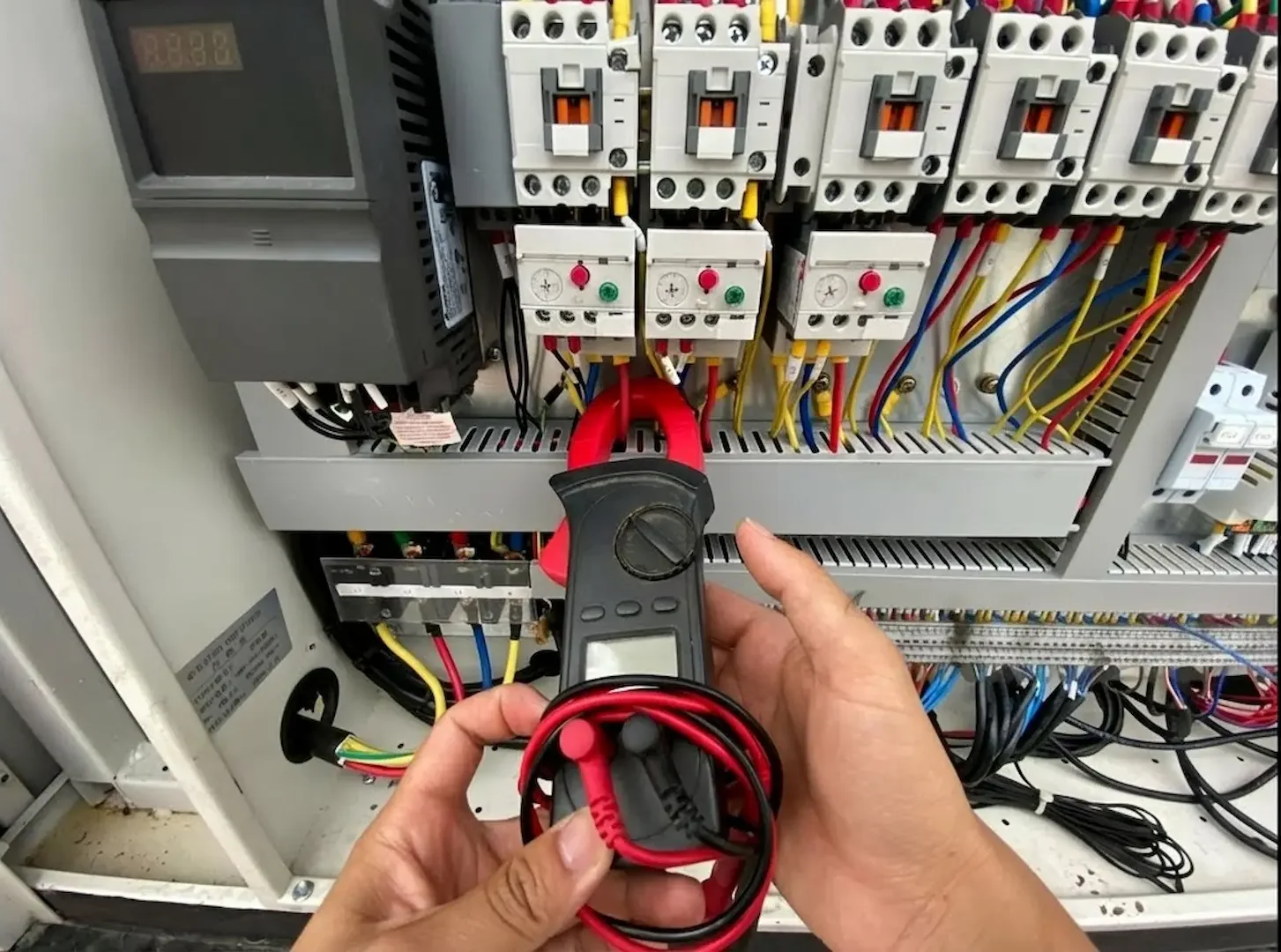
Existing panel condition and the actual project scope should be evaluated before deciding whether repair, panel replacement, additional distribution, or service work is appropriate.
Does a Fuse Box Automatically Need Replacement?
Not solely because it uses fuses.
An older fuse-based electrical system should be evaluated based on its condition, configuration, wiring, available capacity, and the needs of the property.
Concerns can arise when:
- Equipment is damaged or deteriorated.
- Improper modifications have been made.
- The system cannot appropriately support planned electrical work.
- There are recurring electrical problems.
- The existing equipment or configuration creates a project-specific concern.
But this website should not describe every fuse box as automatically unsafe, noncompliant, or requiring immediate replacement.
Do Breaker Trips and Flickering Lights Mean You Need a Panel Upgrade?
Not automatically.
Breaker trips and flickering lights are symptoms that can have several possible causes.
| Symptom | Possible Areas to Evaluate |
|---|---|
| Breaker repeatedly trips | Electrical loads, connected equipment, circuit wiring, fault conditions, breaker, or panel |
| Lights flicker or dim | Fixture, control, connection, circuit, changing loads, panel, service, or utility conditions |
| Panel becomes unusually hot | Panel equipment and related electrical conditions require professional evaluation |
| Buzzing or crackling | Electrical equipment, connections, wiring, breaker, or another fault condition |
| Partial power loss | Branch circuits, panel equipment, service equipment, or utility supply |
Diagnosis comes before deciding whether the solution is a circuit repair, breaker replacement, panel repair, panel replacement, or service work.
Learn more in our electrical panel safety and warning-sign guide .
How Do Meter and Service Equipment Affect Cost?
A project involving the electrical service can extend beyond the panel inside the home.
Depending on the property and scope, service-related work can involve equipment or conditions associated with:
- The meter location.
- Service-entrance equipment.
- Service conductors.
- The connection to utility service.
- Existing exterior equipment.
- The requested service capacity.
That additional scope is one reason a true service change can cost more than a panel-only project.
What Does PSEG Long Island Require for a Service Change?
PSEG Long Island has a specific process for changing or upgrading electrical service.
PSEG Long Island currently states that an electrical inspection certificate is required for all new services and service changes.
For service sizes of 300 amps or less, required information is entered through PSEG Long Island's service-change request. For services of 400 amps or more, and for all commercial services, PSEG Long Island requires a load letter completed by the electrician.
Review PSEG Long Island's current Upgrade or Change Service requirements .
Important Distinction
PSEG Long Island's service-change requirements apply when the electrical service itself is being changed. They should not be described as the process for every breaker replacement, panel repair, subpanel project, or routine electrical repair.
Does PSEG Long Island Charge for Every Service Upgrade?
Not every project has the same utility cost.
PSEG Long Island states that a payment or deposit may be required depending on the electrical load and specifications of the installation.
That is another reason not to build a universal "utility fee" into every online panel-cost estimate.
What About Permits and Electrical Inspections?
Project requirements depend on the municipality and the work being performed.
A true service change has documented PSEG Long Island requirements, including the electrical inspection certificate.
Other panel-related projects can have different municipal or inspection requirements.
It is therefore too broad to say every panel project follows one universal Suffolk County sequence of:
- Permit application.
- Plan review.
- Rough inspection.
- Final inspection.
- Utility approval.
The correct process should be determined from the actual scope and property.
Why Breaker Type Can Affect a Panel Quote
The breakers and protective equipment involved in a panel project can affect material cost.
But this article should not publish generic retail prices for individual AFCI, GFCI, or other breakers and then multiply those prices across an assumed panel configuration.
Breaker requirements depend on:
- The circuits involved.
- The existing wiring.
- The equipment being installed.
- The scope of the project.
- Applicable requirements for that specific installation.
The more useful homeowner question is whether competing panel quotes include comparable equipment and comparable electrical work.
Should a Panel Quote List Every Individual Material Price?
Not necessarily.
Contractors can structure proposals differently.
A useful panel quote should give the homeowner enough information to understand the project being proposed, but there is no universal rule that every proposal must show:
- Every individual breaker at retail price.
- An hourly labor calculation.
- A separate markup percentage.
- A universal permit allowance.
- An identical itemization format from every contractor.
What matters is understanding what electrical scope is included and whether competing proposals are reasonably comparable.
How Should You Compare Two Panel Quotes?
Compare the work before comparing the numbers.
Is the Cheapest Panel Quote the Best Choice?
Not necessarily.
A lower quote can be perfectly legitimate, but it may also describe less work.
Before deciding, ask:
- Are both contractors replacing the same equipment?
- Is one quote a panel replacement while the other is a full service change?
- Are related meter or service components included?
- Does one quote include additional circuit work?
- Are inspection or utility requirements different?
- Are both contractors properly licensed and insured?
Two prices cannot be compared fairly until you understand what each one actually buys.
Does a More Expensive Quote Mean Better Work?
Not automatically.
Price alone does not prove workmanship, just as the lowest price does not prove poor workmanship.
A homeowner should consider:
- The electrician's licensing and insurance.
- The proposed scope.
- Whether the recommendation is tied to the actual electrical system.
- Whether major equipment selections are clear.
- Whether the contractor explains why the work is needed.
- Whether unnecessary upgrades are being assumed.
Is a New Panel Always a Safety Upgrade?
A panel replacement can address legitimate equipment or electrical concerns, but it should not be sold as a universal cure for every electrical problem.
A new panel will not automatically correct:
- Damaged wiring elsewhere in the house.
- A problem inside an appliance.
- An unrelated branch-circuit fault.
- A utility-side outage.
- Every flickering-light condition.
- Every recurring breaker problem.
The actual electrical problem still needs to be diagnosed.
Does an Old Panel Automatically Need Replacement?
No.
Age can be relevant, but panel replacement should be based on more than the installation date.
An evaluation may consider:
- Physical condition.
- Signs of overheating or deterioration.
- Recurring electrical problems.
- Equipment configuration.
- Available circuit distribution.
- Current electrical demand.
- Planned future electrical work.
Read: Why Your Home May Need an Electrical Panel Upgrade for a more detailed decision guide.
What If the Panel Is Warm, Buzzing or Damaged?
Significant unexplained heat, burning odors, visible damage, sparking, or unusual buzzing around electrical equipment deserve professional attention.
Do not remove the panel cover or attempt to inspect internal components yourself.
Smoke, Fire or Serious Electrical Injury?
Leave the affected area and call 911. For an urgent property-specific electrical problem without an immediate life-safety emergency, RJ & Son Electric provides 24/7 emergency electrical service throughout Suffolk County.
Call (631) 833-7663 for current emergency availability.
How Long Does a Panel Upgrade Take?
There is no universal project duration.
Timing depends on whether the project is:
- A focused panel repair.
- A panel replacement.
- A subpanel installation.
- A full electrical service change.
- A project involving meter or service equipment.
- Part of a larger renovation.
Utility involvement, inspections, project access, equipment availability, and the condition of the existing system can also affect scheduling.
The expected schedule is best discussed after the electrical system and actual scope have been evaluated.
Should You Finance a Panel Upgrade?
Financing is a personal financial decision, not an electrical recommendation.
This article should not imply that RJ & Son Electric offers contractor financing or that a utility rebate automatically applies to a panel project unless a specific current program has been confirmed.
Homeowners who choose to finance work can compare their own available options separately from the electrical recommendation itself.
What Does RJ & Son Electric Evaluate Before Recommending a Panel Upgrade?
The purpose of an evaluation is to understand what the property actually needs.
Depending on the project, considerations can include:
- The existing panel and service.
- The reason the homeowner is considering the project.
- Current electrical loads.
- Planned future loads.
- Available circuit distribution.
- Visible equipment condition.
- Related electrical problems.
- Whether the project is a panel issue or a broader service-capacity issue.
Richard Gruttola is the licensed Master Electrician behind RJ & Son Electric and can explain whether the appropriate solution is repair, panel replacement, a subpanel, a service change, or another electrical approach.
Licensed & Insured
RJ & Son Electric is licensed and insured. Richard Gruttola is the Master Electrician behind the company, License ME-72156.
Diagnosis Before Replacement
Breaker trips, flickering, panel age, or an EV charger should not automatically lead to a 200-amp service recommendation.
Straightforward Pricing
The goal is to explain the electrical work being recommended and price the actual project rather than forcing every property into the same online package.
Suffolk County Service
RJ & Son Electric provides residential, commercial, and light industrial electrical service throughout Suffolk County.
2026 Panel Upgrade Planning Ranges for Long Island
For early budgeting, the ranges below are reasonable planning estimates for Long Island. They are not RJ & Son Electric quotes, and the actual cost of your project can fall below or above these ranges depending on the property.
| Type of Project | General 2026 Planning Range | What Can Change the Price |
|---|---|---|
| Panel replacement without a major service change | Approximately $1,500 to $3,000+ | Panel size, breaker requirements, existing wiring, grounding, location, access, and additional repairs |
| 100A to 200A service upgrade | Approximately $3,000 to $6,000+ | Meter equipment, service entrance, grounding, utility requirements, inspection, overhead or underground service, and site conditions |
| Fuse box replacement | Often several thousand dollars | Existing wiring condition, required circuit work, grounding, service capacity, and whether the project also changes the electrical service |
| Complex service upgrade | Can exceed $6,000 | Meter relocation, service mast work, underground service, extensive wiring changes, property conditions, and utility requirements |
These are budgeting ranges, not advertised RJ & Son Electric prices. An on-site evaluation is needed before Richard can determine what your specific panel or service upgrade requires.
Benefits of Replacing an Outdated or Inadequate Panel
A panel replacement should solve a real electrical need. When replacement or additional capacity is appropriate, the project can provide several practical benefits.
Additional Capacity
A properly planned electrical upgrade can support new loads when the existing system does not have adequate capacity.
More Circuit Space
Updated equipment can provide space for circuits required by renovations, additions, EV charging, or other projects.
Replacement of Worn Equipment
Damaged, deteriorated, or unsuitable electrical equipment can be replaced with equipment appropriate for the property.
Cleaner Circuit Organization
A professionally completed panel project should leave circuits clearly identified and the installation neat and serviceable.
More capacity does not automatically mean lower electricity use, and a new panel does not by itself correct every wiring problem in a home. The value of the project comes from addressing the actual electrical need correctly.
Why a Load Evaluation Matters
The number printed on the panel does not tell the entire story. A professional evaluation considers the electrical loads already served by the property and the additional equipment the homeowner plans to add.
That information helps determine whether the existing service has adequate capacity or whether a panel, subpanel, circuit, or service change may be appropriate.
New electrical loads can require changes beyond the panel itself, depending on the existing system.
What "Panel Upgrade" Can Mean
The term covers more than one type of project, and each carries a different price:
Breaker replacement
If the panel itself is sound but individual breakers are failing or outdated, replacing breakers is the lightest intervention. It solves nuisance tripping caused by worn breakers without touching the panel. This only works when the panel and service size are otherwise adequate.
Breaker-box swap (like-for-like)
The panel is replaced with a similar size and capacity. The wiring, meter, and service entrance stay as they are. This is the simplest scope and usually the most affordable path when the existing service size still meets your needs.
Subpanel addition
A smaller secondary panel adds circuit space without replacing the main panel. It works when the main service has capacity to spare but you have run out of breaker slots, for example during a kitchen remodel or garage workshop build-out.
Service upgrade (capacity increase)
The home moves to a larger service, for example from 100 amps to 200 amps. This usually involves the meter, the service entrance cable, grounding, and sometimes the utility connection. More components change, so the investment is higher.
Knowing which scope your home actually needs is the first step.
For help selecting the right panel for your home, see our guide on how to choose the right electrical panel.
Why Two Homes Get Different Quotes
Your neighbor paid one price, and your quote is different. Common reasons:
- Different scopes. Your neighbor had a like-for-like swap. You need a service upgrade because of the new addition. Those are different projects.
- Different starting conditions. A 1990s panel in good shape with copper wiring is a cleaner job than a 1970s panel with corrosion and aluminum branch circuits.
- Different inclusions. One quote includes permits, inspection scheduling, drywall patching coordination, and cleanup. Another does not. Compare line by line, not just the bottom number.
- Different business models. A licensed Master Electrician who does the work personally prices differently than a company that sends whoever is available that day.
How to Compare Estimates Fairly
Get two or three written estimates and check them against each other:
- Same scope? Make sure each electrician is pricing the same project. Ask each one: "Is this a like-for-like swap or a service upgrade, and why?"
- Permits included? Confirm the permit and inspection are in the price and handled by the electrician.
- Materials specified? The panel brand and breaker type should be named, not vague.
- Warranty in writing? Ask what happens if something is not right after the inspection passes.
- Cleanup and patching? Panel work opens walls. Know who handles what before the work starts.
- Timeline? Ask how long the power will be off and what the inspection scheduling looks like.
If one quote is dramatically lower than the others, ask what is missing. The cheapest bid with the thinnest scope is rarely the cheapest finished project.
What Never Gets Skipped
Permits and inspections. Proper grounding. Correctly sized breakers and conductors. Torque specs on every connection. These are not upgrades or add-ons. They are the job. Any quote that treats them as optional is not a quote you should accept.
Where Homeowners Waste Money
Paying for capacity you will never use
Bigger is not automatically better. A 200-amp service for a small home with gas appliances and no plans for an EV or addition is money spent on nothing. A load calculation, not a guess, should size the service.
Fixing the symptom instead of the problem
Replacing breakers three times when the panel bus is corroded, or adding a subpanel to a failing main panel, spends money twice: once on the patch, once on the real fix. Diagnose first.
Ignoring the service entrance
A new panel connected to a deteriorated service entrance is a half-finished job. If the mast, meter socket, or lateral needs work, doing it with the panel project is cheaper than a second visit later.
Choosing on price alone
The lowest bid often reflects the thinnest scope: no permit, no inspection scheduling, vague materials, no warranty. When the inspector flags the work or something fails in a year, the "cheap" job becomes the expensive one.
Ways to Keep the Project Affordable Without Cutting Safety
- Time it with other work. A panel upgrade during a renovation, addition, or rewiring shares labor, wall access, and inspection visits. One coordinated project beats two separate ones.
- Get the scope right the first time. An accurate diagnosis prevents paying for work you do not need and rework you should never have needed.
- Ask about phasing. Sometimes a panel replacement now and a planned service upgrade later, tied to a future addition, is the sensible sequence. A good electrician will map that out honestly.
- Keep the panel accessible. Clear the area around the panel before the electrician arrives. Time spent moving storage is time you are paying for.
- Decide on equipment upfront. Change orders mid-project cost more than decisions made during planning. Know whether you want standard or smart breakers before work begins.
Will a Panel or Service Upgrade Lower My Electric Bill?
Not by itself.
An electrical panel distributes electricity, and the service supplies electrical capacity. Replacing either one does not automatically make the appliances and equipment in the home consume less energy.
Energy savings come from changes that actually reduce electrical consumption, such as more efficient lighting, HVAC equipment, appliances, or controls.
Does Newer Electrical Equipment Automatically Increase Resale Value?
Electrical improvements can be useful to a homeowner or future buyer when they address an actual electrical need, but there is no universal resale-value increase that can be promised for a panel replacement or 200-amp service.
Home value depends on many factors, and buyers have different priorities.
The electrical recommendation should therefore be based on what the property needs rather than a promise of investment return.
Does a New Electrical Service Guarantee Code Compliance Everywhere in the Home?
No.
A service project addresses the electrical work within that project scope.
Existing wiring, devices, equipment, previous modifications, and conditions elsewhere in the home may be outside that scope.
A new service should therefore not be marketed as a universal way to make every part of an older home's electrical system current.
Does Hiring a Master Electrician Guarantee Faster Permits?
No.
A licensed Master Electrician brings professional electrical qualifications to the project, but a contractor does not control municipal review schedules, inspection availability, or utility processing times.
Local experience can be useful, but it should not be presented as a guarantee of faster approval or fewer inspection issues.
Frequently Asked Questions About Panel Upgrade Quotes
Why can two electrical panel quotes be thousands of dollars apart?
The projects may include different work. One quote might cover panel replacement while another includes a service change, meter or service equipment, additional circuits, grounding-related work, utility coordination, or other electrical scope. Compare what is included before comparing the final price.
Is panel replacement the same thing as a 200-amp service upgrade?
No. Panel replacement concerns the electrical distribution panel. A service upgrade changes the electrical service supplying the property. Some projects involve both, while others do not.
Does every 100-amp home need 200-amp service?
No. The appropriate service capacity depends on the electrical loads the property needs to support. Existing 100-amp service by itself does not automatically require an upgrade.
Does installing an EV charger require a panel or service upgrade?
Not automatically. The charger, intended charging output, existing electrical loads, available circuit space, service capacity, and installation conditions should be evaluated before deciding whether additional panel or service work is necessary.
Does a subpanel increase the electrical service capacity of my home?
No. A subpanel can add circuit distribution space, but it does not create additional electrical capacity from the utility.
Does a fuse box automatically need replacement?
Not solely because it uses fuses. Its condition, configuration, wiring, capacity, previous modifications, and the electrical needs of the property should be evaluated before recommending replacement.
Does PSEG Long Island need to be involved in every panel project?
No. PSEG Long Island has specific requirements when electrical service is being upgraded or changed. Those requirements should not automatically be applied to every panel repair, breaker replacement, or subpanel project.
What does PSEG Long Island require for an electrical service change?
PSEG Long Island currently requires an electrical inspection certificate for all new services and service changes. Services of 400 amps or more and all commercial services also require a load letter completed by the electrician as part of the service-change request.
How long does a panel replacement or service upgrade take?
The schedule depends on the electrical scope, existing equipment, accessibility, utility involvement, inspections, equipment availability, and other project conditions. The expected schedule is best discussed after the actual project has been evaluated.
Where can I see current Suffolk County panel-upgrade cost ranges?
RJ & Son Electric maintains a separate 2026 electrical panel upgrade cost guide with planning ranges and explanations of the factors that affect panel replacement and service-upgrade costs.
Related Electrical Panel Resources
Panel Repair vs. Upgrade
Understand when the right solution may be repair, replacement, additional distribution, or a broader service evaluation.
Why a Home May Need a Panel Upgrade
Learn which conditions can justify considering a panel upgrade without treating home age or 100-amp service as automatic replacement triggers.
Panel Upgrades & Service Changes
Visit the main RJ & Son Electric panel service page for project and quote information.
Need a Panel Upgrade Quote in Suffolk County?
RJ & Son Electric provides panel repairs, panel replacement, subpanels, service changes, and related electrical work throughout Suffolk County. Richard Gruttola is a licensed and insured Master Electrician who can evaluate the existing system and explain what the property actually needs before recommending a major electrical upgrade.
Licensed & Insured Master Electrician serving Suffolk County, NY
Master Electrician License ME-72156
(631) 833-7663 · RichG@rjandsonelectric.com