Electrical installation and repair on Long Island demand local code knowledge, fast response, and experienced crews to keep people and property safe. This guide explains common electrical repair services across Suffolk County, how our licensed electricians diagnose problems, and when an issue becomes an emergency. We also cover key installation projects — from panel upgrades (including why 200 amp service matters) to EV charger installs, generator transfer switch planning, and commercial work that improves uptime. Read on for clear signs of trouble, straightforward safety steps, and planning checklists for backup power and EV readiness. Throughout, you’ll see how RJ & Son Electric — a licensed, insured Master Electrician led by Richard Gruttola — serves local customers with transparent pricing and professional workmanship on every electrical installation.
What Electrical Installation & Repair Services Are Available in Suffolk County?
Local electrical services cover everything from outlets and circuits to lighting, surge protection, and panel work. Our technicians repair unsafe wiring, faulty breakers and switches, and distribution problems that threaten safety or equipment. Every installation and repair follows applicable code requirements: we isolate faults, replace defective parts, and test systems under load to reduce fire risk and protect electronics. Knowing the common repair categories helps homeowners and businesses set the right diagnostic and repair priorities for their electrical installation needs.
The most common repair types include:
- Outlet and switch repairs to restore proper grounding and fix wiring mistakes.
- Breaker and circuit work, from replacing damaged breakers to troubleshooting nuisance trips.
- Locating and repairing wiring faults caused by age, rodents, or overheated conductors.
- Lighting repairs and fixture replacement for both interior and exterior systems.
- Surge protection installation to shield sensitive electronics from transient voltage events.
Most jobs begin with a diagnostic visit to map circuits and test components. From there we provide a clear estimate and a prioritized plan. When permits are required we handle them, then complete repairs and perform final testing and documentation to confirm code compliance and reliable operation of your electrical installation.
How Licensed Electricians Diagnose & Fix Electrical Installation Issues?
Licensed electricians follow a methodical diagnostic process to find root causes instead of treating symptoms. Typical steps include a visual panel inspection, non-contact voltage and continuity checks, isolating circuits, and load testing to reproduce faults. We trace wiring paths — breakers, main panels, subpanels, and conduit runs — to find loose connections, corrosion, or overloaded circuits. Repairs commonly involve replacing breakers, reterminating neutral and ground conductors, repairing or replacing damaged cable, or upgrading components so they meet actual load and code requirements for a safe electrical installation.
This approach reduces repeat visits and improves safety by confirming proper grounding and bonding and by testing protection devices. Technicians document findings and recommended next steps so property owners can choose immediate repairs, a panel upgrade, or further inspection. A thorough diagnosis naturally leads to planned upgrades or emergency action when hazards are found in an existing electrical installation.
When to Call for Emergency Electrical Installation & Repairs?
Call for emergency electrical installation and repairs when conditions pose immediate danger to people or property or when essential systems fail. Warning signs include visible sparks, a burning or acrid smell near outlets or panels, persistent outages that affect safety equipment, smoke, or exposed live wiring. If you see those signs, switch off affected circuits only if you can do so safely, evacuate the area if there’s smoke or fire, and call emergency services for life-safety threats before contacting an electrician for emergency electrical installation support.
If you notice any of the following, request emergency support for your electrical installation:
- Repeated arcing, visible sparks, or a burning smell from outlets, switches, or panels.
- Smoke or charring around devices or wiring.
- Persistent outages affecting refrigeration, alarms, medical equipment, or other critical systems.
- Exposed or severed conductors, or water contacting electrical components.
While you wait for professional help, keep people away from the hazard and avoid using suspect circuits. Emergency responders will quickly assess the situation, apply temporary mitigation (such as isolating circuits), and recommend a repair plan to restore safe, code-compliant electrical service.
Why Choose RJ & Son Electric for Panel Upgrades & Electrical Installation in Suffolk County?
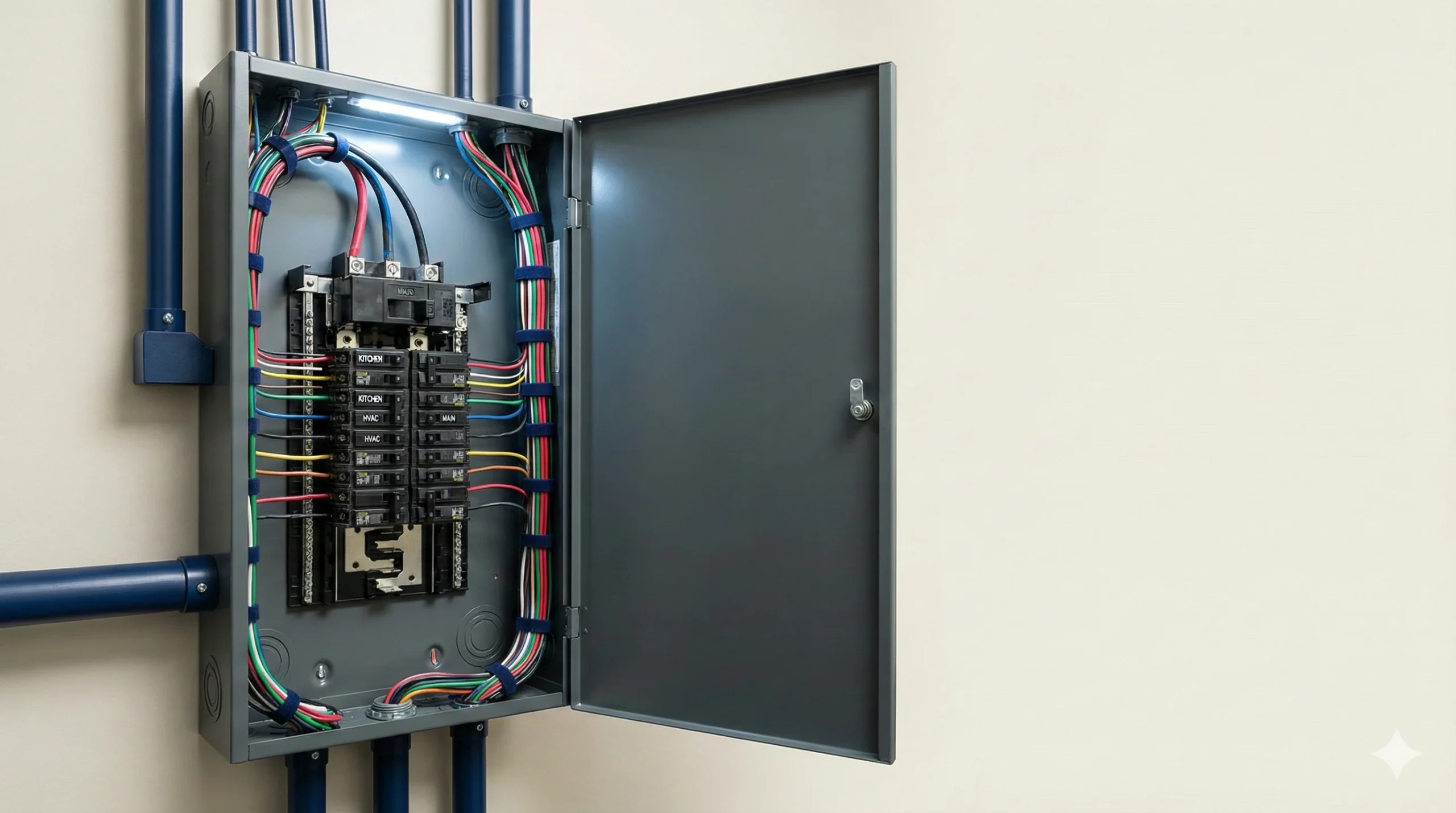
Panel upgrades increase capacity and safety to support modern demands like EV chargers, HVAC, and kitchen appliances. The process starts with a professional assessment and load calculation. RJ & Son Electric is a licensed, insured Master Electrician service in Suffolk County that focuses on honest, upfront pricing, clear communication, and tidy, professional workmanship. A typical upgrade includes a site visit and load analysis, permit handling and inspection coordination, installation of a new main panel or subpanel, and final testing and documentation to meet local code for your electrical installation.
To compare common upgrade options and considerations for your electrical installation, see the table below for capacity, typical use, installation timeframe, and common cost drivers.
| Service Rating | Typical Use Case | Installation Timeframe | Common Cost Factors |
|---|---|---|---|
| 60 amp | Small service for limited circuits or minor additions | 2–4 hours | Panel accessibility, minor rewiring needs |
| 100 amp | Older homes with moderate appliance use or small remodels | 1 day | Panel replacement, permit fees, conductor upgrades |
| 200 amp | Modern homes, EV chargers, HVAC, future-proofing | 1–2 days | Meter-base work, service conductors, inspection complexity |
Higher capacity options support more simultaneous loads and future additions but often require coordination with the utility and inspections. A licensed electrician confirms the correct rating with a load calculation and service inspection to avoid undersizing or unnecessary work for your electrical installation.
Signs You Need an Electrical Panel Upgrade or New Electrical Installation
You may need a panel upgrade when breaker trips become frequent, fuse-based equipment is still in use, or appliances demand more power than the service can deliver. These signs usually build over time but become clear through repeated interruptions. A licensed electrician will perform a load calculation and inspection to turn those observations into a specific upgrade recommendation for your electrical installation.
Common indicators include:
- Frequent tripped breakers during normal use, signaling overloaded circuits.
- Fuse-based service or very old panels lacking modern safety features.
- Flickering lights or voltage drops when high-demand appliances start.
- Not enough breaker spaces for new circuits such as EV chargers or dedicated appliance lines.
Addressing these signs early prevents nuisance outages and reduces fire risk. A professional load analysis guides the upgrade planning process for your electrical installation.
Benefits of a 200 Amp Panel Upgrade for Modern Electrical Installation Needs
Upgrading to a 200 amp main service increases available capacity, improves safety margins, and makes it easier to add high-demand equipment without overloading circuits. It provides a larger main breaker and more breaker spaces for dedicated circuits to EV chargers, central air, and multiple heavy appliances running at once. This upgrade reduces nuisance trips, lowers conductor stress, and creates headroom for future electrical needs.
Residential Panel Upgrades for EV Charging & Electrification
A study by the California Center for Sustainable Communities at UCLA examined residential electric service panel needs as households electrify and add more electric vehicles. The LA100 scenarios project significant increases in electric loads from vehicle charging and other end-use electrification. Rising demand can outpace the rated capacity of existing panels, creating a barrier to expanding service capacity for some customers. This underscores the importance of professional electrical installation for panel upgrades.
Primary benefits include:
- Increased capacity: Run more heavy loads at once without overloading the service.
- Enhanced safety: Modern panels use improved breaker technology and allow room for surge protection devices.
- Future-proofing: Makes adding EV chargers or subpanels during renovations simpler so your electrical installation can meet future demands.
Upgrading to 200 amps often involves coordinated inspections and possible meter-base work. Planning with a licensed Master Electrician ensures permits and testing are completed correctly for dependable, long-term performance of your electrical installation.
EV Charger Electrical Installation on Long Island
EV charger installation on Long Island starts with a site assessment: panel capacity, ideal charger location, and vehicle connector compatibility. After a load calculation and permit submission, installers run a dedicated circuit sized for the charger, install mounting and conduit, and complete commissioning and testing to meet local inspection requirements. Level 2 residential installation is the most common option, though the final scope depends on panel capacity and site specifics.
Below is a comparison of common charger types and what residential customers can expect for electrical installation.
| Charger Type | Voltage / Power | Typical Installation Time | Vehicle Compatibility |
|---|---|---|---|
| Level 1 | 120 V / 1–1.5 kW | Minimal (uses existing outlet) | All EVs (slow, overnight charging) |
| Level 2 | 240 V / 3.3–11 kW typical | 3–6 hours | Most EVs with J1772; Tesla with adapter |
| DC Fast (public) | 400–800 V / 50 kW+ | Commercial-scale project | High-speed charging for compatible vehicles |
Level 2 is the go-to residential choice because it delivers much faster charging with a reasonable installation scope. Permits and inspections are standard in Suffolk County, and a load analysis will determine whether a panel upgrade or a dedicated circuit is required for your EV charger electrical installation.
For homeowners, RJ & Son Electric handles the assessment, coordinates permits, and installs Level 2 chargers with attention to compatibility and code-compliant wiring. Working with a licensed Master Electrician helps ensure the charger and site wiring meet manufacturer and inspection requirements for a safe installation.
Benefits of Level 2 EV Chargers for Residential Electrical Installation
Level 2 chargers cut charging time dramatically compared with Level 1. Operating at 240 volts and typically delivering 3.3–11 kW, a Level 2 charger can replenish most EVs in a few hours rather than requiring an entire night on a standard outlet. That convenience makes daily driving simpler, supports larger battery packs, and is a worthwhile investment for many homeowners.
Key advantages include faster charge times, a dedicated circuit that reduces household power conflicts, and broad vehicle compatibility via the J1772 standard or manufacturer adapters. Faster home charging improves vehicle availability for multi-driver households and reduces reliance on public chargers when installed properly by a licensed electrician.
Ensuring EV Charger Compatibility & Safety in Electrical Installation
Compatibility and safety start with a checklist: confirm panel capacity, correct breaker sizing, proper cable type, reliable grounding, and strict adherence to the charger manufacturer’s instructions. Proper installation includes a dedicated circuit sized for the charger’s continuous load, correct conductors and conduit, and verification of ground-fault protection. Technicians also confirm the vehicle’s connector type and that the charger’s communication features are configured correctly.
Important compatibility and safety checks for electrical installation:
- Confirm the vehicle’s inlet and required connector standard.
- Perform a load calculation to verify the panel can support the charger without overload.
- Install a dedicated breaker and conductors sized for the charger with proper grounding.
- Verify mounting location, weather protection, and tamper-resistance per code.
Planning for these items prevents compatibility problems and costly rework, and ensures the charger operates reliably and passes inspection — making your electrical installation safe and efficient.
Generator Transfer Switch Electrical Installation: Key Considerations
A transfer switch prevents dangerous backfeed into the utility grid and lets you switch loads safely during an outage. Choosing the right switch and sizing the generator are central to an effective backup-power plan. Transfer switches come as manual or automatic units — the choice affects convenience, cost, and how seamless power restoration will be. Proper installation includes siting the generator, correct wiring and grounding, and coordinating permits and inspections to meet Suffolk County requirements.
These devices provide safe load transfer and system protection, essential for any generator electrical installation.
Automatic Transfer Switch Operation & Protection
Automatic transfer switches (ATS) move loads between power sources without manual intervention. Proper ATS design and electrical installation deliver automatic switching, overload and short-circuit protection, and safe generator stop functions to ensure reliable, hands-free operation during outages.
When planning backup power, start by prioritizing essential circuits, calculating required kW, and selecting a transfer switch and generator sized to those loads. Installers also consider fuel access, ventilation, and secure mounting, and they handle inspections and documentation to maintain compliance for your electrical installation.
The following table compares manual, automatic, and hybrid transfer switches by operation, cost range, safety considerations, and recommended generator size for electrical installation.
| Transfer Switch Type | Operation | Typical Cost Range | Recommended Generator Size |
|---|---|---|---|
| Manual | User-initiated transfer of loads | Lower initial cost | 5–20 kW depending on loads |
| Automatic | Automatic sensing and transfer on outage | Higher cost, seamless transfer | 7–30+ kW for whole-house scenarios |
| Hybrid (selective loads) | Automatic switching of priority circuits | Moderate to high | Sized to essential circuit load |
Automatic switches deliver seamless backup at a higher upfront cost, while manual switches are more economical for selective or occasional use. Key safety considerations for installation include proper interlocks, overcurrent protection, and preventing backfeed to the utility.
Manual vs. Automatic Transfer Switches in Electrical Installation
Manual transfer switches require you to start the generator and move the switch to transfer power. They’re less expensive and suit partial backup needs. Automatic transfer switches detect loss of utility power, start the generator, and transfer loads without intervention — ideal for unattended locations or mission-critical systems, but more complex and costly to install.
In short: manual is simple and cost-effective for occasional use; automatic offers hands-free reliability for critical loads. Your choice should reflect generator size, which circuits are essential, and how much downtime you can tolerate during an outage for your electrical installation.
Planning Backup Power Electrical Installation for Suffolk County Homes
Plan backup power by listing essential loads (refrigeration, HVAC, sump pumps, medical equipment), estimating simultaneous demand to size the generator, and choosing the right transfer switch for whole-house or selective coverage. Then submit permits, schedule professional installation with a licensed electrician, and set up routine testing and maintenance.
A staged plan works best: inventory loads, size equipment, secure permits, install to code, and test under load. Regular testing and service keep the system reliable and ensure inspection compliance for your electrical installation.
Commercial Electrical Installation Services for Suffolk County Businesses
Commercial electrical installation services include lighting upgrades, emergency systems, tenant fit-outs, and preventive maintenance to improve energy efficiency, safety, and uptime. Tailored maintenance schedules reduce emergency repairs and keep critical systems online. Upgrades like LED lighting, emergency lighting compliance, and surge protection lower operating costs and enhance occupant comfort while meeting code and inspection requirements for your commercial electrical installation.
Common commercial services include panel installation and maintenance, dedicated circuits for equipment, emergency and exit lighting systems, and surge protection for sensitive electronics. Projects follow a scoped schedule and testing plan to minimize business disruption and preserve continuity during installation.
The essential commercial offerings typically involve:
- Preventive inspections and thermal imaging of panels to find hot connections early.
- Emergency lighting and exit sign testing and repair to meet safety codes.
- Tenant fit-outs with dedicated circuits and power distribution for new occupants.
- Energy-efficiency upgrades such as LED retrofits and lighting controls.
These services reduce downtime and liability, improve energy performance, and extend equipment life — lowering total cost of ownership over time.
Essential Commercial Electrical Installation & Maintenance Services
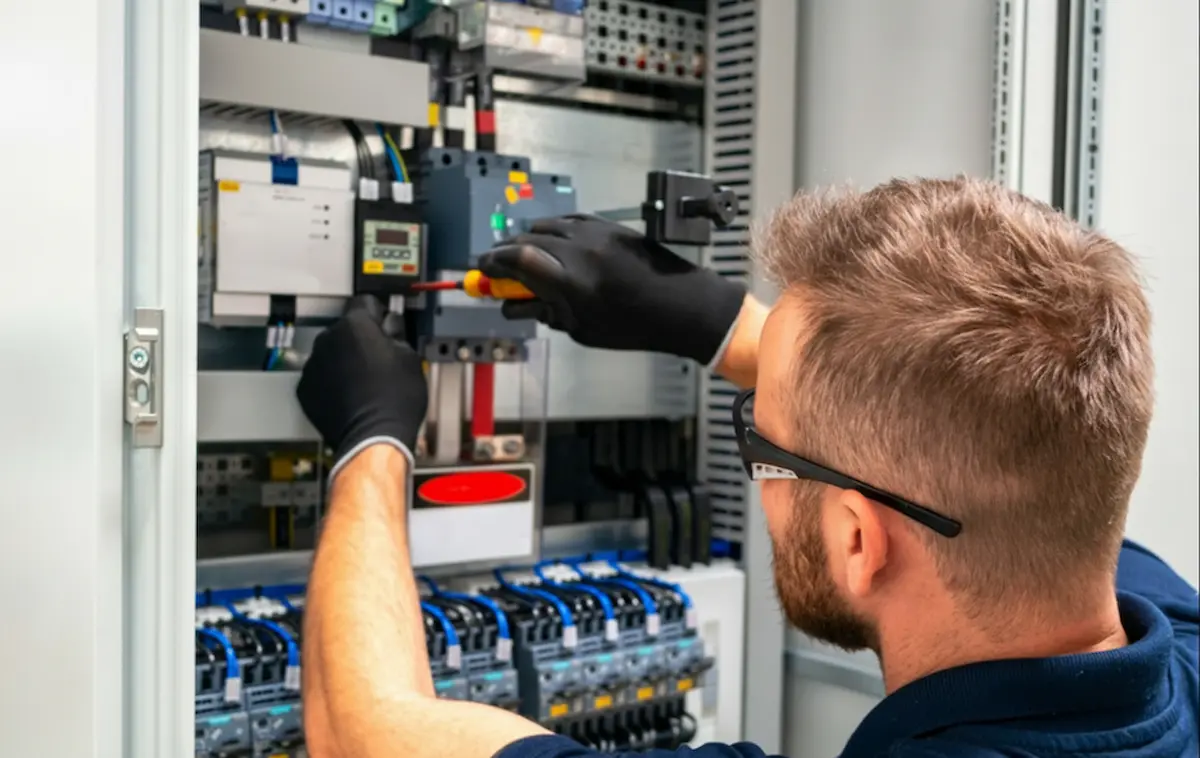
Key commercial maintenance tasks include scheduled preventive inspections, thermal scans of electrical gear, load testing of critical circuits, emergency lighting checks, and surge protection verification. Preventive programs catch loose connections, overloaded circuits, and aging components before they cause outages or fire hazards. Regular testing of emergency lighting and signage ensures life-safety systems work when needed and inspections verify code compliance for your electrical installation.
Recommended frequencies vary by asset criticality: general panel inspections annually, thermal scans annually or biennially, and emergency lighting checks monthly or per code. A documented maintenance plan increases uptime and helps businesses plan capital improvements strategically for their electrical installation.
Retail & Office Electrical Installation Upgrades for Efficiency
Retail and office upgrades — LED retrofits, lighting controls, and dedicated circuits for HVAC and IT systems — reduce energy use, lower operating costs, and improve the customer and staff experience. LEDs cut wattage while improving light quality; controls like occupancy sensors and scheduling cut unnecessary runtime. Dedicated circuits and power conditioning protect sensitive equipment and prevent interruptions from shared loads, making these upgrades highly valuable.
Examples include LED retrofits that lower energy and maintenance costs and lighting controls that adjust output based on occupancy and daylight. When professionally installed and commissioned, these measures deliver measurable utility savings and a faster return on investment.
RJ & Son Electric: Your Trusted Partner for Electrical Installation
RJ & Son Electric, owned and operated by Richard Gruttola, is a local Suffolk County Master Electrician service. We provide licensed, insured workmanship, honest upfront pricing, clear communication, and a clean jobsite when the work is done. Those are the qualities customers look for when choosing a contractor for panel upgrades, EV charger installs, emergency repairs, or commercial electrical projects. We handle transparent estimates, permit coordination, and emergency response so clients get reliable, code-compliant results for every electrical installation.
To schedule an assessment or request emergency service, contact RJ & Son Electric by phone or email. Working with a licensed Master Electrician ensures permits, inspections, and final testing are completed correctly to protect people and property during any electrical installation.
Ensuring Quality in Electrical Installation: Licensing & Professionalism
Licensing shows technical training and legal authorization to perform electrical installation work under Suffolk County rules. Insurance protects property owners from accidental damage or liability during the job. Professional practices include pulling required permits, coordinating inspections, using code-compliant materials, and documenting final testing. Verifying a provider’s Master Electrician credentials and insurance reduces risk and helps ensure the electrical installation will pass inspection.
Ask to see license numbers and proof of insurance, and confirm that permits will be filed. Those steps protect homeowners and businesses by making sure electrical systems are safe, inspected, and legally compliant after installation.Customer Reviews: RJ & Son Electric’s Electrical Installation Workmanship
Customers often praise our clear communication, neat workmanship, and quick emergency response. Straightforward estimates and transparent pricing build trust on jobs from small repairs to major upgrades. Public reviews highlight professionalism, attention to safety, and follow-through on inspections and testing.
To request a quote or discuss an electrical installation project, reach out by phone or email. A licensed Master Electrician can schedule an assessment, provide a clear estimate, and explain the permitting and inspection process for your job.
Frequently Asked Questions
Hiring an Electrician for Electrical Installation in Suffolk County
Check licensing, insurance, and relevant experience. Confirm the electrician is licensed to work in Suffolk County and carries adequate insurance. Read reviews for workmanship and reliability, and ask about prior projects similar to yours — panel upgrades, EV chargers, or commercial work. Make sure pricing, timelines, and the scope of work are communicated clearly to avoid surprises.
Frequency of Electrical Installation Inspections for Homes & Businesses
For most homes, an electrical inspection every three to five years is a reasonable baseline; commercial properties typically need annual checks. If you notice warning signs — flickering lights, frequent breaker trips, burning smells — schedule an inspection right away. Regular inspections catch problems early and help keep systems code-compliant.
Benefits of Surge Protection in Electrical Installation
Surge protection helps prevent damage to electronics from lightning, utility switching, or equipment faults. It lowers repair and replacement costs for computers, TVs, and appliances, and reduces the risk of electrical fires. For businesses, surge protection preserves critical systems and minimizes downtime — saving money over time when installed as part of a professional electrical installation.
Improving Energy Efficiency Through Electrical Installation Upgrades
Common steps include upgrading to LED lighting, adding smart thermostats, and choosing energy-efficient appliances. Regular electrical maintenance and thermal imaging reveal inefficiencies or problem areas. Energy management systems and lighting controls further reduce consumption. Have a licensed electrician handle these upgrades to ensure code compliance and maximum savings.
Key Factors for Generator Electrical Installation
Calculate total wattage for essential appliances and systems, including starting and running watts for motors. Choose a fuel type (gasoline, propane, diesel) based on availability and runtime needs. Decide between a manual or automatic transfer switch depending on how hands-free you want the system to be. Consult a licensed electrician to size the generator and select the proper transfer switch for your electrical installation.
Benefits of a Licensed Electrician for Electrical Installation
A licensed electrician ensures work is done safely and to code. They’ve completed training and testing, carry insurance, and typically provide warranties on their work. Licensed professionals pull permits, coordinate inspections, and document testing — all of which protect you and help avoid costly problems down the road with your electrical installation.