How Local Electrical Repair Keeps Your Suffolk County Home Safe
Electrical faults are a common cause of home fires and shocks, but prompt local repair cuts that risk by fixing the root problem, restoring safe circuits, and making sure protective devices work the way they should. This guide explains how focused electrical repairs and upgrades make your home safer, what warning signs to watch for, and when to call a licensed electrician in Suffolk County. RJ & Son Electric is a licensed, insured Master Electrician serving Suffolk County with local repair, troubleshooting, panel upgrades, transfer switch and EV charger installation, plus 24/7 emergency response. Use the information below to recognize common residential electrical hazards, understand how professional diagnostics and code-compliant repairs stop problems from coming back, learn which upgrades provide the biggest safety gains, and set practical inspection and maintenance routines. We’ve combined clear technical explanation with homeowner-focused steps and checklists so you can reduce fire and shock risk, respond quickly to hazards, and plan upgrades that protect your family and property.
What Are the Most Common Residential Electrical Hazards Affecting Home Safety?
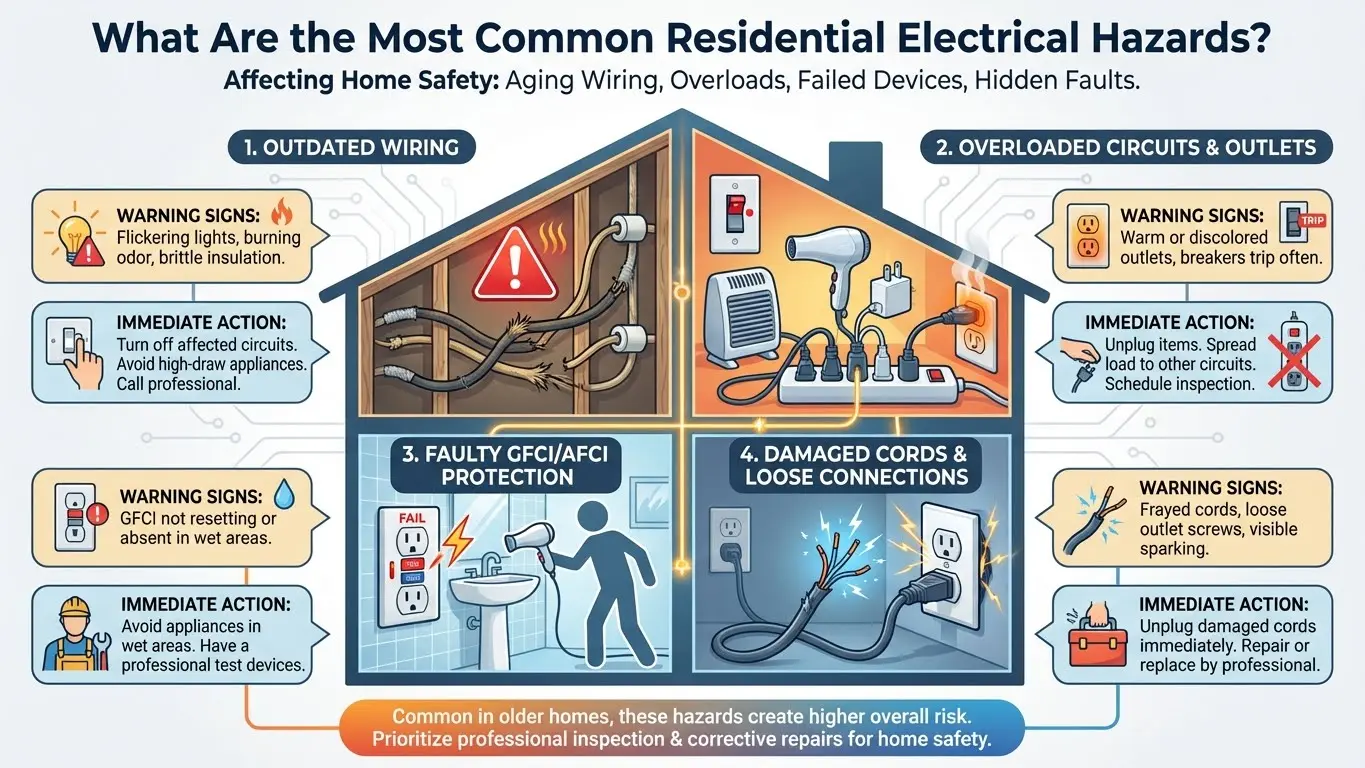
Most home electrical hazards come from aging wiring, overloaded circuits, failed protective devices, and hidden faults that produce heat, arcing, or shocks. Knowing these hazards helps you prioritize inspections and take immediate actions that lower the chance of fire or injury. Below we list the main hazards, their warning signs, and the immediate steps a homeowner should take. After the overview, a quick-reference table matches each hazard with visible signs and recommended short-term actions.
Typical household warning signs include flickering lights, warm or discolored outlets, breakers that trip often, a burning odor, or visible sparking. Each symptom points to a different failure—insulation breaking down, loose connections heating up, overloaded circuits, or failed safety devices—and spotting the pattern helps an electrician diagnose the cause faster. Early recognition prevents escalation and lets you accurately describe the problem to a licensed pro, which speeds correct repairs. The sections that follow explain the major hazard types and how they can worsen if left unchecked.
The most common hazards are listed below with short definitions and immediate homeowner actions.
- Outdated wiring: Older cloth-insulated, knob-and-tube, or aluminum wiring that can deteriorate and overheat; turn off affected circuits and avoid using high-draw appliances until a professional evaluates the system.
- Overloaded circuits and outlets: Too many devices or heavy appliances on a circuit causing heat and repeated trips; unplug items, spread the load to other circuits, and schedule an inspection.
- Faulty or missing GFCI/AFCI protection: Required safety devices that are absent or not working, increasing shock or arc-fire risk; avoid using appliances in wet areas and have a licensed electrician test the protection.
- Damaged cords and loose connections: Frayed cords or loose outlet screws that can arc; unplug damaged cords right away and have them repaired or replaced by a professional.
These problems often happen together in older homes, creating a higher overall risk best handled through a professional inspection and corrective repairs.
What Dangers Does Outdated Wiring Pose to Your Home?
Outdated wiring—like knob-and-tube, cloth-covered wiring, or early aluminum installations—can become brittle, develop poor connections, and lack capacity for today’s appliances, all of which increase fire risk. Insulation ages, junctions loosen, and grounding may be missing, creating conditions for overheating and arcing that can ignite nearby materials. You may notice flickering lights, discolored outlet plates, or intermittent grounding; these signs often mean a more thorough evaluation or partial/full rewiring is needed. Rewiring is a coordinated job that requires correct circuit labeling and code-compliant materials, so professional assessment ensures repairs stop recurring problems and meet current safety standards. Once you understand the limits of older wiring, it’s natural to check circuit capacity and signs of overload.
How Do Overloaded Circuits and Outlets Threaten Electrical Safety?
Overloads happen when modern appliances or multiple high-draw devices push a circuit beyond its rated capacity, producing heat and frequent breaker trips. Prolonged high current degrades insulation and connections inside outlets and panels, raising the chance of arcing and fire even if breakers still work. Common examples are space heaters, window A/C units, or several kitchen appliances on one branch circuit. Fixes include redistributing loads, installing dedicated circuits for large appliances, or upgrading the panel. In the short term, reduce loads, unplug nonessential devices, and schedule a professional load assessment to determine safe upgrades. After overload risks are corrected, protective devices like AFCIs and GFCIs help lower shock and arc risk.
Why Are Faulty GFCI and AFCI Outlets a Risk for Homeowners?
GFCIs (Ground-Fault Circuit Interrupters) and AFCIs (Arc-Fault Circuit Interrupters) are layered safety devices—GFCIs prevent shocks in wet areas and AFCIs detect arcing patterns that can lead to fires. If these devices are missing or not working where code requires them, occupants face higher risk. Failures show up as nuisance trips, outlets that won’t reset, or simply a lack of required protection in kitchens, bathrooms, garages, and bedrooms. A licensed electrician can test and install the proper devices. If an outlet fails a test or trips for unexplained reasons, schedule professional testing and replacement to restore important protections. Once installed, keep a routine testing schedule to confirm ongoing function.
What Other Hidden Electrical Hazards Should Homeowners Watch For?
Hidden hazards include loose neutrals or hot connections in junction boxes, poor grounding, DIY splices without approved connectors, and overloaded outlet boxes with too many splices—conditions that often hide until they produce heat or arcing. Cables pinched during renovations, corrosion in damp areas, and improperly fused subpanels are additional risks that can go unnoticed but are dangerous. Look for burn marks, buzzing sounds at outlets or the panel, and changes in performance after work was done in the house. Avoid DIY fixes when you’re unsure and schedule a professional inspection. Licensed electricians use circuit tracing and thermal imaging to find hidden faults and recommend durable, code-compliant repairs.
Different hazards call for specific immediate actions. The quick-reference table below pairs common hazards with visible signs and safety-first homeowner steps to take before a professional arrives.
| Hazard | Visible Warning Signs | Immediate Homeowner Action |
|---|---|---|
| Outdated wiring | Flickering lights, brittle insulation, discolored outlets | Stop using the circuit, unplug appliances, schedule professional inspection |
| Overloaded circuits | Repeated breaker trips, warm outlets, dimming lights | Reduce loads, unplug high-draw devices, avoid extension cords |
| Faulty GFCI/AFCI | Outlets that don’t reset, nuisance trips, lack of protection | Test devices, avoid wet-area appliance use, contact a licensed electrician |
| Damaged cords & loose connections | Frayed cords, sparks, buzzing outlets | Unplug damaged cords, do not repair with tape, replace or call pro |
| DIY or improper splices | Recent renovation issues, exposed splices, inconsistent power | Turn off power if unsafe, avoid using suspect circuits, book inspection |
This table helps you triage hazards and decide whether to shut off power or book an inspection. The next section explains how professional repair techniques address root causes and restore lasting safety.
How Does Professional Electrical Repair Prevent Electrical Hazards and Improve Safety?
Professional repair prevents hazards by finding the underlying cause, using code-compliant fixes, and installing quality materials so problems don’t come back. Licensed electricians use diagnostic tools—thermal cameras, insulation resistance testers, circuit tracers, and load analysis—to uncover hidden faults that aren’t obvious visually. Correct diagnosis and repair lower the chance of recurring shorts, loose connections, or ineffective protective devices, which reduces fire and shock risk. Below we outline the advantages of expert diagnostics and explain why following code matters for safe, lasting repairs.
Expert diagnostics are valuable because they address failure mechanisms instead of masking symptoms with temporary patches. Thermal imaging can show a hot connection inside a panel that looks normal to the eye, and load testing can reveal circuits that run over capacity during typical use. Those findings let technicians recommend targeted fixes—tightening connections, replacing aged breakers, or upgrading circuits—that remove the hazard and deliver measurable safety improvements. RJ & Son Electric’s Electrical Repairs & Troubleshooting service centers on these diagnostic methods to find causes and perform durable, code-compliant repairs. Knowing how code compliance fits into repairs also highlights why licensed work protects safety and liability.
What Are the Benefits of Expert Diagnostics and Troubleshooting by Licensed Electricians?
Licensed electricians bring specialized tools—thermal cameras, clamp meters, insulation testers, and circuit tracers—to locate hotspots, overloaded circuits, and hidden faults that a visual check can miss. These tools let technicians quantify risk (temperature rise, current draw, insulation resistance) and prioritize repairs by severity so work focuses on safety-critical items. Accurate troubleshooting reduces repeat visits and the cost of temporary fixes that fail under load, improving long-term reliability. Written diagnostics also support inspections and give homeowners a clear record of the problem and the corrective steps taken.
How Does Code Compliance Ensure Safer Electrical Repairs?
Code compliance spells out safety practices—correct conductor sizing, required GFCI/AFCI protection, proper grounding, and labeled panels—that reduce the chance of shock and fire when followed. Work done outside code can leave hidden vulnerabilities and create insurance or legal complications after a loss, while compliant repairs ensure systems operate as designed and are simpler to maintain. Licensed professionals know how Suffolk County’s local amendments affect older homes and new installs and follow inspection procedures to verify safe completion. Following code also helps decide when to replace an undersized panel or add modern protective devices.
Which Electrical Upgrades Are Essential for Enhancing Home Safety?
Some upgrades give large safety improvements for a modest cost: replacing outdated panels, adding AFCI/GFCI protection where required, installing whole-home surge protection, putting in transfer switches for generators, and wiring dedicated circuits for EV chargers. These options boost daily safety and resilience during storms or heavy use and should be considered based on your home’s age, appliance load, and any warning signs you’ve seen. The table below summarizes upgrade types, the safety benefits, and when to consider each improvement.
| Upgrade Type | Safety Benefit | When to Consider |
|---|---|---|
| Panel upgrade | Reduces overloads, accommodates modern breakers, improves connection integrity | Frequent trips, obsolete panel types, adding major appliances |
| GFCI/AFCI installation | Prevents shocks and arc-initiated fires | Bathrooms, kitchens, garages, bedrooms, and after nuisance trips |
| Whole-home surge protection | Shields equipment from transient overvoltages | Sensitive electronics, recent lightning or utility surge events |
| Generator transfer switch | Prevents dangerous backfeeding and ensures safe backup power | Regular use of portable generator during outages |
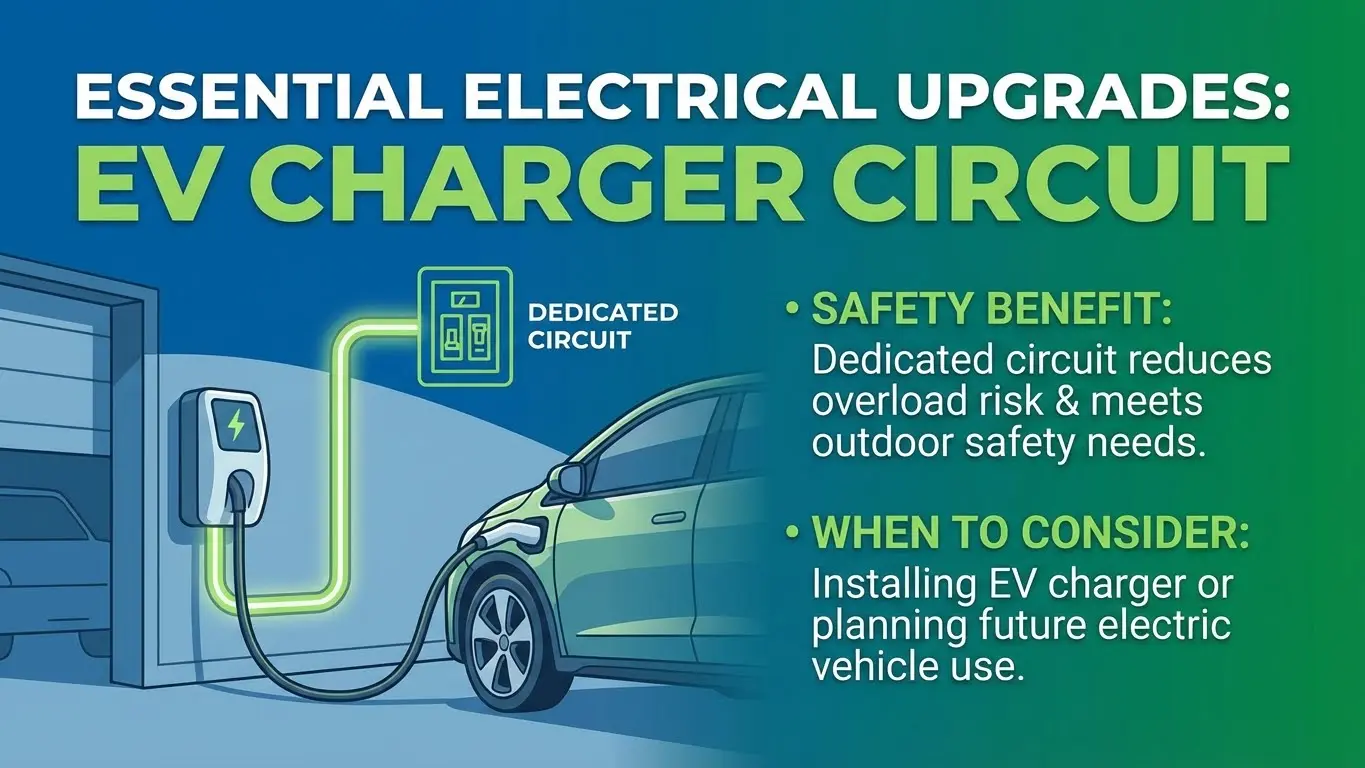
| EV charger circuit | Dedicated circuit reduces overload risk and meets outdoor safety needs | Installing EV charger or planning future electric vehicle use |
Read on for H3 subsections that explain each upgrade, how it protects your home, and what to consider when planning the work.
When upgrades are needed, RJ & Son Electric provides panel upgrades, generator transfer switch installation, EV charger installation, and surge protection services performed by licensed technicians. Homeowners can request an inspection or quote to prioritize work based on safety impact and budget.
Below are the top safety-focused electrical upgrades and what each does.
- Panel upgrades: Increase capacity and replace aged components to reduce overheating and improve breaker reliability.
- GFCI/AFCI installations: Add required protective devices in high-risk locations to prevent shock and arc fires.
- Whole-home surge protection: Limit equipment damage and prevent gradual degradation of electronics from repeated transients.
These priority upgrades reduce immediate hazards and make ongoing maintenance easier. The sections that follow explain each upgrade in practical terms.
How Do Electrical Panel Upgrades Protect Your Home from Overloads?
Upgrading your panel replaces undersized or outdated distribution equipment with modern gear that improves connection integrity and breaker performance to prevent overheating and nuisance trips. Older panels often lack capacity, use outdated breaker designs, and have poor labeling, which makes safe load management difficult and raises the chance of heat-related damage. A panel upgrade allows for modern breakers, dedicated circuits for high-draw appliances, and better bus connections that reduce contact resistance and thermal stress. If you have persistent trips, multiple heavy-load appliances, or plans for an EV charger or new HVAC, consider a panel evaluation and possible upgrade. A solid panel sets the stage for reliable protective devices and future additions.
Why Are GFCI and AFCI Outlet Installations Critical for Safety?
GFCIs block dangerous ground faults in wet areas and AFCIs detect arcing patterns that often precede electrical fires—installing both where required significantly lowers injury and property-loss risk. Current codes call for GFCIs in kitchens, bathrooms, garages, and exterior outlets, and AFCIs in bedrooms and living areas; together these devices provide layered protection. Proper installation may require mapping circuits, testing existing devices, and sometimes rewiring older circuits to accept the new protection. A licensed electrician can handle circuit mapping, test device function, and install the correct protection to meet safety and code requirements.
What Role Does Whole-Home Surge Protection Play in Preventing Damage?
Whole-home surge protection intercepts large transient voltage spikes at the service entrance, preventing cumulative damage to appliances and electronics that can happen over time. While point-of-use surge strips protect individual devices, they don’t stop big incoming surges or line-to-neutral transients that can damage equipment internally; whole-home systems mitigate those larger events and lower repair and replacement costs. Many insurance and equipment-failure claims after storms trace back to inadequate surge protection, so service-panel–level protection is both a safety and economic measure. A licensed installer can recommend surge suppression ratings and coordinate protection with your grounding system.
How Does Generator Transfer Switch Installation Ensure Safe Backup Power?
A transfer switch isolates generator power from the utility to prevent dangerous backfeed that could injure utility workers or harm equipment, and to ensure your circuits receive generator power only when intended. Manual transfer switches require you to flip switches to shift loads; automatic transfer switches sense grid loss and switch loads automatically—each option has trade-offs for safety and convenience. Proper transfer-switch installation includes required interlocks, labeling, and verification that chosen circuits match your generator’s capacity. Amateur hookups or temporary cords without a transfer switch are unsafe and noncompliant. Professional installation ensures backup power works safely and meets code and inspection requirements.
What Safety Considerations Are Important for EV Charger Installation?
EV charger installation requires a load calculation, a dedicated circuit, outdoor-rated equipment, and the right permits to avoid overloads and ensure safe outdoor use. Many EV chargers draw significant continuous current, which may require panel upgrades or dedicated breakers sized to the charger and code. Outdoor installs need weatherproof conduits and equipment rated for exterior conditions; certified technicians ensure correct grounding, clearances, and code-compliant disconnects. Planning an EV charger often reveals companion upgrades—panel capacity, surge protection, and conduit runs—that improve overall electrical safety. A licensed electrician can assess the site, calculate loads, and obtain necessary permits for a compliant installation.
Why Should You Choose a Licensed Master Electrician for Home Electrical Repairs?
Hiring a licensed Master Electrician protects homeowners by ensuring work meets code, uses tested materials, and follows professional standards that reduce liability and the chance of repeat problems. Licensed pros are trained to interpret the NEC and local amendments, perform accurate diagnostics, follow inspection procedures, and use correct installation methods that minimize hidden hazards. Local providers also understand typical regional home types and common failure modes, which speeds diagnosis and repair. Below we describe RJ & Son Electric’s local knowledge, quality protocols, and emergency availability to show practical homeowner benefits.
Beyond technical skill, a licensed electrician provides documentation, proper labeling, and test records that support insurance claims and future property sales. Work done to code lowers the risk of introducing new vulnerabilities and ensures protective devices are correctly chosen and tested. Local Master Electricians maintain relationships with inspectors and understand permitting in Suffolk County, which streamlines compliant completion of safety upgrades. The subsections that follow explain these local advantages and quality standards in more detail.
How Does RJ & Son Electric’s Local Expertise Benefit Suffolk County Homeowners?
RJ & Son Electric is a licensed, insured Master Electrician business serving Suffolk County, NY. Local expertise matters because our technicians know the area’s common housing styles, local code nuances, and typical failure patterns in older systems. Familiarity with permit processes and inspection expectations speeds repairs and reduces back-and-forth that can leave hazards unresolved. Faster response times and community-focused service mean we can often reach properties sooner, stabilize dangerous conditions, and help homeowners prioritize repairs. That regional knowledge helps you choose between temporary fixes and long-term, code-compliant upgrades.
What Quality and Safety Standards Does RJ & Son Electric Follow?
RJ & Son Electric follows established safety practices, including the National Electrical Code and local amendments, use of certified materials, and post-repair testing to confirm correct operation. Standard procedures include labeling panels, documenting load changes, and testing GFCI/AFCI devices and grounding to meet inspection standards. These steps reduce the chance of recurring faults and give homeowners verifiable records of safe, compliant work. For peace of mind, ask for written descriptions of the work performed and test results after any repair or upgrade.
How Do 24/7 Emergency Electrical Services Enhance Home Safety?
24/7 emergency electrical service means rapid response to life-safety hazards like visible sparking, smoke, persistent breaker trips with odor, or intermittent power affecting medical devices—reducing the time a dangerous condition remains in the home. Immediate professional intervention can shut down hazardous circuits, apply safe temporary isolations, and prioritize permanent repairs to prevent escalation. Emergency service also limits secondary damage—fire spread or equipment loss—and helps homeowners make safer choices while waiting for repairs. If you see danger, call a licensed emergency electrician to stabilize the situation and plan safe corrective work.
When Should You Schedule an Electrical Safety Inspection or Repair?
Knowing whether a situation needs an immediate repair or a scheduled inspection helps you prioritize safety and avoid delays that raise risk. Immediate repair is necessary for active danger signs—smoke, burning odors, visible arcing, or loss of grounding—whereas routine inspections are appropriate after a purchase, renovation, or every few years for older homes. Below is an urgency guide, frequency recommendation, and a decision table matching symptoms to recommended actions.
The checklist below summarizes urgent signs and what to do before a professional arrives.
- Smoke or burning smell: Turn off power if it’s safe, evacuate if needed, and call emergency services and a licensed electrician.
- Persistent or unexplained breaker trips: Stop using the affected circuit and schedule immediate diagnostics.
- Sparks or visible arcing: Cut power to the circuit and seek emergency repair to prevent ignition.
- Warm or discolored outlets and panels: Avoid using the circuit and arrange a prompt inspection.
After emergencies are handled, consider periodic inspections based on your home’s age and usage. The decision table below links common signs to likely causes and recommended responses.
| Problem / Sign | Potential Cause | Recommended Response |
|---|---|---|
| Burning smell or smoke | Overheated connection or arcing | Immediate power shutdown and emergency electrician call |
| Repeated breaker trips | Overload or short circuit | Reduce loads; schedule diagnostic inspection |
| Frequent flicker or dimming | Loose neutral or overloaded feeder | Professional circuit tracing and repair |
| No ground or tingling shock | Faulty grounding or GFCI failure | Avoid use; test devices and book electrician |
This table helps you triage urgency and choose the right action. The next section outlines how often to schedule inspections and what triggers an evaluation.
What Are the Signs You Need Immediate Electrical Repairs?
Immediate repair is required for clear, life-safety signs such as visible sparks, smoke, a burning smell, melting insulation, or repeated breaker trips with heat or odor—these indicate active failures that can start fires or cause shocks. If these occur, shut off the affected circuit if you can do so safely, evacuate if there is smoke or flame, and call an emergency electrician to isolate and repair the fault. Delaying increases the chance of fire spread or equipment damage and can complicate insurance outcomes. After the situation is stabilized, schedule a full diagnostic inspection to find and fix the root cause.
How Often Should Homeowners Conduct Electrical Safety Inspections?
Schedule a full electrical safety inspection every 3–5 years for older homes, sooner after major renovations, or before selling or buying a property. Trigger events—adding large appliances, installing an EV charger, or significant water intrusion—should prompt targeted inspections. Regular checks uncover loose connections, degraded insulation, or missing protective devices before they cause visible danger, allowing planned repairs rather than emergencies. Pair routine inspections with timely upgrades to maximize safety and reduce unexpected disruption.
What Are the Key Steps to Prevent Electrical Fires and Accidents at Home?
Preventing electrical fires and accidents means regular maintenance, safe use of appliances and cords, and proper protective devices—steps that reduce ignition sources and help spot faults early. Homeowners should follow a practical maintenance checklist, avoid common cord and outlet misuse, and work with licensed electricians for scheduled testing and upgrades. Below you’ll find concrete steps, a maintenance schedule, and daily safety practices to lower risk.
Regular maintenance includes visual checks of cords and outlets, testing GFCI/AFCI devices, tightening accessible connections, and watching the panel for heat or noise. Suggested intervals are monthly visual checks, testing protective devices every 3–12 months, and a professional inspection every 3–5 years or after major changes. When you need professional help, choose licensed technicians who provide documentation and test results. The checklist table below guides routine preventive actions.
| Maintenance Task | Frequency | Purpose |
|---|---|---|
| Visual cord and outlet inspection | Monthly | Identify fraying, discoloration, and loose plugs |
| Test GFCI/AFCI devices | Every 3 months to 1 year | Verify protective devices trip and reset correctly |
| Professional electrical inspection | Every 3–5 years | Detect hidden faults, load issues, and code gaps |
| Tighten accessible connections | Annually (professional) | Reduce resistance heating that causes failures |
Below are simple day-to-day practices that help prevent electrical problems.
- Avoid running multiple high-draw appliances on one outlet or extension cord; use properly rated, dedicated circuits instead.
- Replace damaged or frayed cords immediately; never run cords under carpets or bundle them tightly where heat can build.
- Keep electrical panels clear and labeled; don’t store flammable items near service equipment.
Following these prevention steps and a routine maintenance plan lowers the chance of electrical fires and extends the life of your equipment. If you find hazards or need upgrades, contact a licensed local provider to ensure inspections, repairs, and upgrades are done safely and up to code.
Frequently Asked Questions
What should I do if I notice a burning smell or smoke coming from an outlet?
If you smell burning or see smoke from an outlet, act immediately. Turn off power to the affected circuit if it’s safe to do so, evacuate if there’s any sign of fire, and call emergency services. Once it’s safe, contact a licensed electrician to inspect the outlet and determine the cause. Waiting can lead to serious fire damage.
How can I tell if my home needs an electrical safety inspection?
Consider an inspection if your home is more than 20 years old, after major renovations, or if you see frequent issues like flickering lights or tripped breakers. If you plan to add large appliances or new electrical systems, an inspection verifies your system can handle the load. Regular inspections every 3–5 years help catch hazards early.
What are the signs that my electrical panel may need an upgrade?
Signs you may need a panel upgrade include frequent breaker trips, an outdated panel type (for example, a fuse box), plans to add high-draw equipment like an EV charger or new HVAC, or a panel that feels warm or shows rust or corrosion. If you see any of these, have a licensed electrician evaluate your panel.
How often should I test my GFCI and AFCI outlets?
Test GFCI and AFCI outlets at least once every three months to ensure they’re working properly. Press the “test” button—power should cut off—and then reset it. If a device won’t trip or won’t reset, call a licensed electrician to inspect or replace it. Regular testing helps prevent shocks and fires.
What are the benefits of whole-home surge protection?
Whole-home surge protection protects all connected equipment by stopping large voltage spikes at the service entrance. Unlike point-of-use strips, whole-home systems reduce the risk of cumulative damage from repeated surges and can lower repair and replacement costs for sensitive electronics. This is especially useful in areas prone to lightning or power fluctuations.
Why is it important to hire a licensed electrician for repairs and upgrades?
Hiring a licensed electrician ensures work is done safely and in line with local codes. Licensed professionals can diagnose issues correctly, use the right materials, and perform installations that minimize risks. Licensed work is important for insurance and resale documentation and ultimately improves safety and reliability in your home.