
Picking the right electrical panel matters for safety, reliability, and future-proofing your home or business. The panel is the control hub that sends power from the meter to each circuit. Choosing the correct panel ensures you have enough capacity today and room for things you may add later, like EV chargers or heat pumps. This guide explains how panels work, shows warning signs that an upgrade may be needed, walks through sizing for current and future use, and compares common panel types. Knowing about amperage, load calculations, and home electrical safety helps you avoid problems. Keep reading for practical steps—from spotting upgrade signals to arranging a safe, code-compliant installation by a Master Electrician—so you can choose the right electrical panel for your needs.
Why the Right Electrical Panel Matters
Your electrical panel is the system’s control point: it receives power from the meter and distributes it through breakers to each circuit. Breakers protect wiring by tripping when current gets too high, preventing overheating and reducing fire risk. A well-sized, maintained panel keeps loads balanced, powers appliances and HVAC reliably, and allows modern safety devices like GFCI and AFCI to work. If you plan to add equipment such as EV chargers or heat pumps, capacity and condition matter—regular inspections and informed upgrade decisions make sure you have the right electrical panel for the job.
What Is the Role of an Electrical Panel in Power Distribution and Safety?
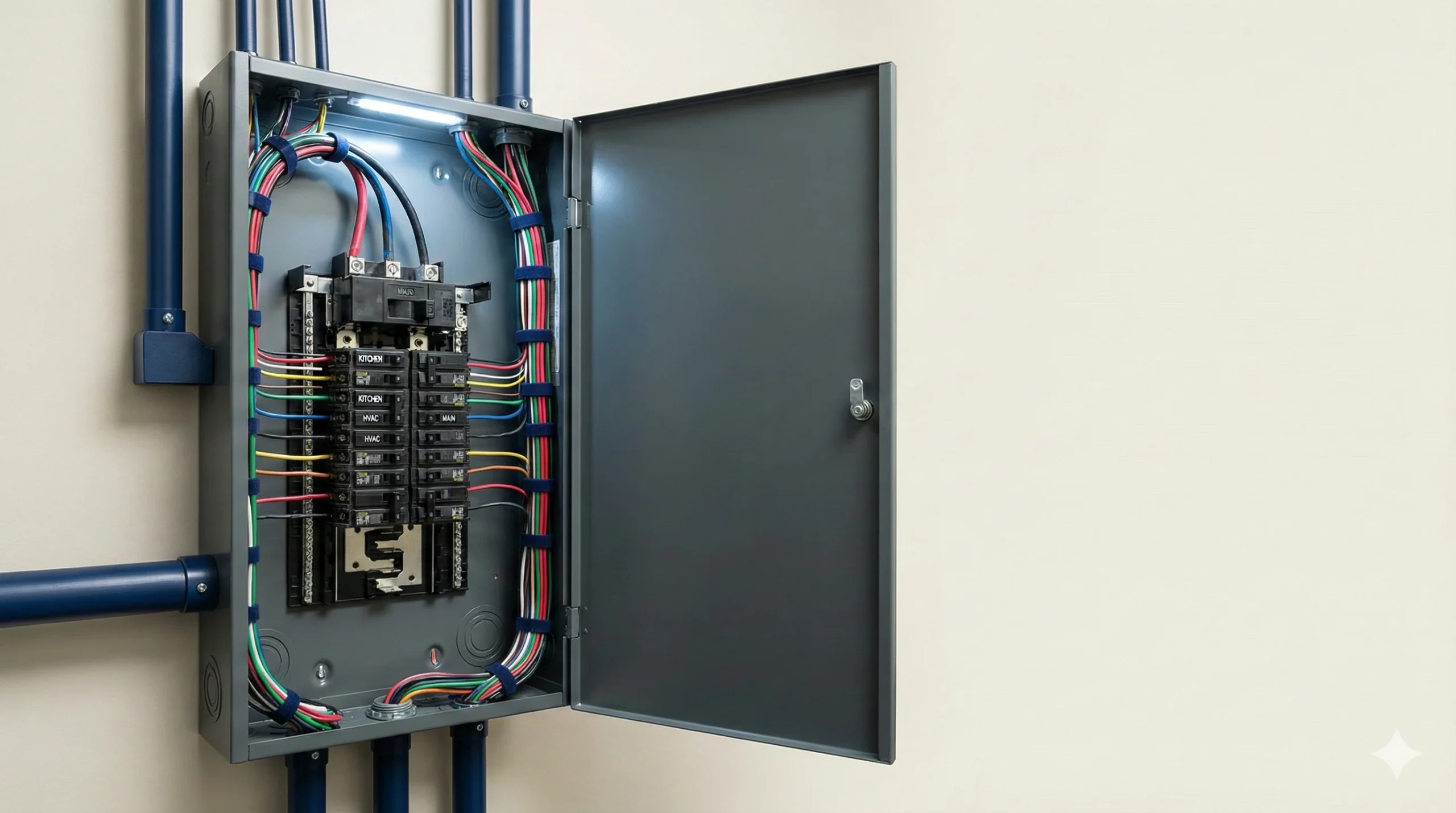
A typical electrical panel includes the main breaker (or main lug), bus bars, neutral and grounding bars, and the branch breakers. The main breaker acts as the service disconnect and limits total amperage; branch breakers protect individual circuits. Bus bars carry power to each breaker; loose or corroded connections at these points can create heat and arcing. When breakers trip they protect wiring, but failed breakers or corrosion increase fire risk. Regular checks help spot worn parts that need electrical repairs or replacement, keeping your system safe and reliable.
How Have Electrical Demands Evolved in Modern Homes and Commercial Properties?
Electrification has increased household demand—electric vehicles, heat pumps, and always-on devices add significant load. Older homes often had 60A–100A service; today, 200A is common for homes preparing for EVs or heat pumps. Panels typically last 25–40 years before becoming outdated and may lack required AFCI/GFCI protections. As demand grows, planning for higher amperage and checking meter and conductor compatibility is essential when upgrading. The next section outlines warning signs that it’s time for an inspection or upgrade so you can confirm you have the right electrical panel.
Signs Your Electrical Panel Needs Upgrading
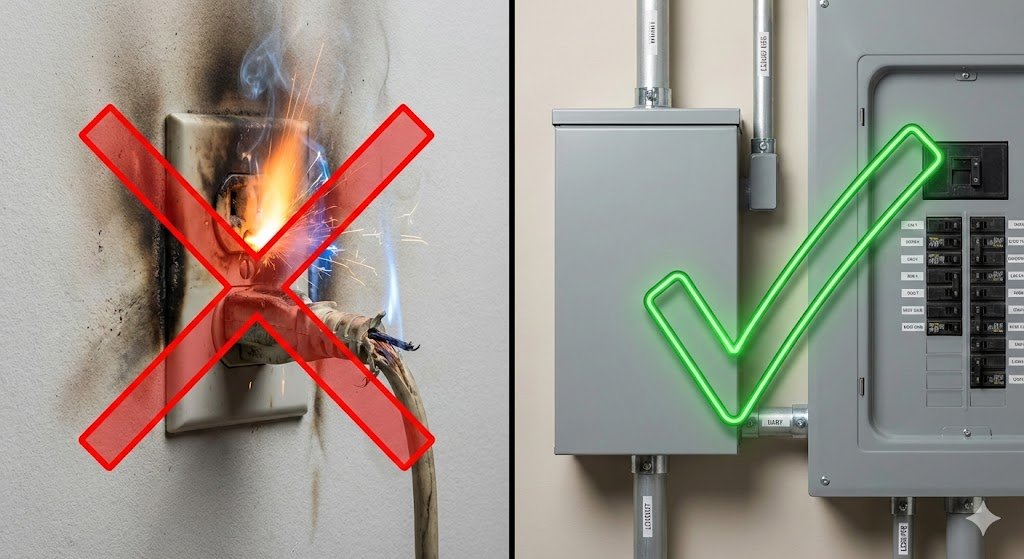
Older or undersized panels show symptoms that point to capacity or safety problems. Frequent trips on the same breaker, lights that dim when appliances start, burning smells, scorch marks, or a hot panel cover are urgent warning signs that need a professional look. Obsolete fuse boxes, recalled panel brands, or panels that can’t accept modern safety devices are also reasons to replace the panel. A panel upgrade addresses these problems and ensures your system is safe. Use this checklist to help decide whether you need an inspection or upgrade:
- Frequent breaker trips: Repeated trips on the same circuit often indicate overloads or failing breakers that need diagnosis.
- Flickering or dimming lights: Voltage drop during appliance startup can mean limited service capacity or loose wiring.
- Burning odors or scorch marks: Any burning smell or discoloration around the panel is an immediate hazard—safety experts recommend professional attention right away.
- Hot panel surfaces: A warm or hot cover suggests excessive current, loose connections, or overloaded bus bars.
- Obsolete fuse boxes or recalled panels: Old fuse systems and recalled brands may lack modern safety features and are usually good candidates for replacement.
- Need to add high-load appliances: Installing EV chargers, heat pumps, or a larger HVAC system often requires higher service amperage and additional circuits.
How to Recognize Warning Signs Like Tripped Breakers and Flickering Lights?
Pay attention to when and where problems occur: which circuits are affected, whether issues happen during appliance startup, and if multiple circuits are involved. Try unplugging devices and resetting the breaker—if it trips with no load, the breaker or panel may be faulty. Never open the panel or attempt repairs if you smell burning, see sparks, or feel heat—those are immediate safety hazards. If problems began after adding an EV charger or HVAC, a load calculation and possible service upgrade are sensible next steps. When unsure, book an inspection with a licensed electrician who can run targeted tests and thermal imaging.
What Safety Risks Are Associated with Outdated Electrical Panels?
Outdated panels bring several risks: loose connections and worn breakers increase arcing and fire potential, and many older panels lack required AFCI or GFCI protection. Noncompliant equipment can affect insurance and inspections, and some legacy brands have documented recalls—see the Consumer Product Safety Commission for guidance. Lack of dedicated circuits for high-demand appliances can overload wiring. Regular inspections—every 3–5 years for older systems—help identify deterioration and guide decisions for repairs or a full panel replacement, following electrical safety best practices.
Finding the Right Electrical Panel Size
The panel’s amperage rating sets the total service capacity available to all circuits. Choosing the right size means knowing your current loads and planned additions so you avoid constant overloads. Common residential services include 100A, 150A, 200A, and 400A; 200A is now typical for homes planning EV charging and heat pumps, while commercial sites may need three-phase services at higher capacities. A load calculation accounts for fixed appliances, HVAC, ranges, EV charging, and continuous loads with appropriate demand factors. A licensed electrician should verify that calculation, confirm conductor and meter suitability, and handle local code and permitting to make sure you select the right electrical panel. The table below summarizes common service sizes and their typical uses.
| Service Amperage | Typical Property Size | Common Appliances Served | EV/Heat Pump Suitability |
|---|---|---|---|
| 100A | Small older homes or apartments | Basic lighting, modest kitchen, small HVAC | Limited — usually needs upgrade for EV or heat pump |
| 150A | Medium homes with moderate loads | Range, central A/C, laundry, light EV charging | Marginal for simultaneous heavy loads |
| 200A | Most modern single-family homes | Multiple HVAC units, EV charger, electric range, appliances | Good for one EV and a heat pump |
| 400A | Large homes or small commercial properties | Multiple EVs, whole-home electrification, heavy equipment | Excellent for multiple EVs and extensive electrification |
Many homes benefit from at least 200A when planning for electrification. For major changes, get a professional load calculation to confirm the right electrical panel size.
What Does Electrical Panel Amperage Mean and Why Is It Important?
Amperage measures how much continuous current the panel can safely handle—think of it like the diameter of a pipe. Higher amperage supports more simultaneous demand and reduces nuisance trips. A panel’s rating (for example, 100A or 200A) indicates the maximum continuous current available. An undersized service can cause frequent trips and limit your ability to add circuits. When upgrading, factor in future additions like EV chargers or HVAC because increasing service later may require coordination with your utility. A professional load calculation and conductor capacity check are essential for safety and correct sizing.
How to Calculate Load Requirements for Current and Future Needs?
Start by listing fixed appliances and their amperage, apply demand factors, and include continuous loads at 125% where required. Count lighting, receptacles, ranges, and HVAC, and add future high-demand items such as EV chargers or heat pumps to see if dedicated circuits or a service upgrade are needed. A licensed electrician should perform the official calculation, verify conductor and meter capacity, and handle permitting. Getting a professional assessment up front can avoid costly phased upgrades. Accurate load profiling is key to planning electrical capacity and making sure you choose the right electrical panel.
For expert sizing, RJ & Son Electric provides load-calculation services by a licensed Master Electrician. We review your current service, estimate future needs, and recommend a safe, code-compliant panel rating and upgrade plan. Request an assessment to match your electrification goals and reduce the risk of undersizing for EV chargers or HVAC upgrades.
Selecting the Right Electrical Panel Type
Panels come in several common types: main breaker panels, main lug panels, subpanels, legacy fuse boxes, and modern smart panels. Commercial sites may use three-phase systems for higher capacity. Main breaker panels include the service disconnect inside the enclosure, which simplifies shutoff; main lug panels rely on an upstream disconnect and work where a separate main exists. Subpanels add circuit capacity in garages or additions without replacing the main service. Fuse boxes are older technology and lack modern breaker conveniences and safety upgrades. Smart panels provide circuit-level monitoring, load shedding, and remote control—useful for energy management, solar, and battery integration. The table below compares these panel types by capacity, typical use, and advantages.
| Main Lug Panel | 100A–400A | Secondary services or locations with external main disconnect | Compact and flexible placement; relies on upstream disconnect |
|---|---|---|---|
| Subpanel | Varies | Service expansion in garages, additions, or outbuildings | Adds circuits without a full service upgrade |
| Fuse Box | Low–varies | Older homes | Simple but lacks modern breaker safety and replacement parts |
| Smart Electrical Panel | 100A–400A+ | Energy management, solar, EV integration | Circuit monitoring, remote control, load optimization |
Main breaker and smart panels meet most modern home needs; subpanels are useful for targeted expansions, and fuse boxes are generally best replaced. The next section explains practical differences and selection tips for the right electrical panel.
How Do Main Breaker, Subpanels, and Fuse Boxes Differ?
Main breaker panels put the disconnect and breakers in one place, simplifying code-compliant shutoff and maintenance, which is why they’re standard for upgrades. Subpanels extend circuit capacity to remote locations but must have correct grounding and neutral separation. Fuse boxes use fuses—simple but inconvenient and often incompatible with AFCI/GFCI requirements. Converting a fuse box to a breaker panel is a common modernization upgrade that improves safety and flexibility. Weigh conversion costs against long-term safety and functionality when deciding.
What Are the Benefits of Smart Electrical Panels and Commercial Three-Phase Systems?
Smart panels give circuit-level visibility, energy reporting, and remote control, helping you manage loads, spot unusual usage, and support solar or battery systems. Homeowners can use targeted load shedding—for example, during EV charging—to avoid overloads. Commercial three-phase systems supply balanced multi-phase power for motors and heavy equipment, offering greater capacity and smoother operation. These options support scalability for electrification, improve operational control, and enhance safety—aligned with Department of Energy guidance on efficient home design.
How to Choose the Right Electrical Panel
Pick a panel by balancing safety features, code compliance, brand and parts availability, warranty, and installer qualifications—these factors affect reliability, maintenance, and insurance. Key safety features include AFCI protection for arc-prone circuits, GFCI where ground faults are a shock risk, and whole-home surge protection to shield electronics. Brand reputation matters for part availability and recall history—choosing widely supported brands reduces future headaches. Quality breakers from manufacturers like Eaton, or known panels like Square D QO and Siemens, can simplify maintenance. Installer experience and licensing lower project risk and speed permitting. Plan for spare capacity and room for extra breakers, and consider smart monitoring so you avoid premature upgrades. The table below links safety features to where they’re typically required and what they protect against.
| Safety Feature | Required Locations | Benefit |
|---|---|---|
| GFCI (Ground-Fault) | Kitchens, bathrooms, outdoors, garages | Reduces shock risk where water or damp conditions exist |
| AFCI (Arc-Fault) | Bedrooms and many living areas | Detects dangerous arcing to lower fire risk |
| Surge Protection | Service entrance or whole-home panels | Shields electronics from transient voltage spikes |
Combining GFCI, AFCI, and surge protection gives layered defense against shock, fire, and transient overvoltages—important for any modern electrical panel. The next section looks closer at these features and how codes and brand choices affect your selection.
What Safety Features Like GFCI, AFCI, and Surge Protection Are Essential?
GFCIs trip when they detect an imbalance, reducing shock risk in wet or outdoor locations like kitchens, bathrooms, and garages. AFCI breakers recognize arc patterns and help prevent fires in bedrooms and living spaces. Service-entrance or panel-mounted surge protection systems limit transient overvoltages from lightning or switching, protecting sensitive electronics. Together these features provide layered protection—GFCI for shock, AFCI for fire, and surge suppression for equipment—that a modern panel should include.
How Do Electrical Codes and Brand Reputation Influence Your Choice?
The National Electrical Code (NEC) defines minimum safety requirements, including AFCI/GFCI mandates, permitting, and inspections. Following NEC updates keeps systems safer. Brand reputation affects part availability, breaker interchangeability, and recall history—choosing a well-supported brand reduces future maintenance issues. Licensed electricians ensure correct code application, handle permits, and provide documentation useful for insurance or resale. Verify that your product and installer meet NEC requirements and that spare capacity and replacement breakers are available for your chosen panel brand.
How Does RJ & Son Electric Ensure a Safe and Code-Compliant Electrical Panel Upgrade?
RJ & Son Electric provides licensed, insured Master Electrician services for electrical panel upgrades, permitting, and safety testing across Suffolk County. We begin with a site consultation and load calculation by a Master Electrician to confirm capacity and required AFCI/GFCI protections. We manage permits, install to NFPA and local standards, perform testing, label circuits, and leave the area clean. With local knowledge and 24/7 emergency support, we focus on clear communication and reliable workmanship. Here’s how our upgrade process works:
What Is the Step-by-Step Process for Electrical Panel Upgrades in Suffolk County?
- Initial consultation and assessment: A Master Electrician inspects your existing service, runs a load calculation, and discusses your electrification plans.
- Permitting and documentation: We prepare permit applications and wiring diagrams needed for local inspections and NEC compliance.
- Installation and testing: On the scheduled day our team installs the new panel, breakers, grounding, and any AFCI/GFCI or surge protection, then completes functional and safety testing.
- Inspection, labeling, and handoff: After municipal inspection we label circuits and provide documentation plus guidance on operation and maintenance.
What Are the Benefits of Upgrading Your Electrical Panel with a Licensed Master Electrician?
Hiring a licensed Master Electrician ensures your upgrade meets NEC requirements, permits are handled, and safety devices are installed correctly—reducing fire and shock risk. Professional installation lowers liability, ensures proper grounding, and uses tested connections to prevent overheating. For cost-effective electrical solutions, trust our team. A licensed electrician will advise on sizing, smart panel options, or three-phase systems and provide the documentation insurers and future buyers expect. Call RJ & Son Electric at (631) 833-7663 to request an assessment, quote, or to schedule an upgrade.
- Code-compliant work: Ensures inspections pass and systems meet NEC standards.
- Safety-first installation: Reduces fire and electrocution risk using professional methods and electrical safety best practices.
- Transparent pricing and documentation: Clear scope, permits, and labeled circuits for easier future maintenance.
Frequently Asked Questions
What should I consider when choosing the right electrical panel for an upgrade?
Think about current and future loads, required safety features (AFCI/GFCI), local codes, and brand reputation for parts. Plan for future needs like EV chargers. Always use a licensed electrician for load calculations, permits, and inspections—follow electrical safety guidance to ensure you get the right electrical panel.
How often should I have my electrical panel inspected?
Have your panel inspected every 3–5 years, especially if it’s older than 25 years. Regular checks catch loose connections, corrosion, and outdated components. Get an immediate inspection if you notice frequent trips, flickering lights, or burning smells.
What are the advantages of smart electrical panels?
Smart panels provide circuit-level monitoring, remote control, and load management. They make it easier to spot unusual usage, enable targeted load shedding (for example, during EV charging), and integrate with solar and battery systems to improve efficiency and avoid overloads.
Can I install an electrical panel myself?
DIY panel installation is strongly discouraged. Improper electrical work can cause fires or electrocution and must meet local codes. Hiring a licensed electrician ensures the job is safe, permitted, and inspected, protecting you and your property, as advised by the Electrical Safety Foundation International.
What is the difference between a main breaker panel and a subpanel?
A main breaker panel is the primary distribution point and includes a main disconnect. A subpanel extends capacity from the main panel to remote areas (like additions or outbuildings) and typically does not include a separate main disconnect, avoiding a full main service replacement.
What are the common causes of electrical panel failure?
Age, poor maintenance, and overload are common causes. Older panels can overheat under modern demand. Loose connections, corrosion, and faulty breakers also lead to failures. Regular inspections and timely upgrades reduce these risks.
How can I prepare for an electrical panel upgrade?
Review current and future electrical needs, gather any existing documentation, and consult a licensed electrician for a load calculation and panel recommendation. Understand the permitting process and expect a temporary power interruption during the upgrade.