Thoughtful outdoor lighting design makes your home look better and helps keep your family safe after dark. This guide walks through practical outdoor lighting design ideas and what you need to know for installation so you can improve curb appeal, extend your outdoor living hours, and tighten up security. We cover landscape concepts, pathway and tree uplighting, planning and permitting, backyard entertaining ideas, front‑yard strategies, and the energy perks of modern systems. You’ll also find a comparison of fixture types, a primer on smart controls, and clear advice on when to call licensed professionals.
Best outdoor lighting design ideas for homes
Good landscape lighting starts with a visual goal and matches fixtures and placement to that goal. Use pathway lights to guide movement, uplights to give vertical impact, downlights (moonlighting) for soft overhead glow, spotlights to call out features, garden accents to add texture, and wall grazing to emphasize materials. Strong outdoor lighting design layers these approaches for a cohesive yard look. Below are smart ideas and a simple fixture comparison to help you choose.
Try these top outdoor lighting design techniques:
- Pathway lighting: Lights the way, cuts trip hazards, and creates a steady visual flow.
- Tree uplighting: Shows off trunk shape and canopy, adding height and drama.
- Moonlighting: Fixtures tucked high in trees that mimic soft, natural overhead light.
- Spot/feature lighting: Draws attention to sculptures, specimen plants, or hardscape details.
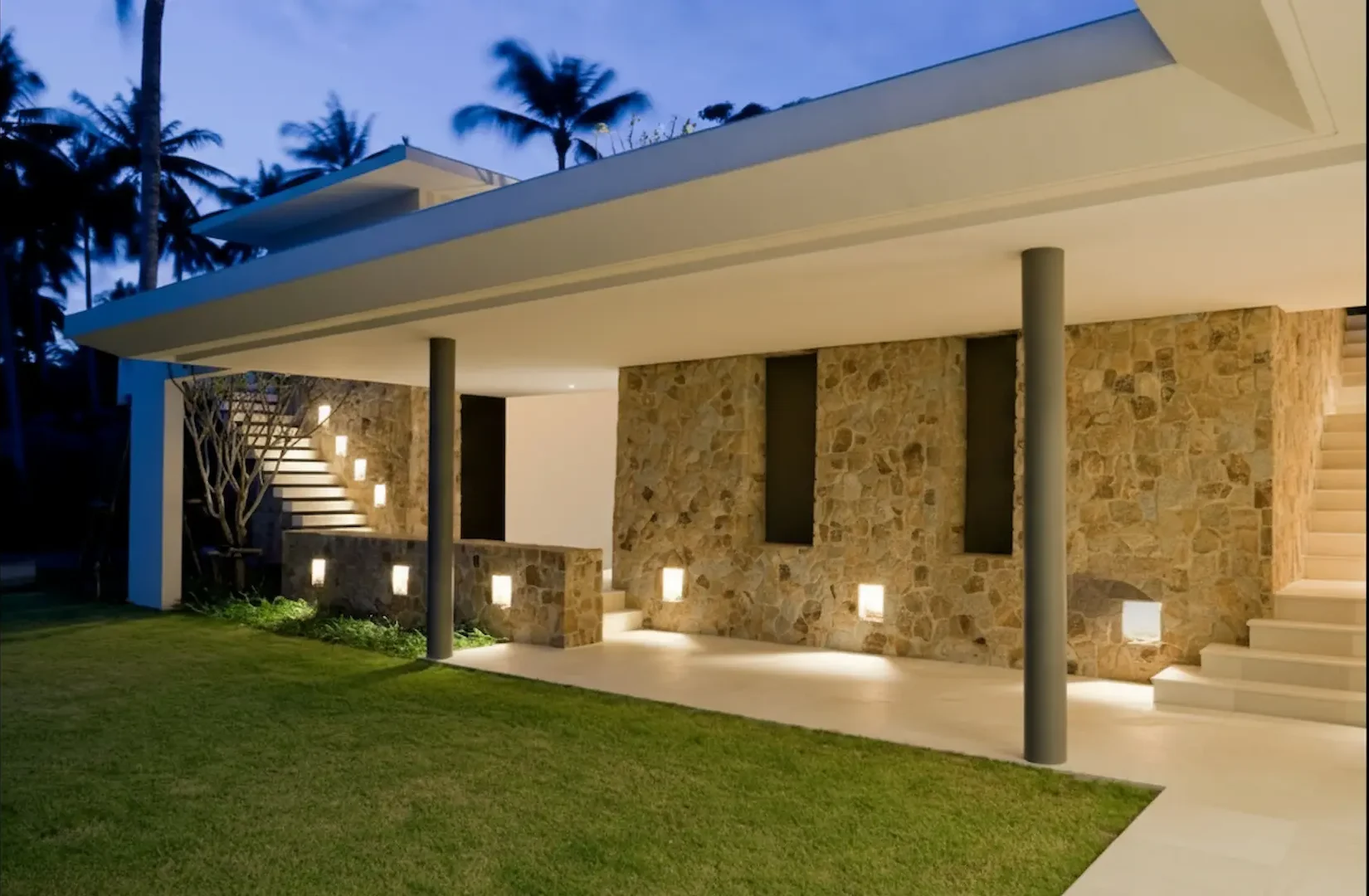
- Wall grazing: Accentuates stone or siding textures and sculpts shadow and depth.
- Garden accent and planter lighting: Adds depth and guides movement near the ground.
These strategies balance safety with atmosphere. The right mix depends on how people move through your yard, your focal points, and the mood you want. The table below summarizes common fixture roles and quick installation notes to match function with form for your outdoor lighting design project.
| Fixture Type | Typical Use | Mounting Location |
|---|---|---|
| Path Lights | Define edges and increase safety | Along walkways and garden beds on low‑profile stakes |
| Spotlights/Uplights | Highlight trees and architectural features | Ground‑mounted near trunks or hidden in planting beds |
| Downlights (Moonlights) | Soft, ambient overhead illumination | Mounted in tree canopies or soffits |
| Step Lights | Illuminate steps and level changes for safety | Integrated into risers or low walls |
| Wall Grazers | Emphasize texture and facades | Placed close to the wall at a low angle |
Limit glare and light spill with proper beam spreads, shielding, and warm color temperatures.
How garden and pathway lighting design improves your outdoor space
Garden and pathway lighting direct movement and frame your plantings. Pathway fixtures are usually spaced 6–12 feet apart to make routes obvious. Low garden fixtures add layers and texture closer to the ground. Choose modest lumen outputs and warm color temperatures to soften shadows and keep the space comfortable—supporting your overall outdoor lighting design without creating light trespass.
Effective tree uplighting techniques for outdoor lighting design
Uplighting turns trees into focal points at night. Set fixtures slightly off the trunk and match beam spread to the effect you want: narrow (10–25°) for trunk detail, wider (30–60°) for a canopy wash. Use multiple fixtures for layered height effects and aim lights to avoid glare. For coastal properties, pick corrosion‑resistant finishes. Combine uplights with moonlighting for a natural, multi‑angle look—an important tool in strong outdoor lighting design.
Planning your outdoor lighting design for residential properties
Start with a site inventory, then layer lighting by purpose. Map entry points, paths, activity areas, and focal elements, and prioritize safety when estimating fixture counts. A layered outdoor lighting design—ambient, task, and accent—meets different needs without overwhelming neighbors. Electrical planning includes transformer sizing, voltage‑drop calculations, GFCI protection, and local code checks. For electrical safety and to follow consumer guidelines and applicable codes, work with certified electrical professionals such as a licensed electrician for load calculations and permits.
Use this checklist to organize your outdoor lighting design project:
- Conduct a site assessment: Note circulation, sightlines, and focal points.
- Define lighting zones: Assign ambient, task, or accent roles to each area.
- Choose fixtures and controls: Pick timers, motion sensors, or smart hubs before final wiring.
- Calculate capacity and permits: Size your transformer, check voltage drop, and confirm permit requirements.
- Get professional quotes: Bring in pros for complex wiring, trenching, or code‑sensitive work.
This checklist helps you scope the job and budget realistically. The table below summarizes planning items, code considerations, and recommended actions so you can decide what to DIY and when to hire help.
| Component | Consideration | Recommended Action |
|---|---|---|
| Fixtures & Controls | IP rating, finish, beam spread | Choose weatherproof fixtures with the right IP rating and corrosion resistance |
| Wiring & Transformers | Voltage drop, GFCI, conduit | Size the transformer for total load; hire a licensed electrician for complex wiring |
| Mounting & Placement | Sightlines, glare, neighbor impact | Do dusk mock‑ups and shield fixtures to limit spill |
| Permitting | Local electrical and trenching codes | Check local permit requirements and bring in pros for compliance |
Planning ahead reduces surprises during installation. When you work with professionals, confirm they follow industry best practices and OSHA electrical standards. For on‑site assessments, permit help, or installation, RJ & Son Electric offers residential consultations with a licensed, insured Master Electrician—contact us to schedule an evaluation and get a customized quote for your outdoor lighting design.
Key principles of layered outdoor lighting design
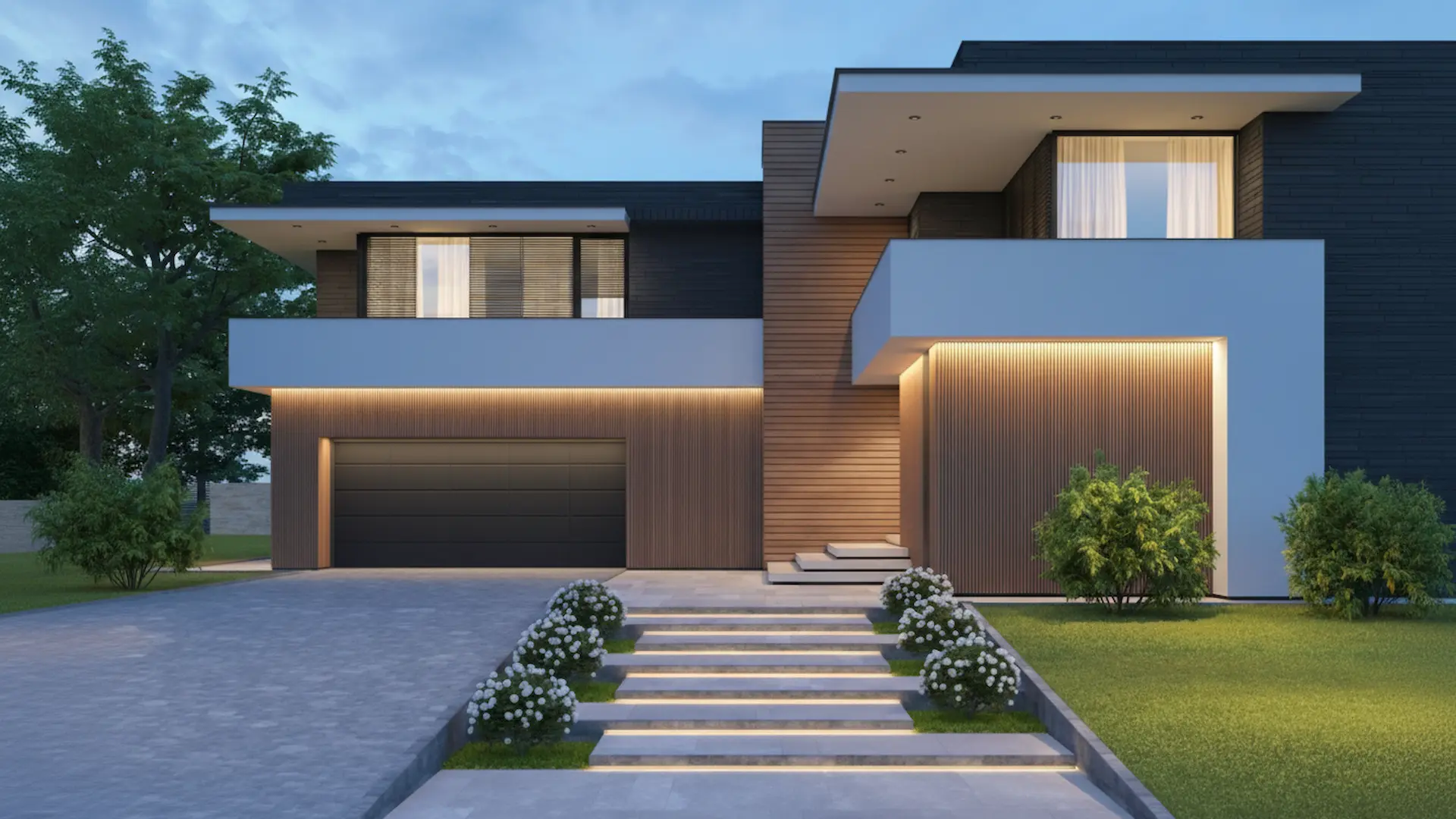
Layered lighting combines ambient, task, and accent roles to make outdoor spaces both useful and inviting. Ambient lighting gives overall visibility, task lighting focuses on activity areas like grills or reading nooks, and accent lighting highlights trees or architectural details. Stick to warm color temperatures (2700K–3000K) and balance brightness across layers with zoning or dimming for a cohesive scene—this balance is central to successful outdoor lighting design.
How Suffolk County conditions affect outdoor lighting choices
Suffolk County’s coastal salt air and humid summers mean you should choose marine‑grade finishes, stainless hardware, and fixtures with high IP ratings for corrosion resistance in your outdoor lighting design. Local trees and plantings will influence beam spread and mounting height. Use shielded fixtures and modest lumen counts to respect neighborhood character and limit light trespass.
Creative backyard outdoor lighting solutions to transform your space
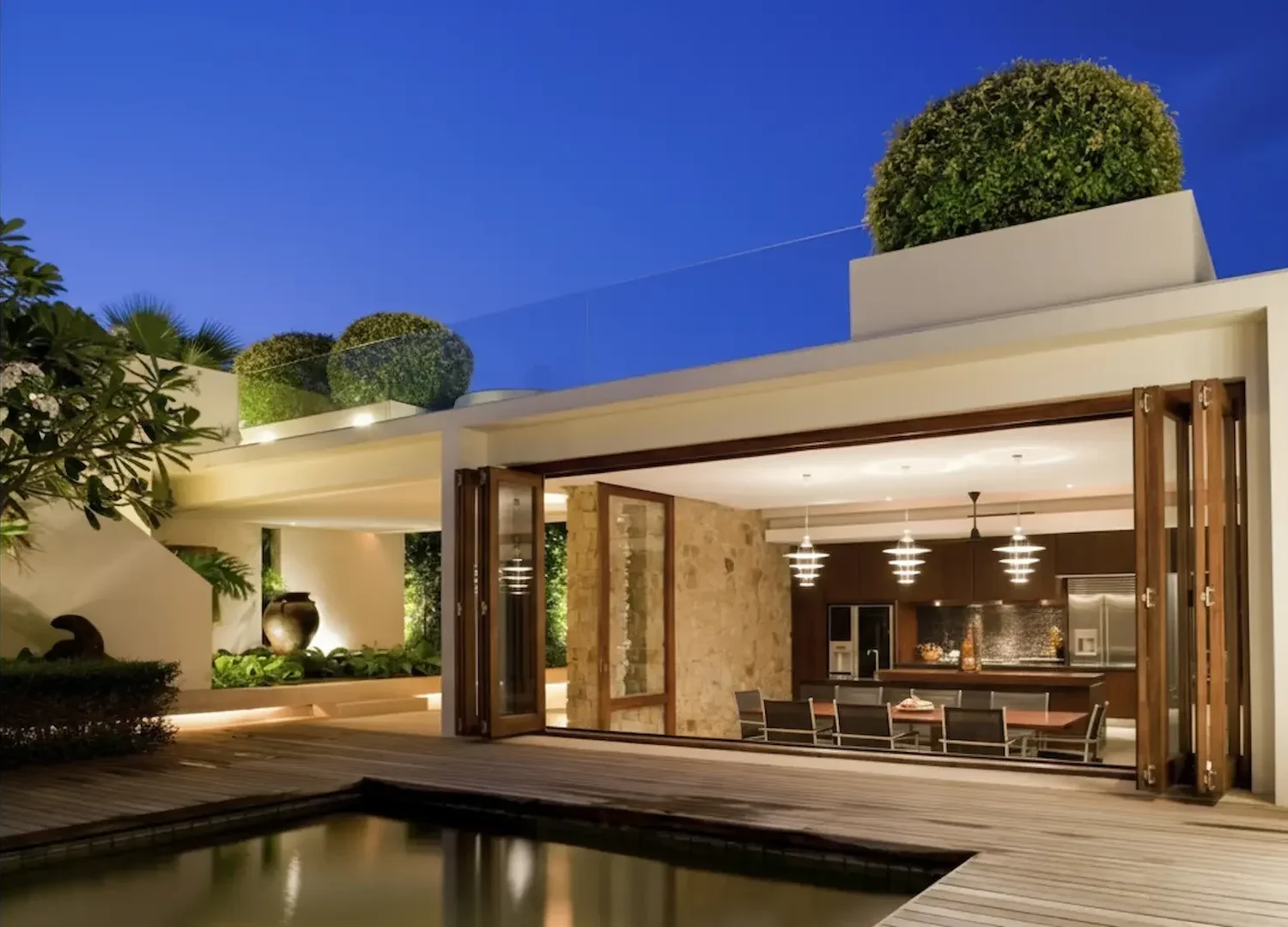
Think of your backyard as another room. Combine ambient string or pendant lighting with task lights over cooking areas, and add low‑glare safety lights for steps and pool edges. String lights and soft pendants create a warm overhead layer for dining and lounging, while recessed soffit or under‑counter lights give focused illumination for food prep. Add step and deck lighting for safe transitions. Smart zoning and dimmers let you switch easily between entertaining and relaxed settings—key to a well‑designed outdoor lighting plan.
Popular ambience and task solutions for outdoor lighting design include:
- String and pendant lights: Define dining and lounge areas with a warm, diffused glow.
- Recessed soffit and beam‑mounted fixtures: Provide targeted light over prep and cooking zones.
- Under‑rail and integrated deck step lights: Create safe, low‑glare transitions.
These elements help you build flexible, durable backyard “rooms.” Use scene controls and dimmers to tailor lighting for any occasion.
How ambient and task lighting improve outdoor living areas
Ambient lighting sets the mood and comfort level; task lighting gives you the brightness needed for activities. At a dining table, a soft overhead ambient layer keeps things comfortable while task lights make food prep safe. Dimmers and multi‑zone switches make it easy to change scenes. Low‑voltage LEDs cut operating costs and maintenance, making it practical to run multiple zones in your outdoor lighting design.
Popular deck and patio lighting ideas for entertaining
For entertaining, focus on durability, even illumination, and glare control. Under‑rail LED strips, recessed deck lights, and step risers provide safe footing without competing with dining lights. Recessed soffit lights and low bollards around seating help build layers. Space fixtures to avoid hot and cold spots, and choose warm color temperatures so outdoor areas feel comfortable and match indoor tones—important details in any outdoor lighting design project.
Front yard lighting concepts to boost curb appeal and security
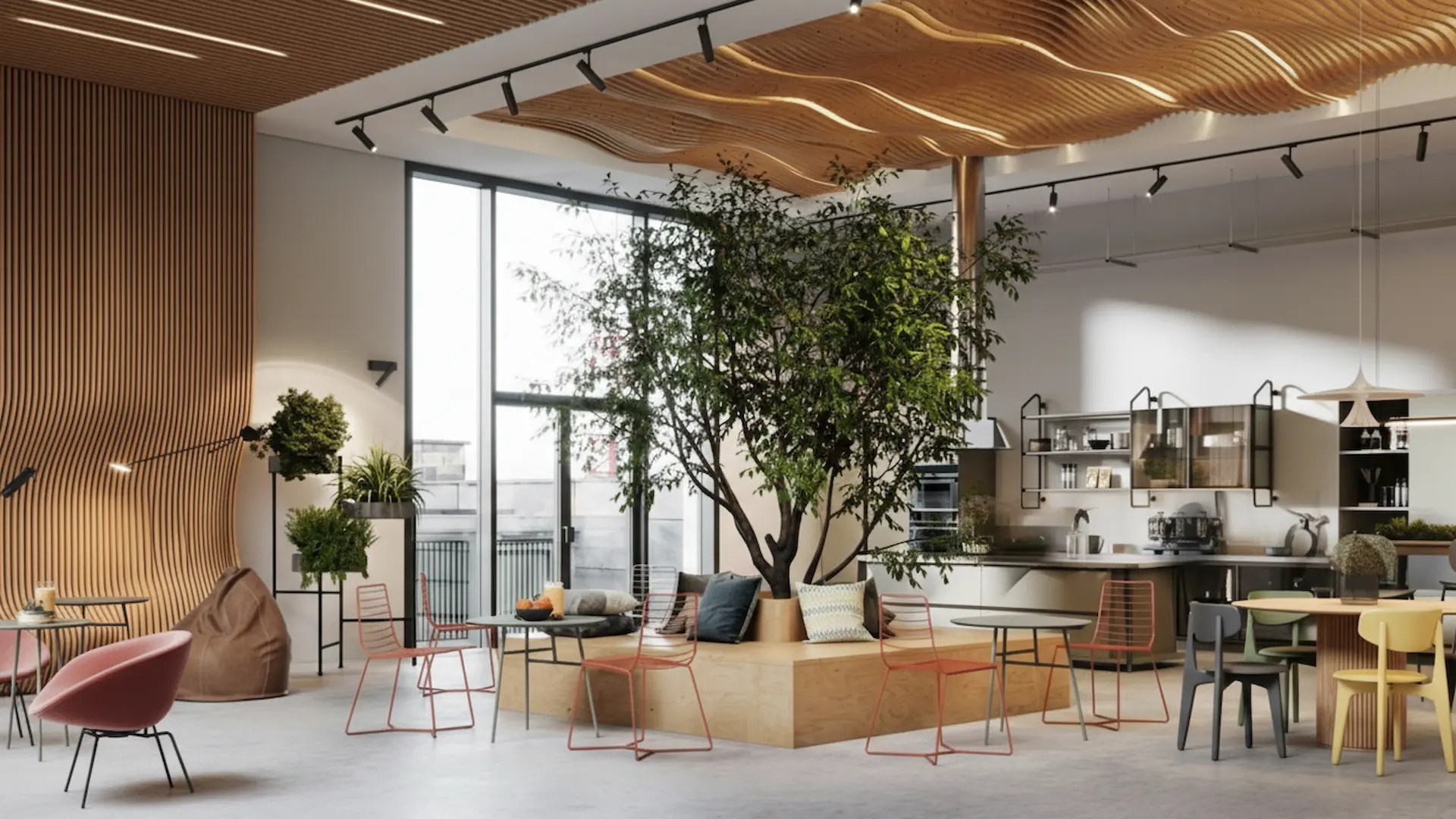
Front yard lighting should improve curb appeal and safety while avoiding harsh glare. Use architectural grazing, driveway lighting, and subtle porch lights for clear wayfinding and a polished welcome. Thoughtful outdoor lighting design pairs modest ambient and accent lighting with motion‑sensing security fixtures for the best results.
Consider these front‑yard techniques and benefits for your outdoor lighting design:
- Architectural grazing: Accents textures and adds depth to facades.
- Driveway lighting: Defines vehicle approaches and cuts accident risk.
- House number/porch lighting: Helps guests find you and improves first impressions.
Effective architectural and driveway lighting techniques
Architectural grazing and angled uplighting bring out facade textures—grazing uses narrow beams close to the wall; silhouetting lights objects from behind. For driveways, bollards or recessed flush lights guide vehicles—space them about 8–20 feet apart. Pick fixtures with downward cutoff and shields to limit neighbor impact and follow dark‑sky principles—important elements of effective outdoor lighting design.
How security lighting improves safety and deterrence
Security lighting increases visible coverage and detection. Motion‑activated fixtures with adjustable sensitivity and timers light areas only when needed, deterring intruders without annoying neighbors. Position sensors to cover approach paths and avoid false triggers from trees or shrubs. Blending discreet security fixtures with design lighting keeps the home welcoming while improving safety—an essential part of comprehensive outdoor lighting design.
For dependable power during outages, consider professional generator transfer switch installation to integrate a standby generator safely into your electrical system.
Benefits of outdoor accent lighting design and installation
Accent lighting improves safety, extends outdoor use into the evening, boosts curb appeal, and saves energy when paired with low‑voltage LEDs and smart controls. Targeted lighting enhances features and can increase property value. LED systems lower energy use and maintenance, and smart controls add automation and convenience. The table below compares common lighting options for your outdoor lighting design.
| Lighting Type | Typical Wattage Equivalent | Typical Lifespan / Notes |
|---|---|---|
| LED (Low‑voltage) | 6–12W per fixture (LED) | 25,000–50,000 hours; low maintenance |
| Halogen (Line‑voltage) | 20–50W per fixture | Shorter lifespan and higher energy use |
| Solar | 0–3W module equivalents | Performance varies with battery capacity and sun exposure |
Low‑voltage LED systems typically deliver the best mix of efficiency and long‑term savings. A professional outdoor lighting design ensures correct transformer sizing, code compliance, and ideal fixture placement. RJ & Son Electric, a licensed Master Electrician in Suffolk County, installs energy‑efficient, code‑compliant outdoor lighting—contact us for a site visit and a tailored estimate for your outdoor lighting design project.
Modern homes often need other specialty electrical services. If you’re adding an electric vehicle, professional EV charger installation ensures safe, efficient home charging.
How low‑voltage LED lighting improves energy efficiency
Low‑voltage LED lighting produces more light per watt and lowers operating costs, with longer lifespans that reduce maintenance. LEDs match the output of halogen at a fraction of the wattage and hold color consistency over time. That efficiency lets you create impactful lighting schemes with a lower total cost of ownership, which is a big win for any outdoor lighting design. For more, see government resources on energy‑efficient lighting and EPA programs.
What smart outdoor lighting systems add in automation and control?
Smart outdoor lighting gives you scene control, schedules, motion integration, and remote access through Wi‑Fi, Zigbee, or Z‑Wave. Use arrival scenes, geofencing, and voice control for convenience. For larger or more complex installs, professional planning ensures reliable performance and secure automation for your outdoor lighting design.
Frequently asked questions
What should I consider when choosing outdoor lighting fixtures?
Look at IP rating for weather protection and finishes suited to your climate. Match beam spread and color temperature to your landscape and architecture. Make sure each fixture serves a clear purpose—safety, ambiance, or highlighting—to achieve a cohesive outdoor lighting design. When possible, choose UL‑certified fixtures for quality and safety assurance.
How can I make my outdoor lighting energy efficient?
Use low‑voltage LED fixtures and add smart controls—timers, motion sensors, and dimmers—so lights run only when needed. Choose fixtures with high lumens‑per‑watt to maximize output while minimizing consumption for your outdoor lighting design. Look for ENERGY STAR certified options and check for UL certification when selecting products.
What maintenance does an outdoor lighting system need?
Clean lenses and housings regularly, inspect wiring for wear, and replace lamps as needed. Keep smart gear firmware up to date. Schedule professional inspections every few years to keep your outdoor lighting design performing well and to catch issues early.
How do I integrate outdoor lighting with a smart home?
Pick fixtures and controllers that support Wi‑Fi, Zigbee, or Z‑Wave, and use a weatherproof hub for outdoor components. Control scenes from an app or voice assistant. For larger systems, professional network planning prevents range and reliability problems in your outdoor lighting design.
What are the benefits of motion sensor lights outdoors?
Motion sensors improve security and save energy by only activating lights when movement occurs. They deter intruders and light paths for safety—just adjust sensitivity and run times to reduce false triggers and enhance your outdoor lighting design.
How do I create a layered lighting effect outdoors?
Start with ambient lighting for overall visibility, add task fixtures where activities happen, and use accent lights to highlight special features. Balance brightness and color temperature across layers with zoning or dimming to create an intentional, comfortable space—one of the hallmarks of excellent outdoor lighting design. Contact us today to talk about your project.