Lighting today — from LEDs to app‑controlled smart systems — works very differently than older lamps like incandescent, halogen, and fluorescent. This guide helps Suffolk County homeowners and small business owners compare performance, cost, light quality, and installation so you can pick the right light for each room and outdoor area. It also explains when to call a professional Lighting repair Service. If you’re seeing high energy bills, changing bulbs often, or dealing with uneven lighting, a clear comparison of modern options and local installation or Lighting repair Service choices will point you to the best next steps. We cover common traditional bulbs and their drawbacks, how LEDs and smart controls behave, the decision factors to weigh (efficiency, color rendering, etc.), and straightforward cost and ROI guidance for local upgrades. We also describe residential retrofit services from a licensed local provider and how to get a tailored assessment for your property. Keywords such as LED Lighting Solutions Suffolk County, Lighting Solutions installation Suffolk County, and residential Lighting Solutions retrofit Suffolk County appear so local readers find the right next steps.
Traditional Lighting Solutions: Types and Common Repair Needs
Traditional fixtures use familiar bulb technologies—incandescent, halogen, and fluorescent—that create light by heating a filament or producing a gas discharge. They usually run hotter and use more electricity than modern LEDs. While they fit many older sockets and give a warm, familiar glow, they’re less efficient and need replacing more often. Those downsides drive many homeowners to retrofit: lower operating costs, fewer replacements, and improved safety. Below is a quick summary of their main advantages and drawbacks to help you compare them with modern options or decide whether a Lighting repair Service is the right call.
Common Traditional Lighting Solutions in Suffolk County Homes and Their Repair Issues
In Suffolk County, older houses commonly still use incandescent and compact fluorescent lamps in ceiling fixtures, table lamps, and decorative sconces — they match existing sockets and give familiar light. Kitchens with older recessed housings and dining rooms often have halogen or incandescent lamps for warm, high‑output task light, while basements and garages frequently rely on fluorescent tubes for bright utility lighting. Most homeowners replace bulbs only when they fail; flickering, dimming, or rising bills usually trigger action. Spotting where traditional bulbs remain helps you prioritize retrofit areas for energy and maintenance savings or identify fixtures that need a professional Lighting repair Service.
What are the pros and cons of incandescent, halogen, and fluorescent bulbs as lighting solutions?
Here’s a quick comparison of common traditional bulb types:
- Incandescent bulbs: Low upfront cost and warm light with good color rendering—but high energy use and short lifespans.
- Halogen lamps: Brighter and whiter than standard incandescents, good for accents and focused tasks, but run hot and aren’t energy efficient.
- Fluorescent fixtures and CFLs: More efficient than incandescents and useful for utility areas, but contain mercury and can have dimming or compatibility problems.
Those trade‑offs explain why many property owners switch to modern lighting that reduces energy use and maintenance while keeping—or improving—light quality. Next we cover LEDs and smart systems and what to expect from installation and repairs.
Modern Lighting Solutions: Installation, Upgrades, and Repair Considerations
Modern lighting pairs efficient LED technology with digital controls for long life, low energy use, and programmable features. LEDs turn more electricity into light and less into heat, and smart controls add scheduling, dimming, and remote management to save energy and simplify daily use.
LEDs typically use 75–85% less electricity than incandescent bulbs and can last tens of thousands of hours, which cuts lifetime energy and replacement costs dramatically. Smart lighting ties switches, hubs, sensors, and apps together to enable occupancy‑based operation and daylight harvesting, converting technical gains into measurable savings and easier everyday control.
The table below compares LED, incandescent, and fluorescent bulbs on core attributes so you can see the differences at a glance.
| Bulb Type | Estimated Annual Energy Use (per bulb, kWh) | Typical Lifespan (hours) | Upfront Cost (typical) |
|---|---|---|---|
| LED | 8–12 kWh | 25,000–50,000 hours | Moderate ($3–$15) |
| Incandescent | 60–120 kWh | 750–2,000 hours | Low ($0.50–$3) |
| Fluorescent (CFL/Tubes) | 15–40 kWh | 8,000–20,000 hours | Low–Moderate ($2–$10) |
This comparison shows LEDs use far less energy and last much longer, which usually means lower annual costs and fewer replacements. For most interior rooms and exterior areas, LEDs are the practical default for energy‑efficient retrofits and can reduce the frequency of Lighting repair Service visits.
If you want a hands‑off path, RJ & Son Electric installs LED fixtures, retrofits existing housings with modern LED modules, and sets up smart lighting controls with schedules and sensors. As a licensed and insured Master Electrician service serving Suffolk County, we pair local knowledge with a full range of lighting services—indoor, outdoor, recessed, security, and landscape lighting—to make sure new systems meet code and perform as promised. Scheduling an assessment with a local expert moves you from planning to a working system without guesswork and can reveal needs for a professional Lighting repair Service. For other electrical needs, see our commercial electric services or EV charger installations.
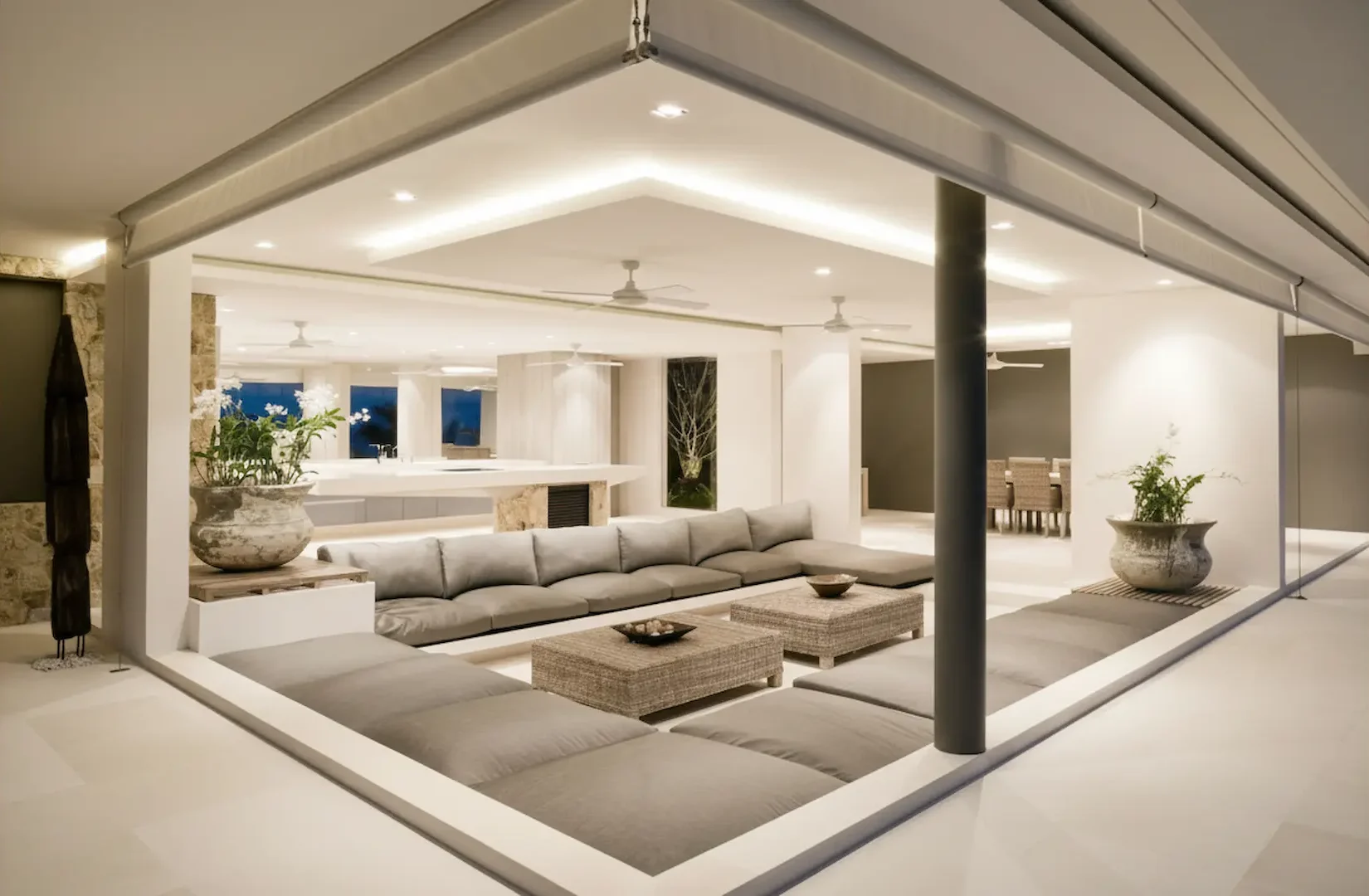
What benefits do LED lighting installations offer over traditional fixtures?
LED installations lower energy use, lengthen the time between service visits, and improve safety because they run cooler and need fewer replacements. For example, swapping a typical incandescent downlight for an LED equivalent can cut energy use by roughly 75–85% and extend service life from about 1,000 hours to 25,000+ hours—reducing utility costs and maintenance labor. LEDs also deliver higher lumens per watt, a wide range of color temperatures, and high‑CRI options that improve task visibility and color accuracy. In many retrofit cases—especially where lights run many hours daily—these benefits pay back quickly, and smart controls increase those savings.
How do smart home lighting systems enhance control and energy efficiency?
Smart lighting adds programmable control, occupancy sensing, and integration with home automation to cut wasted run time and enable behavior‑based savings with schedules and scenes. Controls include smartphone apps, voice assistants, wireless switches, and motion or daylight sensors, offering features like automatic dusk dimming, vacancy shutoff, and coordinated security schedules. Pairing occupancy sensors with LEDs can trim unnecessary on‑time by 30–50% in corridors, garages, and outdoor areas, turning efficient hardware into measurable energy savings. Smart systems also add convenience and improve home security.
Smart vs. Conventional Lighting: Residential Energy Consumption
A simulation examined how household composition and daily activities affect smart lighting versus conventional lighting energy use for a two‑room apartment. The model shows how behavior changes the potential savings from smart systems.
Electric lighting energy consumption simulation for three different households, NH Moadab, 2021
The next section walks through the key factors to weigh when choosing between traditional and modern lighting.
Choosing Lighting Solutions: Installation, Repair, and Efficiency Factors
Choosing between modern and traditional lighting means weighing energy efficiency, total cost of ownership, light quality, compatibility, control needs, and code/safety requirements. Energy efficiency drives operating cost; light quality (color temperature and CRI) affects usability and appearance; and control features determine convenience and potential extra savings. Looking at all these factors together helps you pick the right light for each space, from kitchens to outdoor landscape lighting.
Key factors to consider when choosing lighting options:
- Energy efficiency and expected runtime, which determine operating costs.
- Lifespan and maintenance frequency, which affect replacement labor and access costs.
- Light quality: color temperature and CRI, chosen to match each room’s function.
- Control capabilities and smart integration for scheduling and automation.
- Safety, heat output, and compliance with local electrical codes.
This checklist helps you prioritize upgrades that deliver the most value for each room or exterior area, and leads into concrete examples of how energy savings affect payback and selection. For broader home safety, consider our electrical inspection services.
How do energy efficiency and cost savings impact your lighting choice?
Energy efficiency directly affects monthly utility bills and long‑term costs. Replacing high‑use incandescent fixtures with LEDs lowers kilowatt‑hours and shortens payback periods. For example, if a light runs three hours a day, replacing a 60W incandescent with a 10W LED saves about 54 kWh per year per fixture—savings that add up across a house. Over five years, lower electricity use and fewer replacements often cover the higher upfront cost of quality LED fixtures in rooms with moderate to heavy use. Use a simple payback calculation—incremental upfront cost divided by annual savings—to see whether an upgrade makes sense; the ROI examples later in this guide show how to apply this in Suffolk County scenarios. For more on efficient home design, visit the U.S. Department of Energy. For energy‑rated products, see ENERGY STAR.
Energy Efficiency & Cost Savings: Traditional vs. Modern Lighting
This study evaluates electricity consumption reductions and bill savings achieved by replacing traditional lamps with high‑efficiency alternatives. It uses financial analysis and survey data to draw conclusions about the technique’s effectiveness in a residential building context. Lighting often accounts for a significant share of building electricity use—sometimes around one‑fifth or more.
Research study on gained energy efficiency in a commercial setup by replacing conventional lights with modern energy saving lights, S Khalid, 2017
What role do lifespan, maintenance, and light quality play in lighting selection?
Lifespan reduces the need for ladder work and replacement labor—especially for recessed or high‑ceiling fixtures where service costs rise. Long‑life LEDs cut these operational burdens and reduce how often you need a Lighting repair Service. Light quality—measured by color temperature (Kelvin) and CRI—matters for cooking, reading, or merchandising where accurate color and the right warmth are important. Warranty terms, dimmer compatibility, and fixture fit should also factor in, since mismatched drivers or housings can shorten life or limit dimming performance. Evaluating these attributes together helps ensure chosen lighting performs as expected, lowers long‑term maintenance, and delivers the right look and function.
How Does the Cost Comparison Between LED and Incandescent Lighting Affect Your Decision?
Compare LED and incandescent costs by including upfront purchase price, installation or retrofit labor, annual energy cost, and replacement frequency. A lifecycle cost analysis gives a clearer picture than sticker price alone. Although LEDs cost more upfront, their much lower energy use and longer life usually mean a lower total cost over a 5–10 year timeframe for fixtures that see regular use.
Below is a sample lifecycle cost comparison using a household assumption of 3 hours of use per day and an illustrative electricity rate to help decision‑making for lighting.
| Bulb Type | Attribute | 1-year cost | 5-year cost | 10-year cost |
|---|---|---|---|---|
| Incandescent (60W) | Energy + replacements | $39 energy + $6 replacements = $45 | $195 + $30 = $225 | $390 + $60 = $450 |
| LED (10W) | Energy + replacements | $6 energy + $3 replacements = $9 | $30 + $3 = $33 | $60 + $3 = $63 |
| CFL (14W) | Energy + replacements | $9 energy + $6 replacements = $15 | $45 + $18 = $63 | $90 + $36 = $126 |
These examples show LEDs typically have the lowest lifecycle cost even with a higher upfront price. Use simple ROI formulas to estimate payback for whole‑room retrofits, and a professional assessment will refine these numbers based on your local rates and fixture counts. That assessment can also identify existing issues that might require a Lighting repair Service.
If you’d like a precise estimate, RJ & Son Electric can perform an on‑site assessment to refine ROI for your specific home and offer a free quote or assessment. By counting fixtures, documenting usage patterns, and checking current electricity rates, a licensed local electrician can produce an accurate payback timeline and recommend which upgrades to prioritize — or provide an expert Lighting repair Service. We also handle ceiling fan installation and generator transfer switch installation.
What are the upfront and long-term costs of LED vs incandescent lighting?
Upfront costs for LED modules and integrated fixtures are higher than a single incandescent bulb, but LEDs usually deliver long‑term savings through much lower energy use and far fewer replacements. A quality LED retrofit kit or fixture may cost several times more than an incandescent, yet because LEDs last 10–30× longer and use a fraction of the energy, total cost over 5–10 years is typically much lower. Remember to include installation labor—especially when converting recessed housings or adding smart controls—for an accurate lifecycle budget. For major electrical overhauls, consider electrical rewiring.
How can Suffolk County residents calculate ROI on energy-efficient lighting upgrades?
To calculate ROI, list the incremental upgrade cost (materials + installation), estimate annual energy savings per fixture, add maintenance savings from fewer replacements, and divide the total incremental cost by annual net savings to find payback years. For example: if a retrofit costs $300 for a group of fixtures and yields $120 per year in combined energy and maintenance savings, payback is 300 ÷ 120 = 2.5 years. Check local incentives and rebates too—these can shorten payback. A free assessment from a licensed local electrician will tailor these numbers to your home and available utility programs, turning sample figures into a concrete plan. For more on local expertise, see How Local Experts Transform Your Home’s Lighting.
Residential Lighting Repair Service & Retrofits by RJ & Son Electric in Suffolk County
RJ & Son Electric provides residential lighting retrofits and installations designed for Suffolk County homes. We specialize in LED retrofits, recessed lighting upgrades, outdoor and landscape LED installs, security lighting, smart lighting integration, and full Lighting repair Service. As a licensed, insured Master Electrician team with local experience, we focus on straightforward, honest work and handle the whole job—from assessment and design through installation and testing—so homeowners get systems that meet safety standards and deliver the promised energy savings.
| Service | Typical Scope | Expected Benefit / Outcome |
|---|---|---|
| LED Retrofit (indoor) | Replace bulbs/modules, update drivers, adjust housings | Lower energy use, longer lifespan, consistent light levels for lighting solutions |
| Outdoor & Landscape LED | Install weather‑rated fixtures, pathway and accent lighting | Improved security, lower outdoor energy costs, enhanced curb appeal with lighting solutions |
| Smart Lighting Integration | Add sensors, smart switches, and control hubs | Automated schedules, occupancy‑based savings, remote control for lighting solutions |
| Lighting Repair Service | Troubleshoot and fix faulty wiring, switches, fixtures, and dimmers | Restore functionality, improve safety, extend fixture life |
LED Technology & Life Cycle Costs: Replacing Traditional Outdoor Lighting
Outdoor lighting has been reshaped by efficiency and ecodesign rules, including bans on some older lamp types. This case study looks at life‑cycle costs for replacing high‑pressure mercury lamps in street lighting with LEDs in three examples, showing that each replacement roughly halved energy costs compared with the original luminaires.
Life cycle cost analysis of three renewed street lighting installations in Finland, 2012
Our services are built to cut energy costs, simplify maintenance, and improve lighting quality throughout your home while making sure installations and any Lighting repair Service comply with electrical safety and code requirements. The sections below describe our typical workflow and why homeowners choose a local provider for their lighting. For businesses, explore Transform Your Business with Custom Lighting Solutions.
How RJ & Son Electric Handles Lighting Installation, Upgrades, and Repair Service
We follow a clear, customer‑first workflow: an on‑site assessment to inventory fixtures and inspect wiring; a detailed proposal with recommended fixtures and estimated savings; scheduled installation by qualified electricians; and post‑install testing with a homeowner walkthrough. During the assessment, we record fixture types, usage patterns, and access constraints so we can design solutions that minimize disruption and maximize energy and maintenance benefits—or identify specific needs for a Lighting repair Service. Installation includes safe removal of old components, correct driver matching, dimmer compatibility checks, and sensor verification; post‑install testing confirms performance and gives you time to review results. This structured approach delivers predictable results and peace of mind. We also offer surge protection for your whole home.
Why Choose RJ & Son Electric for Energy-Efficient, Smart, and Lighting Repair Service?
Choose RJ & Son Electric for our licensed Master Electrician expertise, local Suffolk County experience, and full‑service approach that covers indoor and outdoor lighting, recessed conversions, security and landscape lighting, smart control systems, and dependable Lighting repair Service. We stand behind honest, reliable work and provide 24/7 emergency availability for electrical issues, so you can trust installations meet safety and performance goals. When you’re ready to move from evaluation to action, contact RJ & Son Electric for a free assessment or quote—we’ll specify correctly, install professionally, and ensure everything aligns with local code and your expectations. For more reasons to choose local, read Top Reasons to Choose Local Electrical Repair.
- Licensed and Insured Master Electrician: Guarantees qualified installation and code compliance for all lighting solutions.
- Local Suffolk County Expertise: We know local homes, common issues, and practical upgrade priorities for lighting solutions.
- Comprehensive Lighting Services: From indoor and outdoor lighting to recessed conversions, security, landscape, smart controls, and expert Lighting repair Service.
These trust elements help homeowners move from planning to measurable energy savings with a reputable local partner for their lighting projects, including any necessary Lighting repair Service.
Frequently Asked Questions about Lighting Repair Service & Solutions
What are the environmental benefits of switching to LED lighting?
Switching to LEDs cuts energy use significantly, which lowers greenhouse gas emissions from electricity generation. LEDs use roughly 75–85% less energy than incandescent bulbs and last far longer, which reduces waste from discarded bulbs. Upgrading to efficient lighting is a straightforward way for homeowners to shrink their carbon footprint while saving on utility bills. Learn more about EPA Energy Efficiency.
How can I determine the right color temperature for my space?
Pick color temperature based on a room’s purpose and desired mood. Measured in Kelvin (K), lower values like 2700K–3000K give warm, cozy light for living rooms and bedrooms. Higher values around 4000K–5000K produce cooler, more energizing light suited to kitchens and workspaces. Think about the activities in each space and how light affects comfort and visibility when choosing your lighting.
Are there any rebates or incentives for upgrading to energy-efficient lighting?
Many utilities and government programs offer rebates or incentives for upgrading to energy‑efficient lighting like LEDs. These programs help offset initial costs and encourage conservation. Check with your local utility or state energy office for available rebates, and ask manufacturers or retailers about promotions that can lower upfront expense.
What should I consider when retrofitting existing fixtures for LED use?
When retrofitting, confirm LED bulbs or modules physically fit existing housings and that fixtures can handle lower wattage and new drivers. Check dimmer compatibility if needed, and review mounting and trim aesthetics. If you’re unsure or suspect a fault, a licensed electrician can verify compatibility and recommend the right retrofit kit or integrated fixture—or provide a professional Lighting repair Service. For product certification, refer to Underwriters Laboratories (UL).
How do I maintain my LED lighting systems for optimal performance?
LED maintenance is straightforward: keep fixtures free of dust and debris to preserve light output, avoid covering fixtures that need airflow, and check connections if you notice flicker or dimming. Track warranties and replace fixtures at the end of rated life to keep performance and efficiency high. For systems with controls, update firmware and test sensors periodically. If problems persist, a professional Lighting repair Service can diagnose and fix the issue.
What are the safety considerations when installing new lighting fixtures?
Safety matters. Always turn off power at the circuit breaker before working on fixtures, and use fixtures rated for the intended environment (for example, wet‑rated fixtures outdoors). Follow local electrical codes and, when in doubt, hire a licensed electrician to ensure work is completed safely and correctly—this reduces the risk of electrical hazards and guarantees code compliance for both new installations and any Lighting repair Service. For general electrical safety, visit the CPSC Electrical Safety guide or the Electrical Safety Foundation. For local repair services that improve safety, see How Local Electrical Repair Enhances Safety.