
Being told you may need an electrical panel upgrade can raise a lot of questions. Is the panel itself actually failing? Would a circuit repair solve the problem? Do you need more electrical capacity, or simply more breaker space? Is the electrician recommending a panel replacement or a full service upgrade?
Those questions matter because panel repair, panel replacement, a subpanel, a new dedicated circuit, and an electrical service upgrade are different projects.
Before approving major electrical work, it helps to understand exactly what problem is being solved and why the proposed solution fits your Suffolk County home.
Not sure whether your panel needs repair or replacement?
Call RJ & Son Electric at
(631) 833-7663
or review our
panel repair vs. upgrade guide
.
Start With the Problem, Not the Panel Upgrade
A homeowner usually starts thinking about the electrical panel because something has changed.
Maybe a breaker keeps tripping. Maybe lights have begun flickering. Maybe an EV charger, heat pump, hot tub, addition, or other electrical load is being planned. Or perhaps an electrician noticed damage or deterioration at the panel.
The important question is not simply, "How old is the panel?"
The better question is:
What electrical problem or project are we trying to solve?
The answer helps determine whether the appropriate solution is a focused repair, circuit work, a subpanel, panel replacement, or a change to the electrical service.
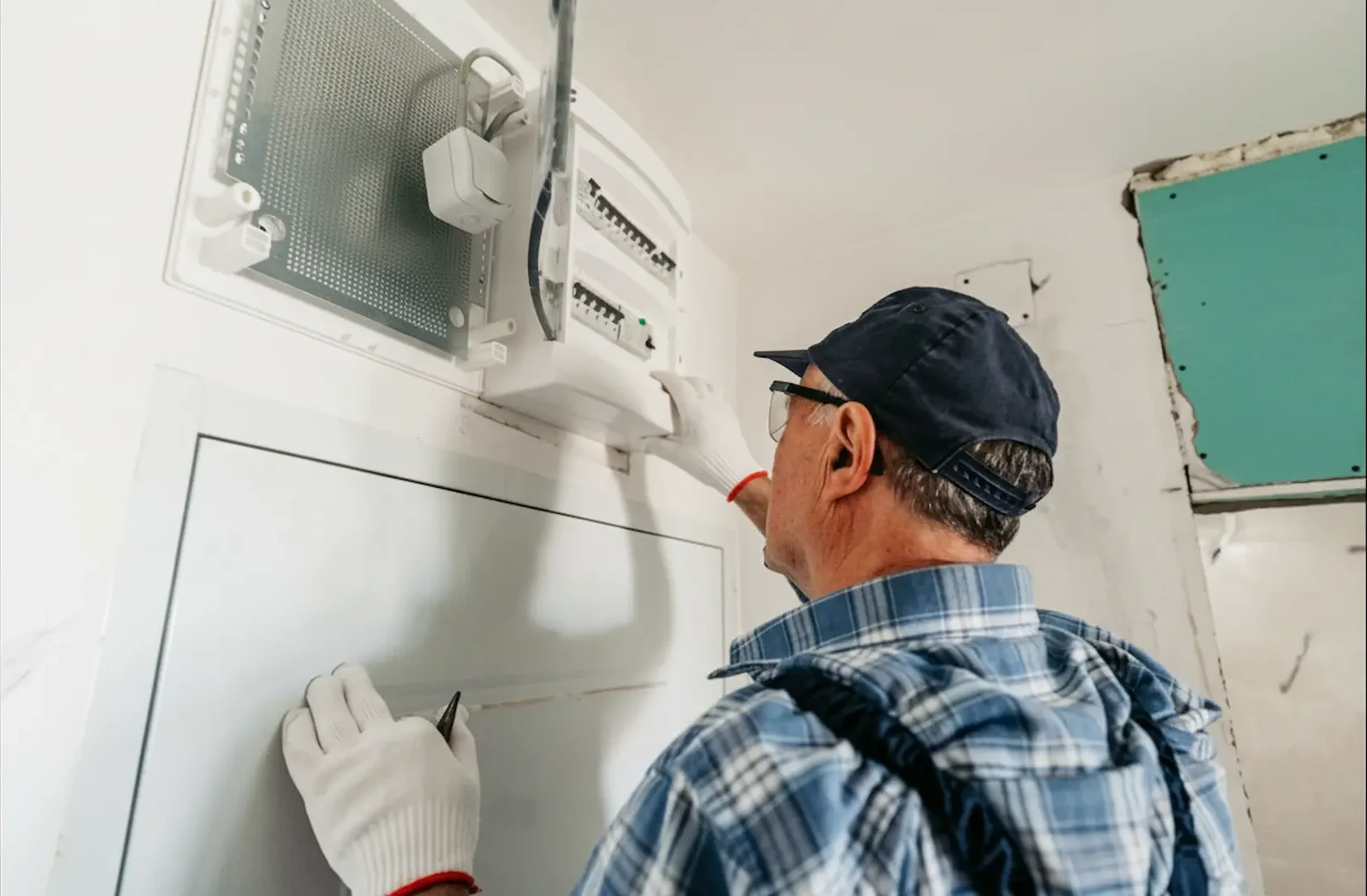
A panel recommendation should follow evaluation of the electrical problem, existing equipment, and the needs of the property.
10 Questions to Ask Before Approving a Panel Upgrade
What Started the Conversation About My Panel?
Start with the original reason the panel is being discussed.
Was it:
- A repeatedly tripping breaker?
- Flickering or dimming lights?
- A burning odor or unusual heat?
- A damaged panel component?
- A lack of usable circuit space?
- An EV charger?
- A renovation or addition?
- A new HVAC system or other major electrical load?
- A fuse box or older electrical equipment?
Those situations can lead to very different recommendations. The symptom or planned project should be understood before deciding that panel replacement is necessary.
Has the Cause of the Electrical Problem Been Diagnosed?
Breaker trips, flickering lights, dead outlets, and partial power loss can involve more than the panel.
Possible causes can include a connected appliance, electrical load, fixture, switch, wiring, connection, breaker, branch circuit, panel component, service equipment, or utility-side condition.
A symptom should therefore lead to diagnosis before a major replacement is recommended.
Learn more about the electrical repair and diagnostic process .
Is the Panel Itself the Problem?
Sometimes it is. Sometimes it is not.
Panel-related concerns can include visible deterioration, damaged equipment, unusual heat, burning odors, evidence of arcing, problems with connections or breakers, or a configuration that does not fit the planned electrical work.
But a breaker that trips or a light that flickers does not automatically prove the entire electrical panel has failed.
Read our electrical panel safety guide for a deeper look at panel warning signs.
Am I Being Quoted for Panel Replacement or a Service Upgrade?
These terms are often used interchangeably in casual conversation, but they are not necessarily the same project.
Panel replacement concerns the distribution equipment that holds the breakers and distributes power to the home's branch circuits.
A service upgrade or service change can involve the electrical service supplying the property and may include additional equipment and utility involvement.
Understanding which project is being proposed is essential when comparing quotes and deciding whether the recommendation fits the home's needs.
Do I Actually Need More Electrical Capacity?
A larger electrical service can be appropriate when the property's evaluated electrical demand justifies additional capacity.
But an existing 100-amp service does not automatically need to become 200 amps simply because:
- The home is older.
- The panel has limited breaker space.
- An EV charger is being considered.
- A breaker has tripped.
- The homeowner wants to modernize the electrical system.
Electrical capacity should be considered in relation to the loads the property actually needs to support.
Would a New Circuit or Subpanel Solve the Actual Problem?
Sometimes the homeowner needs additional circuit distribution rather than additional utility service capacity.
A new dedicated circuit may be appropriate for certain equipment when the existing electrical system can support the new load.
A subpanel may provide additional circuit distribution where appropriate.
A subpanel does not increase utility service capacity. It can provide additional distribution space, but the property's available electrical capacity still depends on the existing service and electrical demand.
Does My EV Charger Really Require 200-Amp Service?
Not automatically.
An EV charger installation should be planned around the actual charging equipment, intended charging output, existing household loads, available panel space, service capacity, and installation conditions.
If the existing electrical system has sufficient capacity, the charger may not require a service upgrade.
If capacity is insufficient, the appropriate electrical solution should be determined from the actual property rather than assuming every Level 2 charger requires 200-amp service.
Does an Older Fuse Box Automatically Need Replacement?
Not simply because it uses fuses.
An older fuse-based system should be evaluated based on:
- Condition.
- Configuration.
- Existing wiring.
- Previous modifications.
- Available electrical capacity.
- Recurring problems.
- The electrical work being planned.
Some fuse systems may have legitimate reasons for replacement, but the website should not treat every fuse box as automatically unsafe or noncompliant.
RJ & Son Electric also provides fuse replacement and fuse box service .
What Exactly Is Included in the Quote?
Two panel quotes may look similar at first but describe different electrical projects.
Before comparing price, understand whether the proposal includes:
- Panel replacement.
- A service-capacity change.
- Meter or service-related work.
- Subpanel work.
- New circuits.
- Repair of damaged wiring.
- Other related electrical work.
- Project-specific inspections or utility requirements where applicable.
A lower price may simply describe less work. A higher price may include a broader scope. Compare the project first and the numbers second.
What Existing Conditions Could Change the Project?
Electrical equipment can conceal conditions that are not obvious before work begins.
Project scope can be affected by:
- Damaged wiring.
- Previous electrical modifications.
- Deteriorated equipment.
- Access limitations.
- Service-equipment conditions.
- Utility requirements.
- Other electrical problems discovered during the work.
Understanding what could change the scope is part of comparing electrical proposals intelligently.
Repair, New Circuit, Subpanel, Panel Replacement or Service Upgrade?
One electrical symptom or new appliance does not always point to one solution.
| Possible Solution | What It Generally Addresses | Important Limitation |
|---|---|---|
| Electrical repair | A specific problem involving wiring, a connection, breaker, device, circuit, or other electrical condition | Does not add service capacity unless the project specifically changes the service |
| Dedicated circuit | Provides a circuit for equipment when the existing electrical system can support the load | Does not automatically solve an overall service-capacity issue |
| Subpanel | Adds circuit distribution space in an appropriate location | Does not increase utility service capacity |
| Panel replacement | Replaces the main distribution panel when its condition, configuration, or project needs justify replacement | Does not automatically mean service amperage is increasing |
| Service upgrade | Changes the electrical service when additional capacity or other service-related work is justified | Can involve utility and inspection requirements beyond a panel-only project |
Breaker Trips Do Not Automatically Mean Panel Replacement
A circuit breaker is a protective device.
If it repeatedly trips, possible causes can include:
- Electrical loads on the circuit.
- A connected appliance or other equipment.
- A short circuit.
- A ground fault.
- Damaged wiring.
- An electrical connection.
- The breaker itself.
- A panel-related condition.
That is why diagnosis comes before deciding whether a circuit breaker , panel, or another part of the electrical system needs work.
Flickering Lights Do Not Automatically Mean the Service Is Undersized
Flickering or dimming can have several possible causes.
Depending on the situation, the issue could involve:
- A lamp or fixture.
- A switch or dimmer.
- A loose or damaged connection.
- A branch circuit.
- Changing electrical loads.
- Panel equipment.
- Service equipment.
- A utility-related problem.
Widespread or recurring flickering deserves professional evaluation, especially when it happens with burning odors, sparking, unusual heat, buzzing, or partial power loss.
It should not automatically be used as evidence that the home needs a 200-amp upgrade.
When Panel Symptoms Deserve Prompt Attention
The Electrical Safety Foundation International identifies warning signs such as frequent breaker trips, dim or flickering lights, arcs or sparks, unusual buzzing or sizzling, overheating, burning odors, electrical shocks, and damaged wiring insulation as reasons to contact a qualified electrician.
Review ESFI home wiring safety guidance .
Smoke, Fire, Serious Shock or Active Electrical Danger?
Leave the affected area and call 911 for active fire, heavy smoke, serious electrical injury, or another immediate threat to people or property. Do not remove a panel cover, touch exposed wiring, or attempt to investigate damaged electrical equipment yourself.
What If the Panel Is Warm or Buzzing?
Significant unexplained heat, burning odors, buzzing, crackling, visible damage, or sparking around panel equipment should be evaluated by a licensed electrician.
The cause could involve a connection, breaker, wiring, internal panel equipment, or another electrical condition.
Do not open the panel to locate the problem yourself.
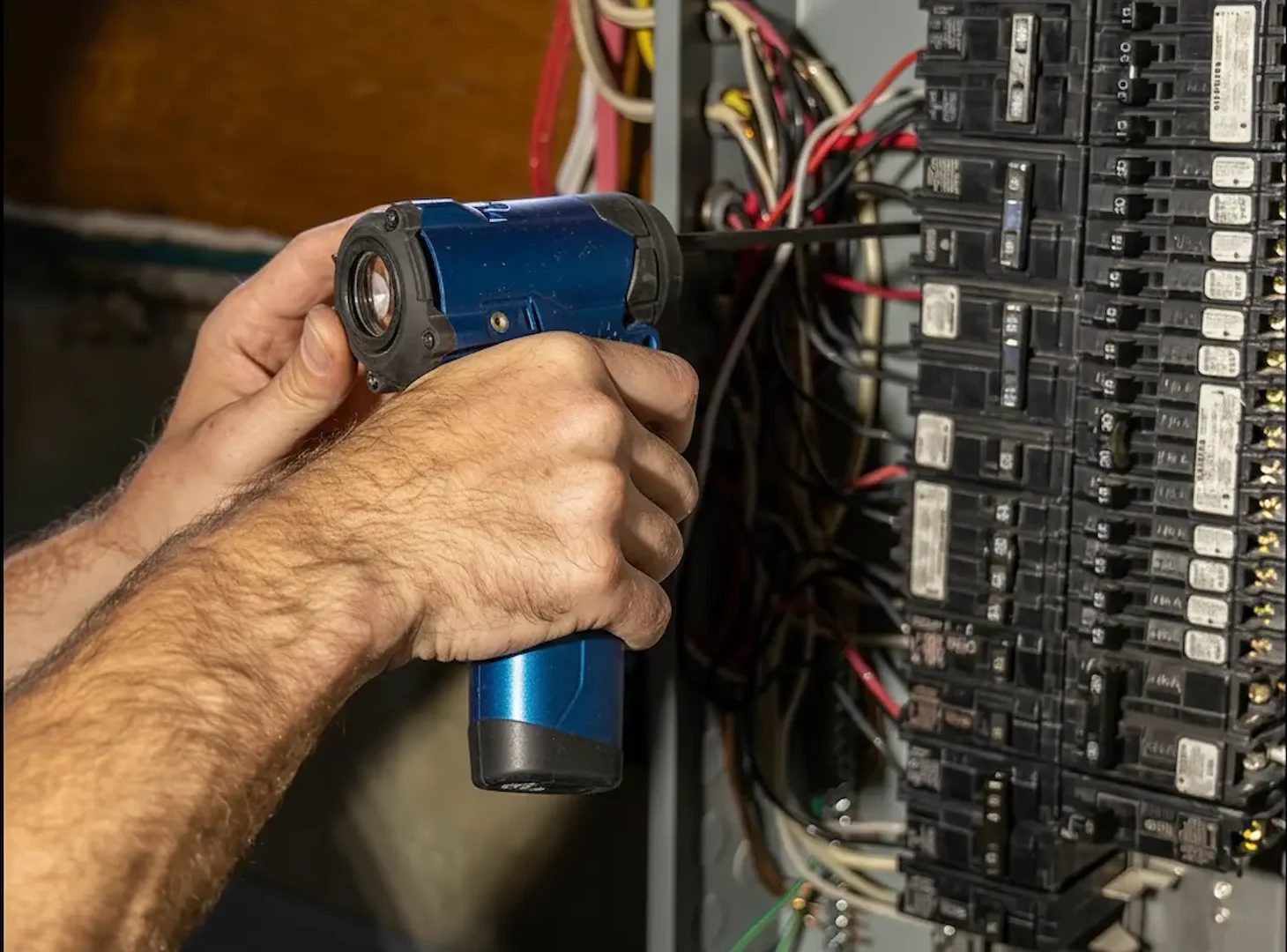
A panel-related symptom can lead to a focused repair, panel replacement, or broader electrical work depending on what is actually found.
Does Panel Age Determine Whether It Should Be Replaced?
No.
Age is useful context, but it is not the entire diagnosis.
An electrician may also consider:
- Physical condition.
- Recurring electrical problems.
- Existing equipment and configuration.
- Available circuit distribution.
- Current electrical demand.
- Planned electrical loads.
- Previous modifications.
Older equipment that is damaged or no longer appropriate for the property's needs is different from equipment being replaced solely because of its age.
When Does PSEG Long Island Become Part of the Project?
Utility involvement becomes especially important when the electrical service itself is being changed.
PSEG Long Island currently requires an electrical inspection certificate for all new services and service changes.
For service sizes of 300 amps or less, required service information is entered through the utility's online submission. For service sizes of 400 amps or more, and for all commercial services, PSEG Long Island requires a load letter completed by the electrician.
Review PSEG Long Island's Upgrade or Change Service requirements .
Panel Work Is Not Always a Utility Service Change
PSEG Long Island's service-change process should not be applied automatically to every breaker repair, panel-related repair, or subpanel project. Whether utility involvement is necessary depends on the actual electrical scope.
Does Every Panel Project Follow the Same Permit Process?
No.
Permit and inspection requirements depend on the municipality and project scope.
A focused electrical repair can have different requirements from:
- A complete panel replacement.
- An electrical service change.
- A renovation or addition.
- New fixed wiring.
- Other substantial electrical work.
When permit, inspection, or utility requirements apply, they should be discussed based on the actual project rather than treated as one universal Suffolk County process.
Should Local Experience Mean Faster Permit Approval?
No electrician controls a municipality's review or inspection schedule.
Local experience can be useful when working on Suffolk County properties, but it should not be advertised as a guarantee of faster permits, special inspector access, fewer corrections, or faster governmental approval.
Should Every Panel Assessment Include Thermal Imaging?
No.
Different electrical problems call for different diagnostic methods.
Specialized testing can be appropriate in some situations, but there is no reason to promise that every panel evaluation includes thermal imaging, insulation-resistance testing, circuit tracing, a formal load calculation, photographs, a written diagnostic report, or the same testing sequence.
The appropriate evaluation depends on the electrical problem and the project being considered.
Will a New Panel Fix Every Electrical Problem?
No.
A new panel does not automatically correct:
- Damaged branch-circuit wiring.
- A problem inside an appliance.
- A failed fixture or device.
- An unrelated loose connection.
- A utility outage.
- Every flickering-light problem.
- Every recurring breaker trip.
The panel should be replaced when the panel itself or the actual project needs justify replacement.
Will a 200-Amp Upgrade Increase Home Value?
A larger electrical service may be useful for a home that genuinely needs additional electrical capacity, but this website should not promise a specific resale-value increase.
Buyers value different improvements differently, and property value depends on many factors beyond electrical service size.
The strongest reason to change electrical service is that the property's evaluated electrical needs justify the work.
Will a Panel Upgrade Lower My Electric Bill?
Not simply because the panel is new.
An electrical panel distributes power. Replacing the panel does not by itself make appliances, HVAC equipment, lighting, or other electrical loads consume less energy.
Energy savings come from changes that actually reduce electricity consumption, such as more efficient lighting or equipment, not from assuming that a newer electrical panel automatically lowers monthly utility bills.
Does a Larger Panel Prevent Breaker Trips?
Not every breaker trip is caused by insufficient service capacity.
A breaker can trip because of:
- The load on an individual circuit.
- A short circuit.
- A ground fault.
- Connected equipment.
- Damaged wiring.
- The breaker itself.
Increasing service capacity does not automatically correct those conditions.
What Should a Good Panel Recommendation Explain?
Before agreeing to major work, a homeowner should understand the reason for the recommendation.
A useful conversation should make clear:
- What electrical problem or project is being addressed.
- Whether the panel itself has a problem.
- Whether service capacity needs to change.
- Why the recommended solution fits the property.
- Whether a repair or smaller project is a reasonable alternative.
- What major work is included.
- What conditions could change the scope.
That information is more useful than simply being told that an older home should be upgraded to 200 amps.
How Much Does Panel Work Cost?
Cost depends heavily on which type of electrical project is actually required.
Panel repair, panel replacement, a subpanel, meter-related work, and a full service change can have very different scopes.
Rather than publishing another competing price table on this page, see our dedicated: Electrical Panel Upgrade Cost in Suffolk County: 2026 Guide .
That article explains current planning ranges and the factors that can affect the project.
Online planning ranges are not property-specific quotes. Actual pricing depends on the existing electrical system and the work required.
How Long Does Panel Work Take?
The schedule depends on the project.
A focused panel repair is different from a complete panel replacement or electrical service change.
Timing can be affected by:
- The electrical scope.
- Existing equipment.
- Accessibility.
- Replacement equipment.
- Inspection requirements.
- Utility involvement.
- Conditions discovered during the work.
The expected schedule is best discussed after the electrical system and project requirements have been evaluated.
What Information Should You Have Ready for a Panel Evaluation?
You do not need detailed electrical knowledge.
Helpful information can include:
- The electrical symptoms you have noticed.
- How often the problem occurs.
- Whether breakers repeatedly trip.
- Whether there are burning odors, unusual heat, buzzing, or sparking.
- Recent renovations or electrical work.
- Major equipment you plan to add.
- Whether an EV charger is being considered.
- Whether you are planning a home addition or electrification project.
That information helps frame the reason for the electrical evaluation without requiring the homeowner to diagnose the system.
How RJ & Son Electric Helps Homeowners Evaluate Panel Options
RJ & Son Electric is led by Richard Gruttola, a licensed and insured Master Electrician serving Suffolk County.
The goal is to understand the electrical problem or planned project before deciding whether the right solution involves repair, panel replacement, additional circuit distribution, or an electrical service change.
Richard-Led Service
Richard is the Master Electrician behind RJ & Son Electric and provides the electrical expertise behind the work and customer communication.
Licensed & Insured
RJ & Son Electric is licensed and insured. Richard holds Master Electrician License ME-72156.
Diagnosis Before Replacement
Breaker trips, flickering, panel age, limited breaker space, or a new electrical load should be evaluated before assuming a complete panel or service upgrade is necessary.
Straightforward Recommendations
The recommended work should be tied to the actual condition of the electrical system and what the property needs to support.
Frequently Asked Questions About Choosing Panel Repair or an Upgrade
Does a breaker that keeps tripping mean I need a new panel?
No. Repeated trips can involve the electrical load, connected equipment, circuit wiring, a short circuit, ground fault, breaker, panel, or another electrical condition. The cause should be diagnosed before deciding what needs replacement.
Does flickering mean my electrical service is too small?
Not automatically. Flickering can involve fixtures, controls, electrical connections, circuits, changing loads, panel equipment, service equipment, or the utility system. The cause should be evaluated before recommending a service upgrade.
Does every 100-amp home need a 200-amp upgrade?
No. The appropriate service capacity depends on the electrical loads the property needs to support. Existing 100-amp service alone is not a reason to upgrade.
Does an EV charger automatically require 200-amp service?
No. The charger, intended charging output, existing household loads, panel space, service capacity, and installation conditions should be evaluated before deciding whether additional panel or service work is necessary.
Can a subpanel give my home more electrical capacity?
A subpanel can provide additional circuit distribution space, but it does not increase the electrical capacity supplied by the utility.
Does an old fuse box automatically need replacement?
Not solely because it uses fuses. Its condition, wiring, configuration, capacity, previous modifications, recurring problems, and the electrical needs of the property should be evaluated before replacement is recommended.
Is panel replacement the same as a service upgrade?
No. Panel replacement concerns the electrical distribution panel. A service upgrade changes the electrical service supplying the property. Some projects involve both, while others do not.
Does PSEG Long Island need to be involved in every panel repair?
No. PSEG Long Island has specific requirements when electrical service is being upgraded or changed. Routine breaker repairs, other panel-related repairs, and some subpanel projects are different from a utility service change.
How much does an electrical panel upgrade cost in Suffolk County?
Cost depends on whether the project involves panel replacement, a service change, meter or service equipment, grounding or wiring work, access conditions, inspections, utility involvement, and other property-specific factors. RJ & Son Electric maintains a separate 2026 panel upgrade cost guide with planning ranges.
How do I know which panel option is right for my home?
Start with the electrical problem or planned project. A licensed electrician can evaluate the existing system and help determine whether the appropriate solution is a focused repair, dedicated circuit, subpanel, panel replacement, service change, or another electrical approach.
Related Electrical Panel Resources
Panel Repair vs. Upgrade
A detailed comparison of when electrical panel repair, replacement, additional distribution, or service work may be appropriate.
2026 Panel Upgrade Cost Guide
Review current planning ranges and the factors that can affect panel replacement and electrical service upgrade cost.
Electrical Panel Safety
Learn which panel symptoms and electrical warning signs deserve professional evaluation.
Why a Home May Need a Panel Upgrade
Understand legitimate reasons to consider panel work without treating home age, 100-amp service, or EV charging as automatic upgrade triggers.
Not Sure Which Electrical Panel Option Fits Your Home?
RJ & Son Electric provides panel repairs, panel replacement, subpanels, service changes, circuit work, and related electrical services throughout Suffolk County. Richard Gruttola is a licensed and insured Master Electrician who can evaluate the existing system and explain what the property actually needs.
Licensed & Insured Master Electrician serving Suffolk County, NY
Master Electrician License ME-72156
(631) 833-7663 · RichG@rjandsonelectric.com