Essential electrical repair ensures home safety, preventing fires, shocks, and outages. This guide covers common residential problems, safe checks, and when to call a licensed electrician.
What Are the Most Common Residential Electrical Problems Requiring Essential Electrical Repair?
Homes face common electrical problems as wiring ages. Early detection reduces risk. Issues include flickering lights, tripping breakers, dead outlets, and burning smells. Recurring signs need diagnosis.
- Flickering lights: Check fixtures/breakers for loose connections or overloads.
- Circuit breaker trips: Isolate appliances; reset for overloads or faults.
- Dead outlets: Inspect visually; try GFCI resets for trips or loose wiring.
- Burning smells and sparks: Isolate power; get professional assessment immediately.
- Old wiring: High fire risk; licensed inspection and replacement advised.
These checks prioritize safety. If symptoms persist after basic troubleshooting, escalate to a licensed professional for deeper diagnosis and essential electrical repair.
Why Do Lights Flicker and How Can You Fix Them?
Lights flicker from loose connections, failing fixtures, or overloads. Tighten connections, swap bulbs. Persistent flickering needs professional essential electrical repair to prevent fires.
Lighting trouble often signals broader circuit issues, making breaker behavior the next logical step for essential electrical repair.
What Causes Circuit Breakers to Trip Frequently?
Breakers trip to protect wiring from overloads, short circuits, or faults. Repeated trips indicate a persistent fault or failing breaker needing professional testing.
Determining if trips are load-related or fault-related guides next steps for outlet and switch troubleshooting and essential electrical repair.
How to Diagnose and Repair Dead Outlets and Switches Safely
Dead outlets and switches result from tripped breakers, GFCIs, or loose connections. Turn off power, use a tester, reset GFCIs. Damaged or persistent issues require a licensed electrician.
Follow this numbered troubleshooting sequence to assess a dead outlet or switch safely:
- Turn off the breaker for the affected circuit and confirm power is off with a tester.
- Visually inspect the outlet or switch for damage.
- Reset nearby GFCI outlets and test downstream receptacles.
- If dead or damaged, stop use and contact a licensed electrician for essential electrical repair.
This approach highlights safe homeowner checks. If overheating or exposed conductors are present, escalate immediately to a professional for deeper diagnosis and essential electrical repair and mitigation.
What Are the Signs of Faulty Outlets and Switches?
Faulty outlets and switches show discoloration, scorch marks, buzzing, or warmth. These signs indicate degraded contacts, loose wiring, or arcing. Arrange essential electrical repair.
These device-level signs indicate when to move from DIY checks to licensed essential electrical repair troubleshooting.
When Should You Call a Licensed Electrician for Essential Electrical Repair Troubleshooting?
Call a licensed electrician for repeated breaker trips, burning smells, visible sparking, exposed wiring, or panel work. A Master Electrician diagnoses faults and makes code-compliant essential electrical repairs.
Knowing when to escalate guides your actions during urgent events and helps decide between temporary mitigation and a full essential electrical repair.
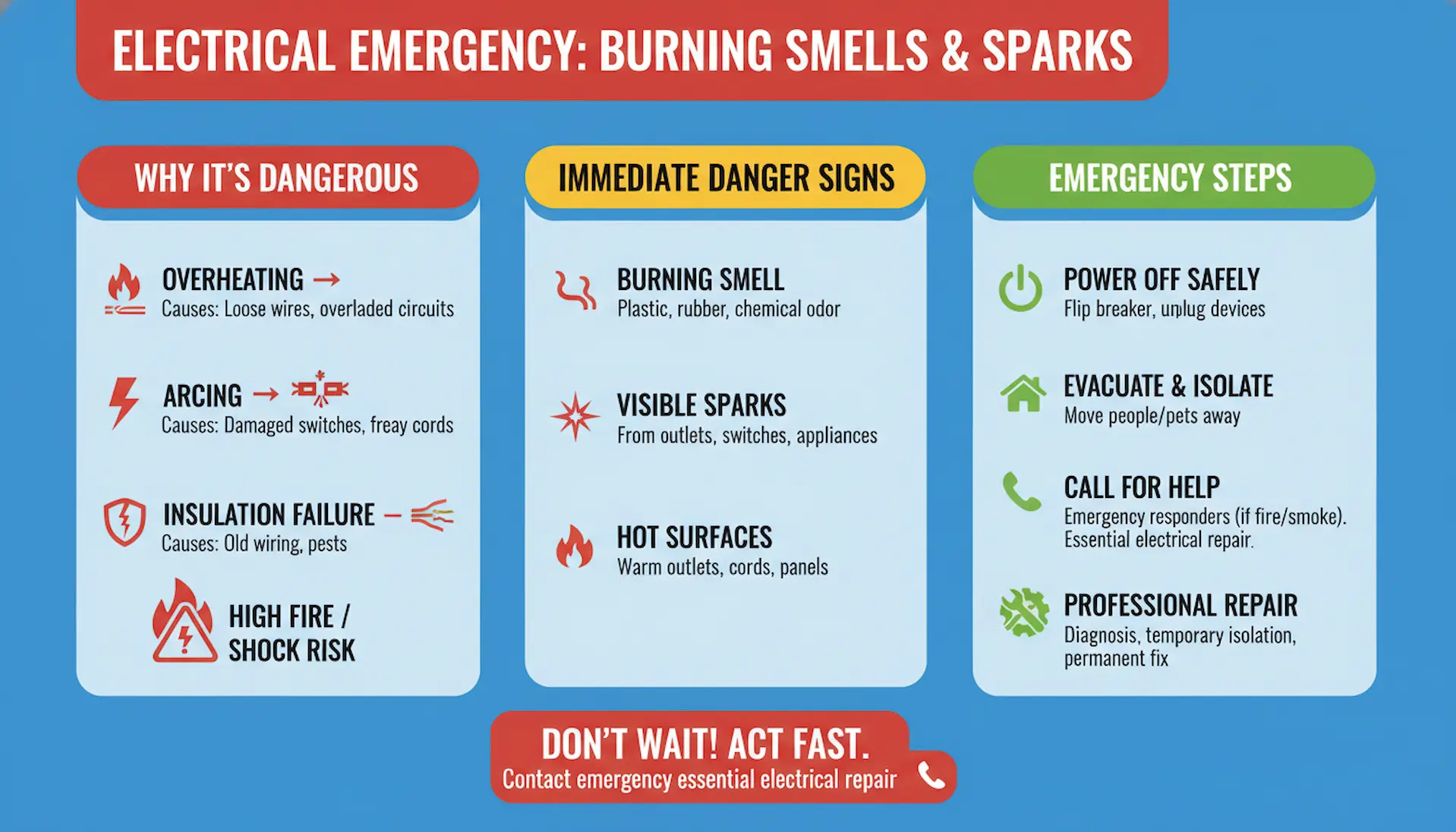
Why Are Burning Smells and Sparks Electrical Emergencies?
Burning smells and sparks indicate overheating, arcing, or insulation failure—immediate electrical emergencies with high fire/shock risk. Safely power off, unplug, evacuate. Contact emergency essential electrical repair.
If you detect burning smells or sparks, follow these emergency steps right away for essential electrical repair:
- Turn off the circuit or main breaker if safe.
- Unplug devices and move people/pets away.
- If smoke/fire is present, evacuate and call emergency responders.
- After evacuation/isolation, get emergency essential electrical repair for diagnosis/temporary isolation.
These actions protect people and property until a licensed electrician completes a full inspection and mitigation through essential electrical repair.
What Hazards Do Burning Smells and Sparking Outlets Indicate?
Burning smells and sparking outlets indicate overheating conductors, loose connections, arcing faults, or broken insulation, increasing fire risk. De-energize the circuit and call emergency essential electrical repair.
Knowing these hazards helps you understand what professionals do when they arrive and how they secure the scene for essential electrical repair.
How Does RJ & Son Electric Provide Emergency Essential Electrical Repair Services?
RJ & Son Electric offers licensed, insured Master Electrician services for emergencies. They prioritize safety-first triage: assessment, temporary isolation, and essential electrical repairs to remove immediate hazards.
This local emergency capability pairs with longer-term upgrade and essential electrical repair planning for aging systems.
When and Why Should You Upgrade Old or Damaged Wiring and Electrical Panels for Essential Electrical Repair?
Upgrading old wiring and electrical panels reduces fire risk, increases capacity for modern appliances/EV chargers, and ensures code compliance. A 200A panel supports future needs.
Residential Electric Panel Upgrades for Future Demand
Research highlights the growing need for residential electric panel upgrades to support decarbonization goals, including EV adoption and appliance electrification. Limited panel capacity is a major barrier.
Service Panel Upgrade Needs for Future Residential Electrification, ED Fournier, 2023
| Wiring or Panel Type | Characteristic | Safety / Cost Impact |
|---|---|---|
| Knob-and-tube wiring | Cloth-insulated, open run conductors | High safety risk; costly essential electrical repair replacement recommended |
| Aluminum branch wiring | Prone to oxidation at connections | Increased fire risk; requires specialized essential electrical repair or replacement |
| 100A panel | Limited circuit capacity for modern homes | May cause frequent trips; upgrade improves capacity, often part of essential electrical repair |
| 200A panel | Higher capacity and more circuits | Supports EV chargers and central HVAC; better safety integration |
| Modern panel with AFCI/GFCI | Integrated arc/ground-fault protection | Improves occupant safety; may require permit and inspection for essential electrical repair |
What Risks Are Associated with Aging Electrical Wiring?
Aging wiring increases risks of overheating, arcing, insulation breakdown, and poor connections, leading to fires and appliance damage. A licensed inspection finds hidden hotspots, preventing failures.
Inspection results then guide panel upgrade decisions and compliance planning for modern electrical demands and essential electrical repair.
How Do Electrical Panel Upgrades Improve Home Safety and Code Compliance?
Panel upgrades boost circuit capacity, enable AFCI/GFCI protection, and provide safer distribution for modern appliances and EV charger installations. Upgrading to 200A service reduces trips.
| Panel Capacity | Typical Use Case | Primary Benefit |
|---|---|---|
| 100A panel | Small or older homes with limited circuits | Cost-effective for low-demand households but limited for modern loads, often requiring essential electrical repair upgrades |
| 150A panel | Moderate-sized homes | Improved capacity and fewer shared circuits |
| 200A panel | Modern homes with EV charging and central HVAC | Supports high-demand devices and future additions, enhancing essential electrical repair capabilities |
| Panel with AFCI/GFCI | Areas requiring arc or ground-fault protection | Reduces arc-fire risk and protects against shock hazards |
The right panel depends on current and projected electrical loads and code requirements. Your licensed electrician can model your needs and recommend the correct essential electrical repair upgrade scope.
RJ & Son Electric performs panel evaluations and upgrades focusing on safety and permit compliance. Our licensed Master Electrician service helps homeowners plan capacity improvements and essential electrical repair.
How Do GFCI and AFCI Devices Protect Your Home and How Are Essential Electrical Repair Issues Resolved?
GFCI and AFCI devices protect against ground-fault shocks and fire-starting arcing. Recurring faults or failures to reset require a licensed electrician for essential electrical repair.
| Device | Function | Common Failure & Fix |
|---|---|---|
| GFCI outlet | Detects ground-faults and trips to stop shocks | Nuisance trips often from downstream faults; replace outlet or repair downstream wiring, an essential electrical repair |
| AFCI breaker | Detects arcing patterns that indicate fire risk | Repeated tripping often signals arcing in wiring or devices; inspect branch circuits and replace faulty breakers, a key essential electrical repair |
| GFCI breaker | Panel-mounted ground-fault protection | Trips under ground leakage; professional diagnosis required for persistent faults, part of essential electrical repair |
| Combination AFCI/GFCI | Protects against arc and ground-fault hazards where mandated | Complex trips require systematic troubleshooting by a licensed electrician for essential electrical repair |
What Are GFCI and AFCI Outlets and Their Safety Functions?
GFCI devices prevent electrocutions by cutting power during ground-faults. AFCI devices reduce arc-fire risk. GFCIs are for wet locations, AFCIs for bedrooms. They add crucial protection.
The next section explains how to test them and when replacement is necessary. Proper protection depends on the device and wiring, often requiring essential electrical repair.
How Can You Test and Repair GFCI/AFCI Devices?
Test GFCI and AFCI devices using their test/reset buttons. Persistent failure suggests wiring faults or a failing device needing professional diagnosis. Essential electrical repair involves replacement or fixing errors.
Regular testing plus professional follow-up keeps protection devices working as intended and preserves home safety through essential electrical repair.
What Should Homeowners Know About Licensed Electrical Contractors and Essential Electrical Repair Services?
Hiring a licensed electrical contractor ensures code-compliant, safe work. A Master Electrician offers advanced diagnostic skills. Licensed electricians are insured. Ask about license, insurance, and emergency response.
- Verify the contractor is a licensed Master Electrician and carries liability insurance.
- Ask about emergency or 24/7 response and on-site triage for essential electrical repair.
- Clarify who handles permits and inspections for upgrades or major essential electrical repairs.
- Provide clear documentation of symptoms, locations, and previous repair history.
Why Choose a Licensed Master Electrician for Essential Electrical Repair?
A licensed Master Electrician brings technical skill, code knowledge, and diagnostic experience. Hiring a licensed pro reduces liability, ensures permits, and delivers reliable, safe essential electrical repairs.
This approach is especially important in emergencies when rapid, code‑compliant stabilization and essential electrical repair are required.
How to Access Reliable Emergency Essential Electrical Repair Services in Suffolk County?
Suffolk County homeowners should prioritize licensed, insured Master Electrician services with emergency response and local code knowledge. Describe symptoms. RJ & Son Electric offers fast diagnostics and safety-first essential electrical repairs.
| Service | Characteristic | Typical Benefit |
|---|---|---|
| Emergency response | Licensed Master Electrician arrives for triage | Rapid hazard mitigation and temporary stabilization, crucial for essential electrical repair |
| Panel evaluation | Load analysis and thermal inspection | Identifies hotspots and upgrade needs for essential electrical repair |
| Protection device testing | AFCI/GFCI testing and replacement | Restores critical shock and arc protection, often an essential electrical repair |
This comparison shows how emergency response ties into longer-term essential electrical repair and upgrades to secure your home’s electrical safety.
Frequently Asked Questions
What should I do if I experience frequent circuit breaker trips, indicating a need for essential electrical repair?
Frequent breaker trips suggest overload, short circuit, or failing breaker. Unplug devices and reset. If trips persist, call a licensed electrician. Don’t ignore risks.
How can I tell if my electrical panel needs an upgrade?
Signs for a panel upgrade include frequent trips, flickering lights, or difficulty powering devices. If under 200 amps, an upgrade is wise. A licensed electrician can recommend essential electrical repair upgrades.
What are the benefits of installing GFCI and AFCI devices?
GFCI and AFCI devices enhance safety. GFCIs prevent dangerous shocks in wet areas. AFCIs reduce fire risk by detecting arcing. Installing these devices improves safety.
How often should I have my electrical system inspected?
Inspect your electrical system every 3-5 years, or sooner if issues like flickering lights or frequent trips occur. Regular checks catch hazards early, ensuring safety and efficiency.
What should I do if I smell burning near an outlet?
If you smell burning near an outlet, act immediately. Safely turn off power at the breaker. Unplug devices. Burning odors signal overheating or arcing. Contact a licensed electrician.
Can I perform my own essential electrical repair tasks?
Simple tasks are fine. Most essential electrical repair tasks—involving wiring, panels, or safety devices—require a licensed electrician. DIY attempts risk shock or fire. Hire a pro.
What are the signs that my wiring is outdated or unsafe?
Look for frequent breaker trips, flickering lights, warm/discolored outlets, or old wiring. Burning smells or exposed wires are urgent warnings. Contact a licensed electrician for inspection.