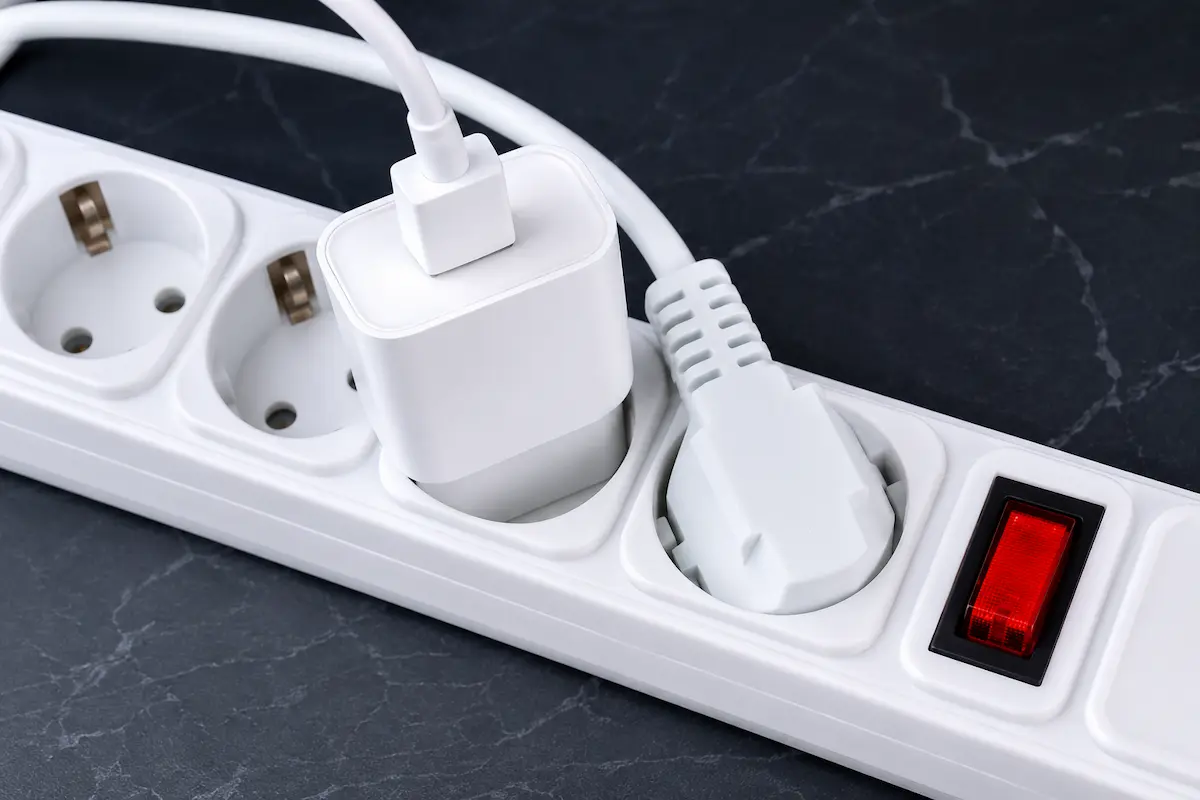
Long Island sees its share of nor’easters, summer thunderstorms, heavy grid demand in July and August, and the occasional lightning strike. Every one of those can send a spike of voltage into your home’s wiring. The power strip behind your TV only protects whatever happens to be plugged into it. Whole-home surge protection guards the entire house at the source. This guide explains what a surge is, the two layers of protection, what they actually protect, and whether it is worth it for a Suffolk County home.
What a power surge actually is
A surge is a brief spike in voltage that pushes more power into your wiring than it is designed to carry. The dramatic surges come from lightning and utility switching events, and those can destroy electronics in an instant. But most surges are small and internal, caused by large appliances like air conditioner compressors, well pumps, and refrigerators cycling on and off throughout the day. Those small surges do not announce themselves. They quietly degrade sensitive electronics over months and years until something fails early.
The two layers of surge protection
Electrical safety experts describe two main types of surge protective device for a home. A Type 1 device is installed between the utility meter and your main panel and acts as the first line of defense against large external surges like a nearby lightning strike. A Type 2 device is installed at the main panel and is the more common choice for homeowners.
Many homes pair a panel-level device with point-of-use surge strips for the most sensitive electronics, which gives layered protection. The National Electrical Manufacturers Association estimates the average home holds around 15,000 dollars of equipment that a surge can damage, and recent editions of the National Electrical Code now call for surge protection in new and renovated homes. Your licensed electrician can tell you which type fits your panel and what the code requires for your situation.
What whole-home surge protection actually protects
A whole-home device helps protect the things that are expensive to replace and increasingly run your house: HVAC equipment and heat pumps, kitchen appliances, your EV charger, washers and dryers, smart-home gear, LED lighting, computers, and televisions. As homes add more electronics and more electrified equipment, the value at risk from a single bad surge keeps climbing. For most homes, one panel-level device is inexpensive insurance against an event that could otherwise cost thousands.
Surge protector versus circuit breaker
People often assume their breakers already handle this. They do not. A circuit breaker protects your wiring from an overload that builds over seconds, when a circuit draws too much current for too long. A surge protector reacts to a voltage spike that lasts a tiny fraction of a second, far too fast for a breaker to catch. They protect against different problems, which is why a complete setup uses both.
Why Long Island homes are especially exposed
A few things make surge protection a smart move specifically on Long Island. The area sees frequent storms and high winds that bring down limbs and lines, and every time the grid switches or a line is restored, a surge can ride along with it. Summer demand is heavy, with air conditioners across whole neighborhoods cycling at once. And homes here are increasingly loaded with electronics, smart-home equipment, and electrified appliances that are sensitive to voltage spikes. The more your home depends on electronics, the more a single surge can cost you.
Signs you may have already taken surge damage
Surges do not always announce themselves with a dramatic event. Watch for electronics that fail earlier than they should, an appliance control board that stops working for no clear reason, flickering or buzzing that comes and goes, or a GFCI or breaker that trips during storms. If you have seen any of these, it is worth having your system looked at and considering protection at the panel before the next event.
What about cost?
A whole-home surge protective device installed at the panel is one of the more affordable upgrades an electrician can make, and the exact cost depends on the device chosen and your panel setup. Compared with the replacement cost of an HVAC control board, an EV charger, or a houseful of electronics, it is modest. A quick assessment gives you a firm number.
Installation
A whole-home surge device is installed at your panel and must be wired by a licensed electrician. RJ & Son Electric is a licensed and insured Master Electrician (License ME-72156) serving Suffolk County, including Selden, Centereach, Shoreham, and Wading River. If you want one less thing to worry about during storm season, we can add surge protection at your panel and make sure it is correctly sized and installed.
Frequently Asked Questions
How much does a whole-house surge protector cost installed?
It depends on the device and your panel, but a panel-level surge protective device is one of the more affordable electrical upgrades. An on-site assessment gives you a firm installed price.
Do I still need power strips if I have whole-home surge protection?
Layered protection is best. A panel-level device handles large surges for the whole house, while point-of-use strips add a second layer for the most sensitive electronics like computers and home theater gear.
Will a surge protector stop lightning damage?
A whole-home surge protection device greatly reduces the risk from typical surges and nearby strikes, but no device guarantees protection against a direct lightning hit. It is risk reduction, and a strong layer of defense for storm-prone Long Island.
Is whole-home surge protection required by code?
Recent editions of the National Electrical Code require surge protection in new and renovated homes. Whether it applies to your specific project is a question for your licensed electrician.
Where is a whole-home surge protection installed?
Type 2 devices are installed at or next to your main electrical panel, and Type 1 devices are installed between the meter and the panel. A licensed electrician handles the connection.