
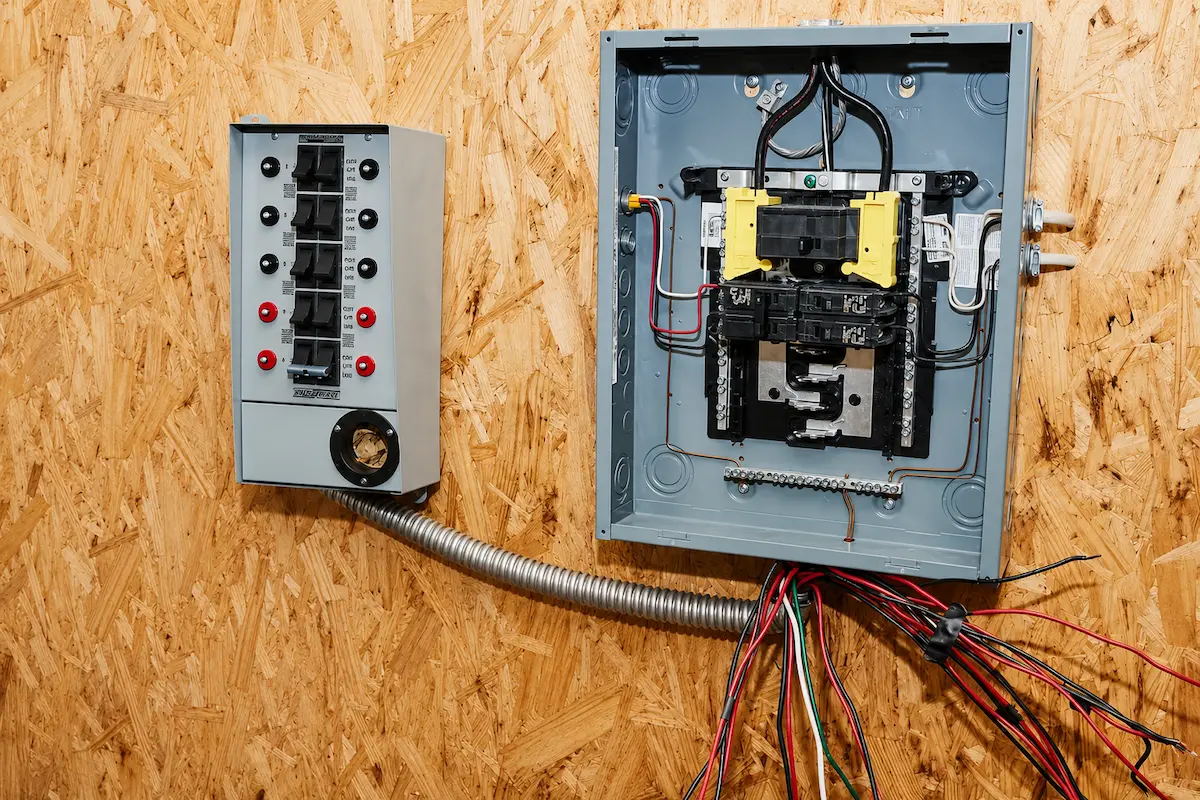
When a nor’easter or hurricane knocks out power on Long Island, a generator keeps your refrigerator cold, your heat running, your sump pump working, and life-saving medical equipment going. But how you connect that generator to your home is a life-safety decision, not just a convenience choice. Having a professional generator transfer switch installation is the only safe, legal, and reliable way to protect your family and your home. This comprehensive guide explains why a transfer switch is mandatory, the difference between portable and standby units, and the strict carbon monoxide rules that save lives.
The Ultimate Danger: Why You Should Never Backfeed Your Home
Backfeeding means plugging a portable generator into a standard wall outlet using a dangerous “double-male” cord to push power into your home’s wiring. Do not ever do this.
Power from a generator connected this way travels back out onto the utility lines (called “stepping up”). This can easily electrocute a utility lineworker trying to restore your grid power, and it poses a massive fire and shock hazard to you and your family.
Warning: The U.S. Consumer Product Safety Commission (CPSC) has explicitly warned consumers against using these male-to-male cords. The only correct method is a generator transfer switch or an interlock, which completely isolates your home from the grid before your generator powers any circuits.
Portable vs. Standby: Choosing the Right Generator Transfer Switch
How you use your backup power depends entirely on the type of generator you choose. Both require a safe connection point to function legally:
Portable Generators: These are wheeled out when you need them, started manually, and connected through a manual generator transfer switch to a chosen set of critical circuits (like the fridge, furnace, and well pump). It is the more affordable option and works perfectly if you do not mind a bit of physical setup during a storm.
Standby Generators: These are permanently installed units running on natural gas or propane. They start automatically through an automatic generator transfer switch the split second utility power drops, then shut off when the grid returns.
While standby units cost more up front, they turn a major blackout into a non-event—which is a massive advantage for Long Island homes with medical needs or frequent outages.
How Does a Generator Transfer Switch Actually Protect Your Home?
Think of the transfer switch as a strict, one-way bridge between your generator and your main electrical panel.
Its primary safety job is to ensure that your home can never be connected to the generator and the utility grid at the same time. This physical barrier is exactly what prevents dangerous backfeeding.
Additionally, a generator transfer switch allows you to safely dedicate power to specific circuits, ensuring you don’t accidentally overload a smaller portable generator. A properly installed system makes powering up during a storm as simple as starting the engine and flipping a switch.
Carbon Monoxide Safety is Not Optional
Generators produce carbon monoxide (CO) an invisible, odorless, and deadly gas. The CPSC attributes dozens of tragic deaths annually to the improper use of portable generators.
When running your system, memorize these non-negotiable rules:
Outdoor Use Only: Always run a generator outdoors, well away from windows, doors, and vents.
Never Use Garages: Never operate a generator inside a garage, even if the main garage door is wide open.
Mind the Exhaust: Always point the generator’s exhaust pipe away from the house.
Install CO Alarms: Ensure you have working, battery-powered carbon monoxide detectors installed on every level of your Long Island home.
Which Essential Circuits Should You Back Up?
One of the best parts of planning your generator transfer switch installation is deciding exactly what needs power when the grid goes down. For most Long Island homes, the priority list includes:
The refrigerator and freezer
The heating system (furnace and blower)
The sump pump
A few dedicated lighting and outlet circuits
Any critical medical equipment
From there, homeowners often add secondary conveniences like garage door openers, Wi-Fi routers, and a window air conditioner for humid summer outages. Mapping this out ahead of time ensures your generator is perfectly sized and never overloaded.
Get Set Up Before the Next Storm, Not During One
The worst time to figure out emergency backup power is in the pitch black while the wind is howling. Arranging your generator transfer switch installation and testing the system on a calm, sunny day ensures that when a real outage hits, powering up your home is a simple, stress-free routine.
Professional Sizing and Electrical Installation on Long Island
Choosing the right generator wattage and matching it to the correct transfer switch requires professional expertise. By law, a transfer switch must be installed by a licensed electrician.
RJ & Son Electric is a licensed and insured Master Electrician (License ME-72156) proudly serving Suffolk County, including Rocky Point, Smithtown, Stony Brook, and the surrounding communities. We will help you correctly size your electrical load and complete a flawless generator transfer switch installation so your backup power is safe, legal, and ready long before the next storm hits.
How big a generator do I need for my house?
It depends on which circuits you want to keep running, such as the fridge, furnace, sump pump, and a few outlets, versus whole-home backup. A licensed electrician sizes the generator and transfer switch to your needs.
Is it safe to run a generator in the garage?
No. Generators must run outdoors only, away from windows, doors, and vents, because of carbon monoxide. Never run one in a garage, even with the door open, and keep working CO detectors on every level.