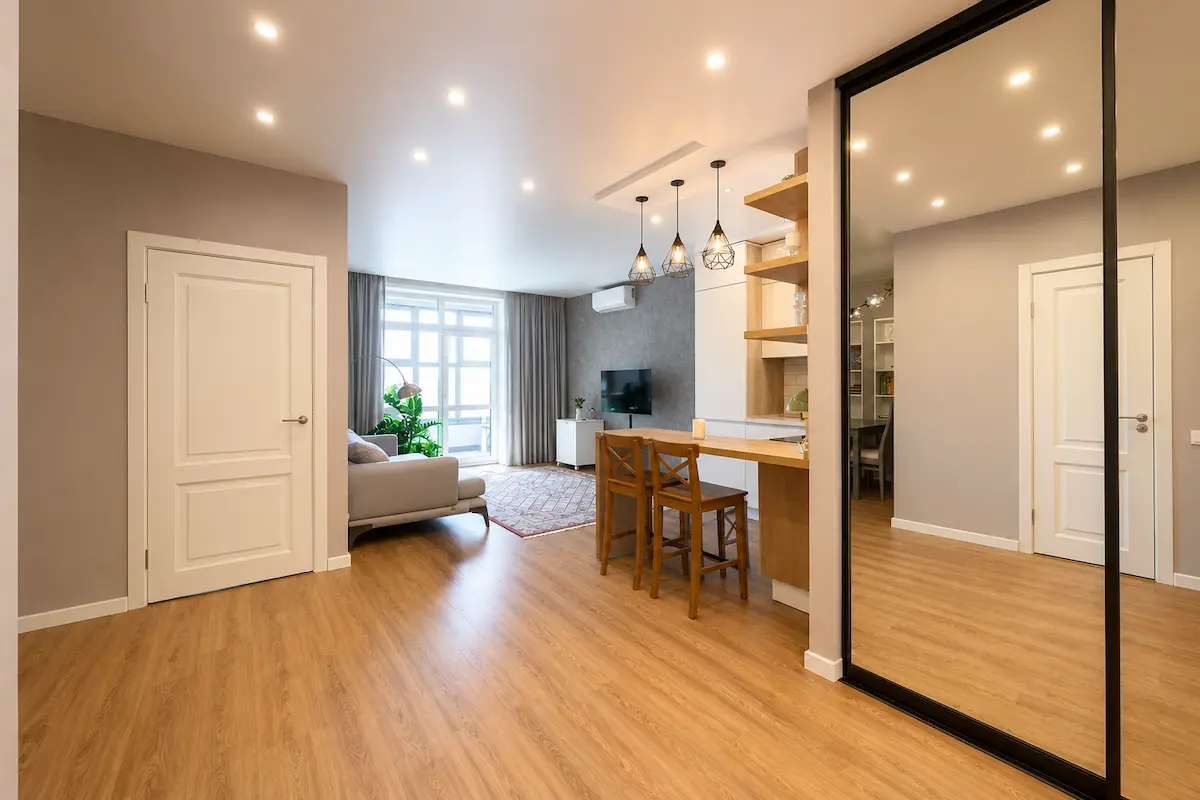
Recessed lighting, often called high hats or can lights, is one of the most popular electrical upgrades we install across Suffolk County. These modern fixtures sit completely flush within the ceiling for a clean, streamlined look, spreading even light across a room without bulky fixtures taking up valuable visual space. Done well, professional recessed lighting makes a kitchen feel dramatically brighter, a basement feel completely finished, and a living room feel significantly larger. This comprehensive guide covers where these fixtures work best, why LED has become the industry standard, how spacing and color temperature affect your room, and why a professional layout is always worth the investment.
What recessed lighting is and where it works
Recessed lighting is a light housing set up into the ceiling so that only the trim shows from below. It works beautifully in kitchens, living rooms, hallways, home offices, basements, and finished attics, anywhere you want even, unobtrusive light. It also pairs well with other layers of lighting, like under-cabinet strips in a kitchen or accent fixtures in a living room, to give a room depth instead of one flat wash of light.
Why LED is the standard now
Today’s recessed lighting is almost always LED, and for good reason. The U.S. Department of Energy notes that LED lighting uses at least 75 percent less energy and lasts far longer than old incandescent bulbs, and that there are hundreds of millions of recessed downlights installed in homes and businesses. That efficiency adds up fast when you are putting six or eight lights in a single room and running them every evening. Modern LED recessed fixtures also run cooler and come in slim profiles that fit tight ceilings.
Spacing, layout, and dimming
Good recessed lighting is about layout, not just adding lights. Spacing them correctly is what prevents both dark gaps and harsh hot spots, and the right number depends on ceiling height and room size. A common starting point is to space lights a few feet apart and keep them off the walls so you light the room, not the baseboards, but the right plan is specific to your room. Putting the lights on a quality dimmer gives you flexibility for everything from cooking to movie night, and choosing a dimmer that matches the LED fixtures is what prevents flicker and buzz.
Color temperature matters
Color temperature changes how a room feels. Warmer light around 2700K reads cozy and is popular in living rooms and bedrooms, while a cooler 4000K reads crisp and clean and works well in kitchens, bathrooms, and work areas. ENERGY STAR notes that certified recessed downlights come in a range from warm to daylight tones. Picking one consistent color temperature per area keeps the home from looking mismatched from room to room.
How many recessed lights do I need?
There is no single answer, because it depends on the size of the room, the ceiling height, how much natural light the space gets, and whether the recessed lights are the only source or part of a layered plan. A small bathroom may need only two, while a large kitchen might use eight or more arranged to light the counters and work zones rather than just the center of the room. The goal is even coverage with no dark corners and no glare, which is exactly what a planned layout delivers and a guess does not. We map out placement before we ever cut into the ceiling.
Recessed lighting in older Suffolk County homes
Many of the homes we work in were not built with recessed lighting in mind, which adds a few wrinkles. There may be limited space above the ceiling, older or ungrounded wiring to tie into, or insulation that requires specific fixture types. Plaster ceilings in older homes need a careful hand so they do not crack. None of this is a dealbreaker, it just means the install should be planned around what is actually above your ceiling, which is one more reason to have a licensed electrician handle it rather than discovering a surprise mid-cut.
Why hire a pro for high hats
Recessed lights mean cutting into your ceiling, tying into existing wiring, and working around joists, insulation, ductwork, and sometimes older home wiring. In insulated ceilings, the fixtures need to be the correct type for the space, and a licensed electrician will use IC-rated and airtight housings where they are required so you do not create a heat or air-sealing problem. Done poorly, recessed lighting leads to uneven spacing, flickering dimmers, or an unsafe connection hidden above the ceiling. A pro plans the layout, handles the wiring safely, and leaves you with clean, even light.
Local, licensed, and clean work
RJ & Son Electric is a licensed and insured Master Electrician (License ME-72156) serving Suffolk County, including Stony Brook, Setauket, Smithtown, and Port Jefferson. We treat your home with respect and clean up thoroughly after every job. If you are thinking about recessed lighting, we will help you plan a layout that fits the room, the ceiling, and your budget.
Frequently Asked Questions
How far apart should recessed lights be spaced?
Spacing depends on ceiling height and room size, but a common starting point is a few feet between lights, kept off the walls so you light the room rather than the baseboards. A layout plan tailored to your room avoids dark spots and hot spots.
What color temperature is best for recessed lighting?
Warmer light around 2700K feels cozy in living rooms and bedrooms, while cooler 4000K reads crisp in kitchens, bathrooms, and work areas. Keep one consistent color temperature per area for a clean look.
Can recessed lights be installed in an insulated ceiling?
Yes, but the fixtures need to be the correct type. In insulated ceilings a licensed electrician uses IC-rated and airtight housings where required to avoid heat and air-sealing problems.
Why do my recessed LED lights flicker on the dimmer?
Flicker usually means the dimmer is not matched to the LED fixtures. Using a compatible LED dimmer almost always fixes it, which is one reason professional installation is worth it.
Can I replace a ceiling light with recessed lights?
Yes, this is a common upgrade. It involves tying into the existing wiring and cutting in the new housings, which an electrician handles cleanly while planning the layout.