
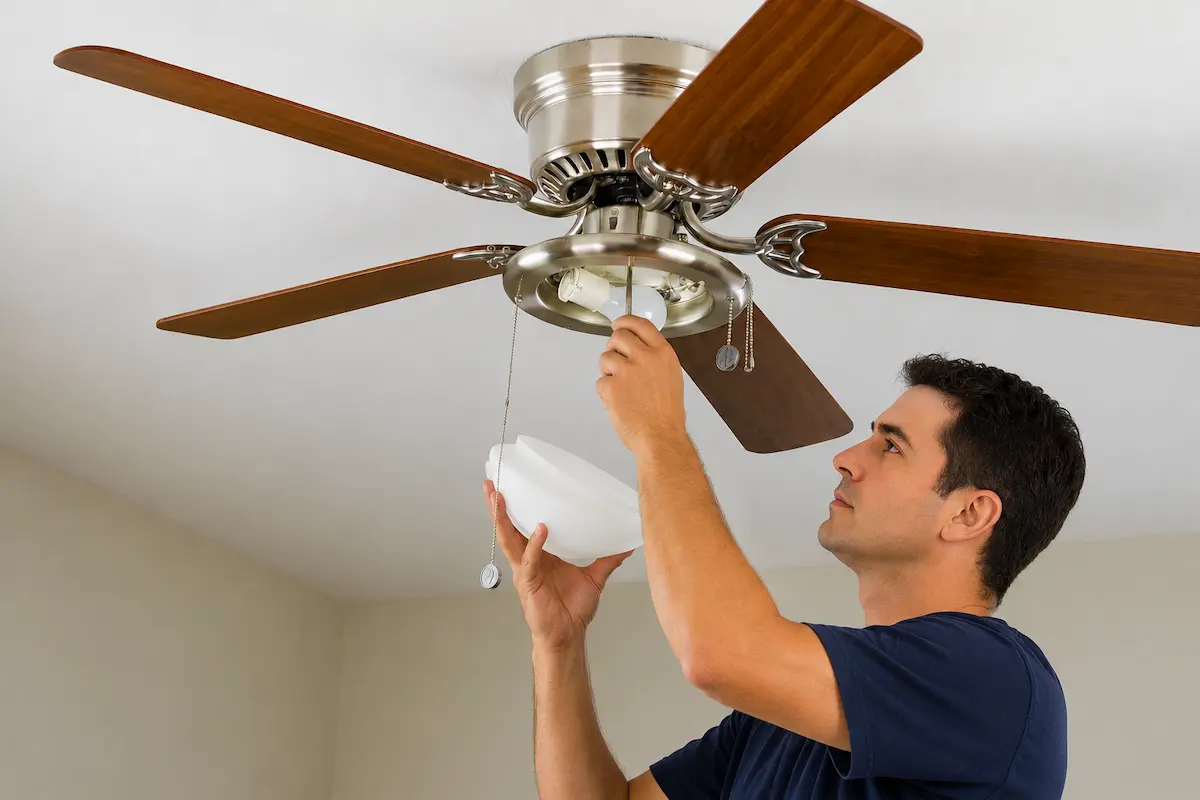
A professional ceiling fan installation is one of the simplest home upgrades that pays you back all year long. It keeps your family remarkably comfortable through a humid Long Island summer and quietly helps your heating system distribute air in the winter. Plus, when a professional handles the job, the final setup looks pristine, operates safely, and runs without a single wobble or buzz for years to come. This comprehensive guide covers the real energy savings you can expect, the winter direction setting most homeowners completely miss, the specialized junction box that makes or breaks the job, and the complex ceiling setups where hiring a pro saves you immense time and grief.
Real Energy Savings with a Professional Ceiling Fan Installation
According to data from the building efficiency sector, ENERGY STAR certified ceiling fans are up to 60 percent more efficient than conventional fan-and-light combos.
In the heat of summer, a proper ceiling fan installation allows you to comfortably raise your thermostat by about four degrees without any loss in personal comfort. This happens because moving air creates a “wind-chill effect” on your skin, making you feel cooler even though the physical temperature of the room hasn’t dropped.
The #1 Rule of Fans: Because fans cool people and not spaces, always turn the fan off when you leave the room to maximize your utility savings.
The winter trick most people miss
Fans are not exclusively a summer tool. To get the most out of your ceiling fan installation, you should reverse the motor to spin clockwise at a low speed during the cold winter months.
This counter-intuitive setting creates a gentle updraft. It pulls cool air upward and forces the warm air trapped near your ceiling back down into your actual living space. Because the ambient heat is redistributed, your oil, gas, or heat pump system doesn’t have to work nearly as hard to maintain a cozy indoor temperature.
The Fan-Rated Box Matters Way More Than the Fan Itself
Here is the precise technical detail that routinely trips up do-it-yourself homeowners attempting a swap. Because a ceiling fan spins, vibrates, and exerts dynamic weight while moving, it cannot simply hang from a standard plastic or metal light fixture box.
A code-compliant ceiling fan installation requires a specialized, heavy-duty, fan-rated braced box that is anchored securely between your ceiling joists.
Hanging a heavy fan from an ordinary electrical light box is the absolute leading cause of dangerous fan wobbling and, in worst-case scenarios, can cause the entire fixture to pull completely loose from the ceiling. When we replace an old light fixture, swapping in the correct fan-rated support box is a mandatory safety part of our job.
Why Fans Wobble and How Professionals Avoid It
An annoying ceiling wobble is almost always a structural mounting or weight-distribution issue, rather than a defect in the fan itself. The most common culprits include:
An unbraced electrical box that is not explicitly fan-rated.
Loose mounting screws or bracket hardware at the ceiling line.
Misaligned or unbalanced fan blades.
A precise ceiling fan installation on a solid, anchored box—combined with digital blade balancing—guarantees a fixture that runs smoothly and remains whisper-quiet for years.
Sizing and Selecting the Perfect Fan for Your Room
A fan that is too small for a room barely moves the air, while a massive model can visually overwhelm a small bedroom. As a general guide for a balanced ceiling fan installation:
| Room Type | Recommended Blade Span | Mounting Style |
| Small Bedrooms / Bathrooms | 36″ to 44″ | Flush Mount (Hugger) |
| Standard Bedrooms / Kitchens | 48″ to 54″ | Standard 6″ Downrod |
| Great Rooms / Primary Suites | 56″ or Larger | Extended Downrod |
Ceiling height is equally critical; blades must sit at least 7 feet above the floor for safety and proper air movement. Furthermore, if you are upgrading an outdoor patio or a screened porch on Long Island, you must select a fan explicitly rated for damp or wet environments to prevent moisture from shorting out the motor.
Adding a Fan Where No Ceiling Fixture Exists
Two of our most frequent requests across Suffolk County are converting a single central light into a fan combo, or performing a brand-new ceiling fan installation in a room with absolutely no overhead wiring.
The Light-to-Fan Swap: This requires opening the ceiling space slightly to install a heavy-duty support brace and running additional wiring if you want separate wall switches to control the fan speed and light kit independently.
New Wire Runs: This is a larger project where we fish fresh electrical lines through your walls and ceilings to a brand-new wall switch location. In older Long Island homes, navigating these paths safely requires a licensed professional to avoid disturbing historical building elements or existing wiring.
Complex Ceiling Designs Where a Professional Pays Off
While replacing a basic fan on a low ceiling is straightforward, complex architectural features change the game entirely. Sloped or vaulted ceilings, multi-story entry foyers requiring tall scaffolding, and rooms lacking any structural overhead access add major complications.
These are exactly the scenarios where booking a professional ceiling fan installation saves your weekend, ensures absolute structural safety high above your head, and guarantees the final wiring and automated wall controls work flawlessly on the first try.
Local, Licensed, and Insured Suffolk County Service
RJ & Son Electric is a licensed and insured Master Electrician (License ME-72156) proudly serving Suffolk County, including Rocky Point, Selden, Centereach, and Miller Place. Whether you need a single ceiling fan installation in a nursery or want to outfit an entire home with smart-controlled fans, we anchor the proper boxes, wire your switches perfectly, balance the blades, and leave your home spotless.
Frequently Asked Questions
Can I handle a ceiling fan installation myself if a light is already there?
It is highly discouraged unless you can verify the existing ceiling box is structurally rated for a fan. Standard light boxes cannot support the dynamic weight and vibration of a spinning fan. An electrician can safely swap the box to an IC-rated, heavy-duty brace.
Why does my existing ceiling fan wobble so badly on high speed?
Wobbling usually stems from a weak mounting box, loose assembly hardware, or fan blades that are out of balance. Securing the ceiling brace and using a precision clip-on balancing kit to equalize blade weight will usually fix the issue.
Which direction should my fan rotate during the winter?
Set the fan to run clockwise at its lowest speed. This draws cool air up and gently pushes the rising hot air back down into your living areas. In the summer, flip the switch back to counterclockwise for a direct breeze.
Does a ceiling fan installation actually lower my electric bill?
Yes, indirectly. Because the airflow makes you feel cooler, you can set your central air conditioning thermostat 4 degrees higher without feeling a difference, drastically reducing your compressor’s energy consumption.
Can you install a fan on a steep, vaulted wood ceiling?
Yes, absolutely. A vaulted ceiling fan installation requires a specialized angled canopy mount and an appropriately sized downrod so the blades clear the sloped ceiling line safely.