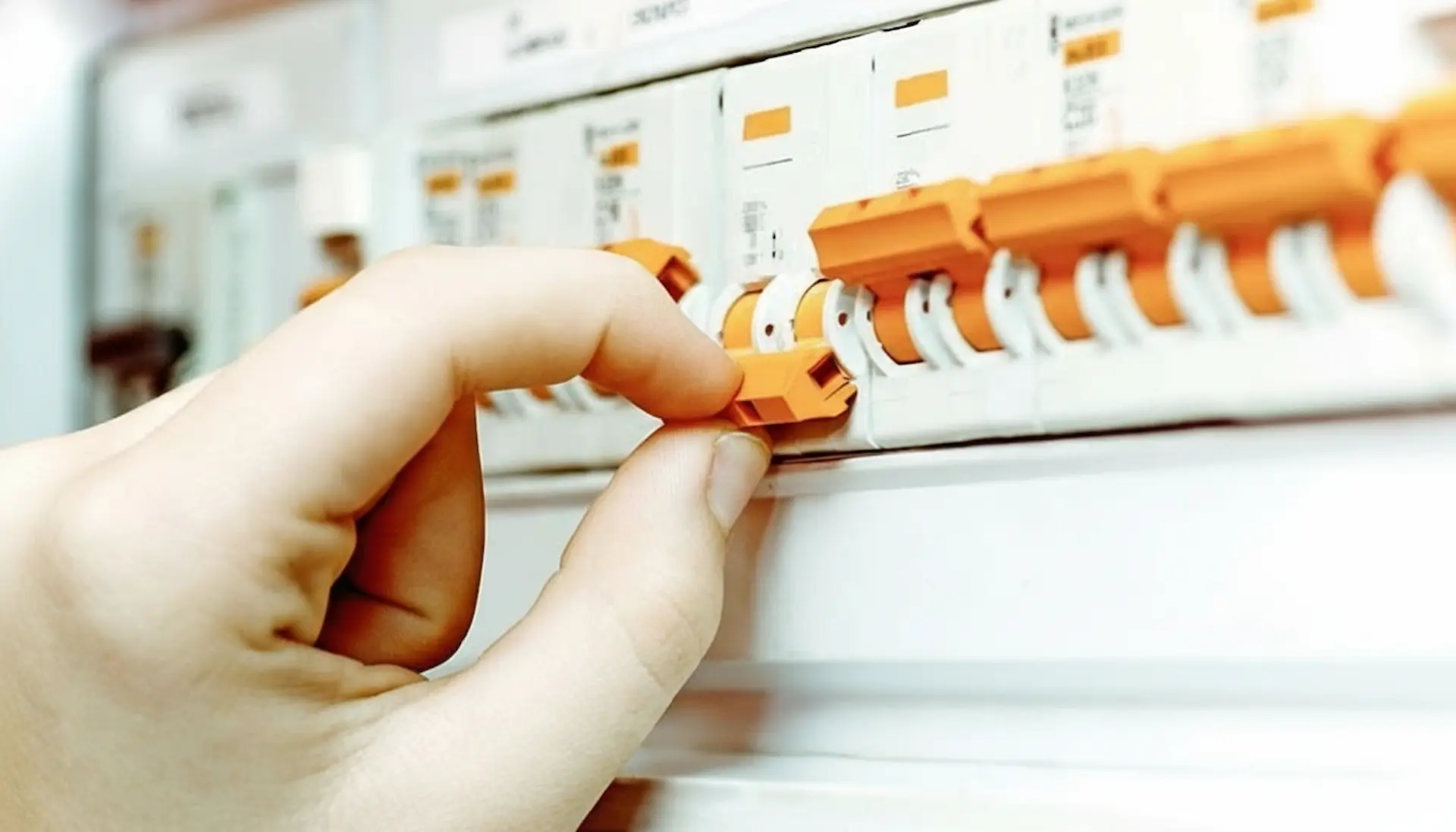
A circuit breaker that keeps tripping does not automatically need to be replaced. Breakers are designed to interrupt power when certain electrical conditions occur, so repeated tripping can be a warning that something else in the circuit needs attention.
The right repair may involve the breaker, but it could also involve the wiring, connected equipment, electrical load, panel, or another part of the system. That is why professional troubleshooting should come before simply swapping the breaker.
RJ & Son Electric provides electrical troubleshooting and repair, circuit breaker work, dedicated circuits, and electrical panel upgrades throughout Suffolk County. The company is led by Richard Gruttola, a licensed and insured Master Electrician.
Breaker keeps tripping?
Call RJ & Son Electric at
(631) 833-7663
to have the electrical problem professionally evaluated.
Why Professional Circuit Breaker Installation Matters
Circuit breakers are protective devices within the electrical system. The breaker installed must be appropriate for the electrical equipment and circuit it is protecting.
Circuit breaker installation is not simply a matter of finding another breaker with the same number printed on the handle. Compatibility with the electrical panel, circuit requirements, conductor size, connected load, and the condition of the existing system all need to be considered.
Correct Diagnosis
A tripping breaker may be doing exactly what it is supposed to do. The reason it is tripping should be identified before replacement.
Correct Equipment
Replacement equipment needs to be appropriate for the specific panel and electrical circuit.
Safe Installation
Electrical panel work can expose dangerous energized components and should be handled by a properly qualified electrician.
Complete Evaluation
The visible breaker may be only one part of a larger wiring, circuit, load, or panel problem.
The Electrical Safety Foundation International also recommends having frequent breaker trips evaluated by a qualified electrician because repeated tripping indicates an electrical issue that needs attention.
Should a Homeowner Replace a Circuit Breaker?
Circuit breaker and panel work should be handled by a licensed electrician. Electrical panels can contain energized components even when individual branch circuits are switched off.
Do not open or modify electrical panel equipment to troubleshoot a recurring breaker problem yourself. If there is burning odor, smoke, sparking, significant heat, or visible damage, keep clear of the equipment and call for professional help.
Why Does a Circuit Breaker Keep Tripping?
Breaker trips can happen for several reasons. The breaker itself is only one possibility.
| Possible Issue | What It Means | Possible Next Step |
|---|---|---|
| Electrical load problem | The circuit may be supplying more electrical demand than it is designed to handle | Evaluate the circuit, connected loads, and whether additional electrical work is appropriate |
| Wiring or circuit fault | A problem elsewhere in the circuit may be causing the protective device to operate | Professional troubleshooting to locate the fault |
| Connected equipment problem | An appliance or other electrical equipment may be contributing to the trip | Determine whether the issue follows a particular piece of equipment or affects the circuit more broadly |
| Breaker problem | The breaker itself may be damaged, unsuitable, or failing | Evaluate and replace the breaker if appropriate |
| Panel-related problem | The issue may involve connections, equipment condition, or another part of the panel | Evaluate the panel before assuming a simple breaker replacement will solve the problem |
Should You Keep Resetting a Breaker That Trips?
A breaker that trips once under an unusual condition is different from one that repeatedly trips during normal use.
If a breaker continues to trip, particularly when there are other symptoms such as buzzing, burning odors, flickering lights, unusual heat, or power problems, have the electrical system evaluated rather than repeatedly resetting it.
When Does a Circuit Breaker Actually Need Replacement?
Replacement may be appropriate when professional evaluation determines that the breaker itself is damaged, defective, unsuitable for the installation, or needs to be changed as part of other electrical work.
Breaker replacement can also be part of:
- Installing a new dedicated circuit.
- Renovating or adding electrical equipment.
- Correcting an existing electrical problem.
- Replacing or upgrading an electrical panel.
- Installing electrical protection appropriate to a specific circuit or project.
The key is that the replacement should match the electrical system and the actual purpose of the circuit.
Standard, GFCI, AFCI and Dual-Function Protection
Different protective devices are designed to respond to different electrical conditions. The correct type depends on the circuit, location, equipment, project, and requirements that apply to the installation.
| Protection Type | Primary Purpose |
|---|---|
| Standard circuit breaker | Provides overcurrent protection for the electrical circuit |
| GFCI protection | Responds to ground-fault conditions and is designed to reduce electrical shock risk |
| AFCI protection | Detects certain hazardous arcing conditions associated with electrical fire risk |
| Dual-function protection | Combines ground-fault and arc-fault protection in compatible applications |
ESFI explains that GFCI and AFCI protection address different electrical hazards. GFCI devices are designed primarily to help protect people from electrical shock, while AFCI devices detect certain dangerous arcing conditions.
Learn more from: ESFI's GFCI guidance and ESFI's AFCI guidance.
Electrical-code requirements depend on the installation. Rather than relying on a generalized online list of where a particular breaker is required, have a licensed electrician determine what protection applies to your specific circuit and project.
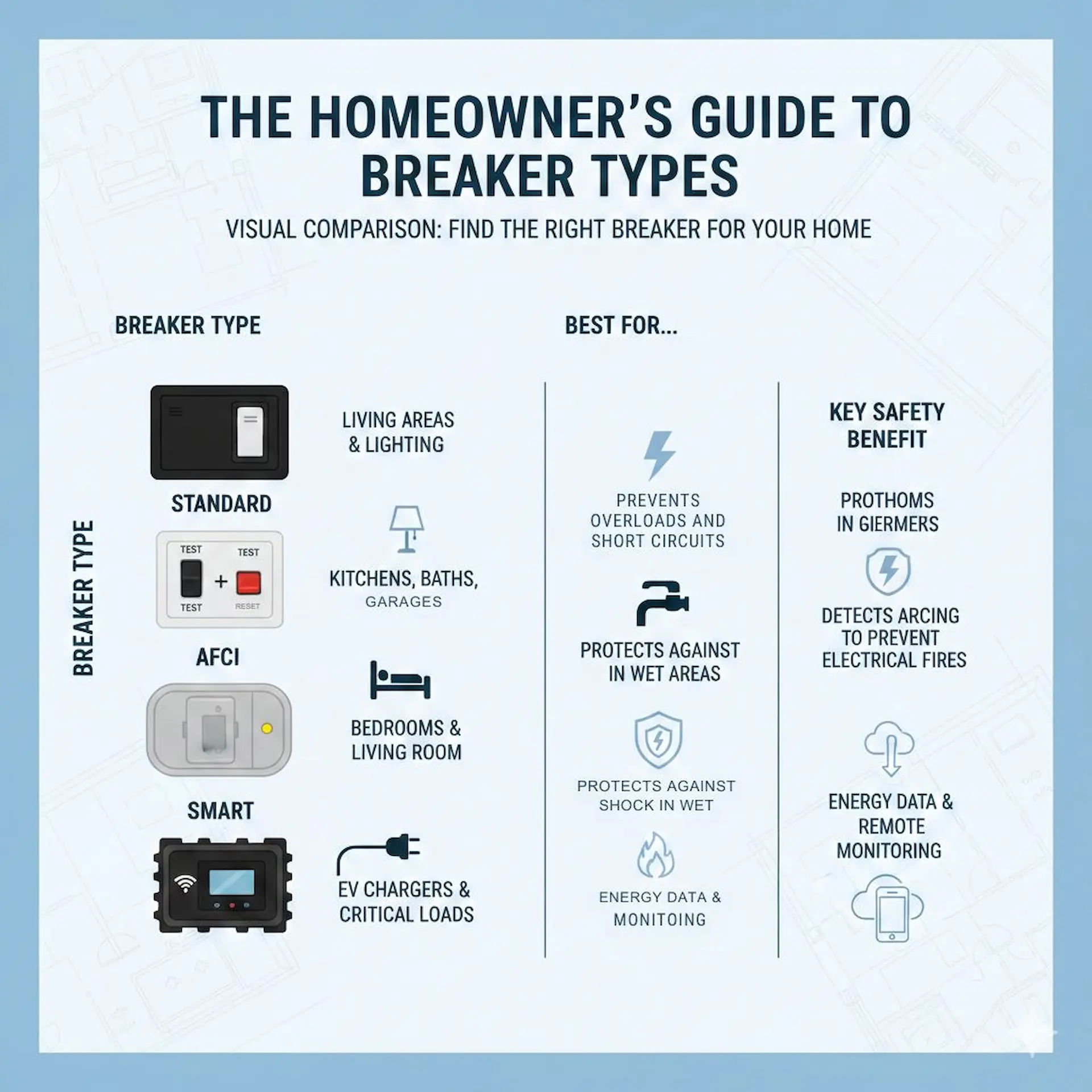
Different breaker and protective-device types serve different purposes. The correct equipment depends on the electrical system and circuit.
Do You Need a New Breaker, a Dedicated Circuit, or a Panel Upgrade?
One of the most important decisions is determining how large the repair actually needs to be.
Breaker Replacement
May be appropriate when the breaker itself is the problem and the surrounding circuit and panel are otherwise suitable.
Dedicated Circuit
May be appropriate when new equipment requires its own properly planned electrical circuit.
Subpanel
Can provide additional circuit distribution or breaker spaces in appropriate situations without automatically increasing utility service capacity.
Panel or Service Upgrade
May be appropriate when the existing equipment is unsuitable, damaged, lacks needed capacity, or the property requires a larger electrical change.
Does an Older Panel Automatically Need Replacement?
No. Age is one factor, but an arbitrary age such as 20 or 30 years should not automatically determine whether an electrical panel needs replacement.
Condition, configuration, available circuit space, electrical capacity, previous modifications, recurring problems, and planned electrical loads are all relevant.
If you are trying to decide whether the existing panel can remain in service, see our guide to electrical panel repair vs. upgrade.
Does an EV Charger Automatically Require a Panel Upgrade?
No. Adding an EV charger does not automatically require upgrading the home to a particular service size.
The electrical requirements depend on the charger, charging rate, existing electrical loads, available panel space, service capacity, and other conditions at the property.
How RJ & Son Electric Approaches Circuit Breaker Work
RJ & Son Electric is led by licensed and insured Master Electrician Richard Gruttola. Breaker work begins by determining why the electrical problem is occurring rather than assuming the breaker is automatically the cause.
What About Permits and Inspections in Suffolk County?
Permit, inspection, and documentation requirements depend on the actual electrical project and the authority responsible for the property. A routine repair should not be described as though it automatically follows the same process as a full electrical service upgrade.
When the project involves changing or upgrading the electrical service, PSEG Long Island has a specific service-change process. PSEG Long Island states that an electrical inspection certificate is required for new services and service changes.
Current utility information is available from PSEG Long Island's Upgrade or Change Electric Service guidance .
The specific requirements for a breaker, panel, dedicated circuit, or service project should be determined from the actual scope and property location.
How Much Does Circuit Breaker Work Cost?
There is no useful one-price answer because “breaker work” can describe very different projects.
| Type of Work | What Can Affect Pricing |
|---|---|
| Breaker replacement | Breaker type, panel compatibility, diagnosis, accessibility, and condition of the circuit |
| Dedicated circuit | Electrical load, wiring route, distance, access, equipment requirements, and panel capacity |
| Panel work | Condition of existing equipment, scope of replacement, circuit work, grounding, access, and related repairs |
| Service upgrade | Service size, meter and service equipment, utility requirements, inspection, wiring, grounding, and site conditions |
An on-site evaluation is the best way to determine what work is actually required and provide project-specific pricing.
If your project may involve a full panel or service change, see our guide to electrical panel upgrade costs in Suffolk County.
Why Choose RJ & Son Electric for Circuit Breaker Work?
RJ & Son Electric provides local Suffolk County electrical service led by Richard Gruttola, a licensed and insured Master Electrician.
Master Electrician Led
Richard is the licensed Master Electrician behind RJ & Son Electric and brings hands-on electrical experience to the work.
Diagnosis Before Replacement
A tripping breaker is treated as a symptom to investigate rather than an automatic parts-replacement job.
Local Suffolk County Service
RJ & Son Electric is based in Rocky Point and serves communities throughout Suffolk County.
Straightforward Communication
Richard explains what he finds and what electrical work is recommended before moving forward.
When Is a Breaker Problem an Electrical Emergency?
Repeated tripping alone deserves investigation, but certain additional symptoms can make the situation more urgent.
Call promptly if the breaker or panel problem includes:
- Smoke or a burning odor.
- Visible sparking or arcing.
- Significant unexplained heat.
- Buzzing or crackling combined with other electrical symptoms.
- Visible damage to the panel or electrical equipment.
- Major unexplained power loss.
RJ & Son Electric provides 24/7 emergency electrical service in Suffolk County.
Call
(631) 833-7663
for current availability. If there is active fire, heavy smoke, serious injury, or another immediate threat to life or property, call 911.
Frequently Asked Questions About Circuit Breaker Installation
Does a circuit breaker that keeps tripping need to be replaced?
Not necessarily. Repeated tripping can be caused by the circuit load, connected equipment, wiring, an electrical fault, the breaker itself, or another condition. The cause should be professionally diagnosed before deciding whether the breaker needs replacement.
Can a homeowner replace a circuit breaker?
Circuit breaker and electrical panel work should be handled by a licensed electrician. Panels can contain hazardous energized components, and replacement equipment must be appropriate for the panel and circuit.
What is the difference between a standard breaker, GFCI and AFCI?
Standard breakers provide overcurrent protection. GFCI protection is designed to respond to ground-fault conditions and reduce electrical shock risk. AFCI protection detects certain hazardous arcing conditions associated with electrical fire risk. The protection required for a particular circuit depends on the installation.
Does an old electrical panel automatically need replacement?
No. Age is one factor, but the condition, configuration, electrical capacity, available circuit space, previous modifications, recurring problems, and planned electrical loads also matter.
Do I need a 200-amp service for an EV charger?
Not automatically. The charger requirements, existing electrical loads, available panel capacity, charging rate, and overall electrical system should be evaluated before deciding whether additional service capacity is needed.
Does replacing a breaker require a full panel upgrade?
No. A breaker can sometimes be replaced without replacing the panel when the breaker is the actual problem and the existing panel and circuit are otherwise suitable. A panel or service upgrade should be recommended only when the electrical system actually requires it.
How much does circuit breaker replacement cost?
Cost depends on the breaker type, panel compatibility, diagnosis, accessibility, circuit condition, and whether additional electrical work is required. RJ & Son Electric can provide project-specific pricing after evaluating the problem.
Related Electrical Services
Electrical Repairs & Troubleshooting
Professional diagnosis for tripping breakers, dead circuits, outlets, switches, wiring, flickering lights, and power problems.
Panel Upgrades & Service Changes
Electrical panel replacement, service upgrades, subpanels, fuse box work, and related panel improvements.
EV Charger Installation
Professional evaluation and electrical installation for residential EV charging equipment.
24/7 Emergency Electrician
Emergency electrical service for urgent electrical problems throughout Suffolk County.
Breaker Keeps Tripping? Find Out Why Before Replacing It.
RJ & Son Electric provides circuit breaker installation, electrical troubleshooting, dedicated circuits, panel work, and related electrical services throughout Suffolk County. Richard Gruttola is a licensed and insured Master Electrician who can identify the cause of the problem and explain the appropriate repair.
Licensed & Insured Master Electrician serving Suffolk County, NY
NY Master License ME-72156
(631) 833-7663 · RichG@rjandsonelectric.com