If you own property in Suffolk County, knowing whether to repair an electrical panel or replace it with an upgrade matters for safety, reliability, and future needs. This guide explains what your panel does, how breakers protect your home, and the common signs that point to a repair or a full replacement. You’ll learn which safety issues to watch for, how high‑demand equipment like EV chargers change load requirements, and when code or insurance rules make an upgrade necessary. We also cover typical repairs, compare costs and benefits, and provide a simple checklist so you can move from inspection to scheduling a licensed professional. These local insights will help you pick the safest, most cost‑effective path for your property.
What Is an Electrical Panel and Why It Matters for Upgrade vs Repair Decisions
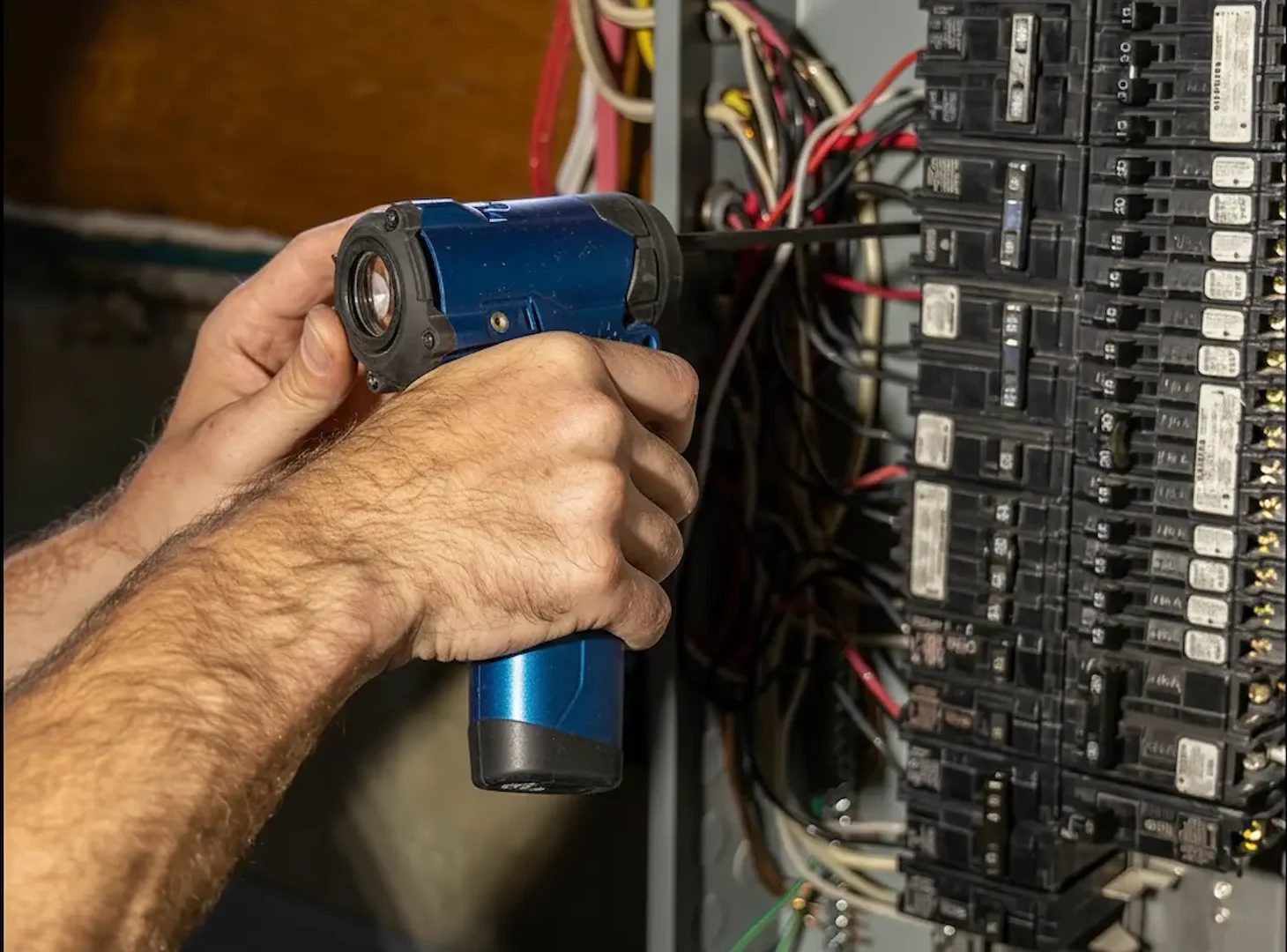
Your electrical panel is the home’s power hub: it brings utility power in, holds the main breaker and branch breakers, and sends electricity to each circuit. Breakers (or fuses on older systems) limit current to prevent overloads and reduce the risk of wiring damage or fire. A well‑kept panel delivers steady power, cuts down on nuisance trips, and protects your home — so understanding how it works is the first step to spotting capacity or safety problems. That basic knowledge makes it easier to decide whether a targeted repair will do or if a full upgrade is the smarter move.
Understanding Electrical Panel Components and How They Work
A typical panel includes a main breaker or main lug, branch breakers, bus bars, a grounding bus, and the meter‑main connection. The main breaker sets the panel’s total amperage; branch breakers protect individual circuits while bus bars distribute current to those breakers. Grounding and bonding stabilize voltage and give fault currents a safe path to ground, lowering shock and fire risk. Knowing these parts helps you read symptoms — for example, a breaker that trips repeatedly usually means an overloaded circuit or a short — and judge whether a repair or an upgrade is appropriate.
How Panels Affect Home Safety and Electrical Performance
Panels protect your home by preventing overheated conductors, arcing, and equipment damage when breakers are correctly sized and connections are secure. Loose terminations, corrosion, or outdated designs increase the chance of arcing faults and fire. Performance issues — flickering lights, breakers that trip during normal use, or being unable to run new appliances — often point to limited amperage or worn internal parts. Modern devices like AFCIs and GFCIs add extra protection that many older fuse boxes lack and that the National Electrical Code (NEC) increasingly requires. Understanding these factors will tell you whether a repair can restore a safe system or if a full upgrade is the better long‑term choice.
For a concise overview of protection and safe practice in low‑voltage systems, see the research excerpt below.
Electrical Safety & Protection in Low Voltage Installations
This chapter explains basic definitions and principles for low‑voltage work, common jobsite hazards, and practical steps to reduce risk. It also outlines the regulatory framework for electrical safety, explains basic risk assessment, and reviews protection measures such as grounding schemes and devices like residual current devices (RCDs) or residual current circuit breakers (RCCBs) that help ensure safe operation and maintenance of low‑voltage equipment.
Electrical Safety in LV Energy Installations, 2024
When Should You Consider an Electrical Panel Upgrade?
Think about a panel upgrade when repairs won’t return the system to safe, code‑compliant operation or when you need more capacity for modern equipment. Upgrades raise ampacity, replace aging or unsafe components, and free up space for dedicated circuits for items like EV chargers or whole‑home HVAC. A typical upgrade installs a higher‑amp panel, updates service conductors and grounding as needed, and includes permits so the work meets the NEC. Prioritizing an upgrade reduces nuisance trips, lowers the risk of overloaded conductors, and gives you room for future circuits — a practical choice for long‑term planning.
Signs You May Need an Electrical Panel Upgrade
Watch for frequent breaker trips during normal use, a burning or metallic smell near the panel, visible scorch marks, an old fuse box or a stamped 60A service, and no spare breaker spaces for new circuits. These usually indicate inadequate amperage or internal deterioration that simple repairs won’t reliably fix. If you spot any of these signs, schedule a licensed inspection with a load calculation to see whether a repair is feasible or a 200‑amp service upgrade (or other service changes) is needed.
Key upgrade indicators and suggested next steps:
- Frequent breaker trips: Persistent trips under normal loads — book a professional inspection to evaluate capacity and safety.
- Burning smell or scorch marks: Clear signs of overheating — stop using the affected circuits and call an electrician right away.
- Old fuse boxes or stamped “60A” service: Legacy systems that can’t handle modern demand — an upgrade is recommended for both safety and capacity.
- No available breaker spaces: No room for new dedicated circuits — add a subpanel if service capacity allows, or upgrade if total amperage is insufficient.
These problems often appear together. A licensed inspection and load calculation will show whether targeted repairs can help or if a full panel replacement is the safer long‑term solution.
Symptom‑to‑Action Reference for Panel Decisions
Use this quick reference to match common symptoms with likely causes and sensible next steps before the electrician arrives.
| Symptom | Likely Cause | Recommended Action |
|---|---|---|
| Repeated breaker trips on multiple circuits | Insufficient overall service capacity or overloaded feeders | Schedule an inspection; an upgrade is likely recommended |
| Burning odor or visible scorch marks | Loose connections or an overloaded bus/breaker assembly | Shut down the affected circuit and call for immediate repair; consider upgrade if damage is extensive |
| Outdated fuse box or low amperage label | Legacy service that can’t support modern loads | Upgrade to a modern breaker panel for safety and capacity |
| No spare breaker slots but new appliances planned | Insufficient panel space for dedicated circuits | Add a subpanel if service capacity allows; upgrade if total amperage is inadequate |
How Adding High‑Demand Appliances Changes Upgrade Needs
Big loads — EV chargers, electric ranges, central A/C — raise a home’s continuous and peak demand and often change the outcome of a load calculation. A Level 2 EV charger typically needs a 40–50 amp dedicated circuit on top of existing loads, and running several heavy appliances at once can overwhelm older panels. An electrician will run a load calculation, apply NEC demand factors, and compare results to your service amperage to decide if a 200‑amp upgrade or other changes are required. Planning ahead before installing major appliances avoids surprises and ensures space for required dedicated circuits.
Good planning and experienced installers cut mistakes. The research excerpt below highlights common pitfalls during panel work.
Electrical Panel Installation: Safety, Load, and Circuit Protection
Research shows that careful planning, qualified installers, and strict safety practices are essential for a successful panel installation. Common problems include incorrect load calculations, insufficient circuit protection, and wiring faults that can cause inefficiency or failure. Best practices include accurate load analysis, proper protective devices, and considering smart monitoring to improve long‑term reliability.
Panel Installation Work, T Wungkana, 2025
What Electrical Repair Involves and When It’s the Right Choice
Electrical repair fixes localized issues — failed breakers, loose terminations, damaged outlets, or missing protective devices — to restore safe operation without changing overall service capacity. Repairs can extend a panel’s useful life when the service has adequate amperage, proper grounding, and otherwise sound condition. Typical repair tasks include replacing failed breakers, tightening or replacing loose terminals, swapping corroded lugs, adding or repairing GFCI/AFCI protection, and correcting damaged branch wiring. Repairs are appropriate when problems are isolated; systemic issues or obsolete equipment usually point to an upgrade.
Common Repair Issues We See in Suffolk County Homes
Typical repair issues include breakers tripping from overloaded or shorted circuits, outlets working intermittently because of loose wiring, buzzing or arcing sounds from aging connections, and breakers that won’t hold a load. These often show up as intermittent power loss on a single circuit or an appliance that fails while others keep running. Repairs usually involve tightening terminations, replacing individual breakers, fixing neutral/ground faults, or installing required protective devices like AFCIs. While many repairs restore safe operation, repeated failures often mean a deeper problem that may require an upgrade.
Common repair scenarios include:
- Breaker replacement: A breaker that won’t reset — replace it and test the circuit for recurring faults.
- Loose terminal repairs: Terminals causing arcing — tighten or replace damaged parts and retest.
- Outlet and wiring fixes: Frayed wiring or damaged receptacles — repair or rewire as needed and verify circuit integrity.
Every repair should be confirmed by a licensed electrician. If the same problem comes back, that’s a strong sign a full panel replacement may be the safer, longer‑term solution.
When to Call an Electrician for Repairs
Call a licensed electrician immediately if you see smoke, smell burning, notice sparks, experience repeated breaker trips, or have partial power loss — these can be emergencies. For non‑urgent but important concerns like a single dead outlet, flickering lights, or a breaker that trips only under a known heavy load, schedule a prompt inspection so the cause can be diagnosed and the right repair or upgrade recommended. RJ & Son Electric is licensed and insured and offers diagnostic services and emergency repairs when immediate action is needed. Early evaluation keeps small problems from turning into dangerous failures and helps you choose the most cost‑effective path forward.
Warning Signs Worth Having Professionally Evaluated
Panel and service problems can show up in different ways. Some symptoms may originate inside the panel, while others can be caused by a circuit, appliance, wiring connection, electrical load, utility issue, or another part of the system.
Warning signs worth having professionally evaluated include:
- Breakers that repeatedly trip during normal use.
- Flickering or dimming lights affecting multiple fixtures or areas.
- Burning odors around electrical equipment.
- Buzzing, crackling, or unusual sounds near the panel.
- Unusual heat around electrical equipment.
- Visible corrosion, rust, discoloration, or physical damage.
- Partial or unexplained power loss.
- A lack of available circuit space when planning new electrical work.
A symptom does not diagnose the problem. For example, repeated breaker trips do not automatically mean the breaker is defective or the panel needs to be replaced. The circuit, connected equipment, wiring, or electrical load may be causing the breaker to operate.
Do Flickering Lights Mean the Electrical Panel Is Failing?
Not necessarily. Flickering can result from several different electrical conditions, and the location and pattern matter.
A single fixture behaving differently from the rest of the home is not the same situation as several rooms dimming or flickering at the same time. Widespread or recurring symptoms deserve professional troubleshooting so the actual source can be identified.
What About an Older Fuse Box or Electrical Panel?
Age by itself does not determine whether electrical equipment must be replaced. The actual condition, configuration, capacity, previous modifications, and needs of the property all matter.
An older fuse box or panel is worth evaluating if you are experiencing recurring problems, planning a renovation, adding substantial electrical loads, or seeing signs of deterioration.
When Can an Electrical Panel Problem Be Repaired?
Repair may be appropriate when the problem is isolated and the existing panel and service are otherwise suitable for the property.
Localized Electrical Problem
A specific circuit, connection, breaker, or other component may be responsible for the symptoms rather than the entire panel.
Adequate Existing Capacity
The current electrical service may already provide suitable capacity for the property’s present and planned electrical needs.
Panel Is Otherwise in Good Condition
The equipment may remain serviceable if the problem can be corrected without replacing the entire panel.
No Major Expansion Planned
A homeowner who is not adding substantial electrical loads may not need to increase service capacity.
What Does Professional Panel Troubleshooting Involve?
The exact diagnostic process depends on the symptoms and electrical system. Richard may need to evaluate the affected circuits, panel equipment, service conditions, wiring connections, or connected electrical loads to determine where the problem originates.
The goal is to repair the actual cause rather than simply replacing whatever component appears closest to the symptom.
When Does Panel Replacement or a Service Upgrade Make More Sense?
There are situations where continued repair may not be the practical long-term solution.
Physical Damage or Deterioration
Significant damage, corrosion, overheating, or deterioration can change whether existing equipment is appropriate to remain in service.
Insufficient Electrical Capacity
Planned electrical loads may require more capacity than the existing service can appropriately support.
Major Renovations or Additions
Kitchen renovations, additions, HVAC changes, workshops, EV charging, and other projects can substantially change a home’s electrical needs.
Recurring Problems
Multiple recurring problems can be a reason to evaluate whether continuing to repair existing equipment still makes sense.
Replacement is not automatically an upgrade to 200 amps. The correct service size should be based on the property’s electrical demand, existing system, and planned future loads.
Other Loads That Can Change a Home’s Electrical Needs
- Electric vehicle charging.
- Electric heating or heat-pump equipment.
- Electric water heating.
- Kitchen renovations and electric cooking equipment.
- Hot tubs or pools.
- Workshops and garages.
- Home additions.
- Other substantial new electrical equipment.
None of these automatically requires a particular service size. What matters is the combined electrical demand of the property.
Upgrade vs Repair: Key Differences and How to Decide
Deciding between a repair and a upgrade comes down to scope, long‑term safety, and code compliance. Repairs address local faults and usually cost less up front; upgrades replace outdated equipment, increase capacity, and bring the system up to current code. Repairs can restore safe operation when the existing service meets modern load and code needs, while upgrades require more initial investment but offer greater longevity, fewer emergency calls, and room for future circuits. Consider how often problems occur, the panel’s age and design, planned renovations or new appliances, and any insurance or code requirements when deciding.
Comparing Costs and Benefits of Upgrades vs Repairs
Repairs typically cover parts and labor for replacing breakers, tightening connections, or fixing specific circuits. Upgrades include the new panel, possible service conductor or meter‑main work, permits, and inspections. Repairs save money short‑term and limit downtime but may be temporary if the panel is aging. Upgrades cost more upfront but lower long‑term maintenance, allow extra dedicated circuits, and reduce emergency service calls. If you face recurring repairs, frequent trips, or planned appliance additions, an upgrade often makes better long‑term financial sense despite the initial cost.
| Option | Scope | Downtime | Longevity |
|---|---|---|---|
| Repair | Fixes localized faults and replaces components | Short — usually a few hours | Moderate; depends on panel condition |
| Upgrade | Replaces the panel, increases ampacity, and addresses code | Moderate — typically a day plus permit time | Long‑term; modern capacity and compliance |
| Subpanel addition | Adds circuit capacity without increasing service | Short to moderate | Good solution when service capacity is adequate |
Safety and Code Considerations That Affect the Choice
Safety and code compliance are central to the decision. The NEC and local inspectors set requirements for protective devices, grounding, and service capacity. Older panels may lack required AFCI/GFCI protection or have unsafe lug designs. Insurance companies sometimes require upgrades for very old equipment before issuing or renewing policies, and non‑compliant gear can increase liability after a loss. A licensed electrician’s inspection will identify code gaps, document needed corrections, and advise whether repairs restore compliance or a permitted upgrade is required.
Key items to consider:
- Required protective devices: Missing AFCI/GFCI protection may mean more than a simple repair is needed.
- Permits and inspections: Upgrades usually require permits and inspector sign‑off; some repairs also need approval depending on scope.
- Insurance implications: Insurers may require upgrades for very old or unsafe equipment to maintain coverage.
Because these factors affect safety and liability, get a professional assessment before deciding on a repair vs upgrade strategy.
How RJ & Son Electric Helps Suffolk County Homes with Panel Needs
RJ & Son Electric is a licensed and insured Master Electrician business serving residential and commercial customers across Suffolk County. We’re owner‑operated and focused on fair pricing, tidy workmanship, and reliable service under the oversight of Richard Gruttola. Whether you need a specific repair, a full diagnostic, or a complete panel upgrade, we perform load calculations, explain options in plain language, and recommend solutions that prioritize safety and code compliance. Below we explain what sets our local team apart and outline our process so you’ll know what to expect when weighing repair versus upgrade options.
Why Homeowners Trust RJ & Son Electric
We’re a licensed, insured Master Electrician outfit that delivers straightforward, dependable work. Our promise is clean, safe, and honest electrical service when you need it. We know Suffolk County permitting and inspection practices, which helps keep upgrade projects moving and reduces delays. With 24/7 emergency availability and a local, owner‑operated approach, we offer the responsiveness and accountability homeowners and businesses rely on. We make the repair vs upgrade decision clear and practical for every customer.
Our Process: How We Deliver Safe, Reliable Service
We follow a safety‑first process to diagnose problems accurately and deliver code‑compliant results:
- Inspection: Visual checks and targeted testing of panel components, breakers, and grounding to find immediate hazards.
- Diagnosis: Load calculation and circuit‑level tests to determine whether a repair or upgrade is the right solution.
- Estimate: Clear, itemized recommendations and a transparent cost estimate that reflect code requirements.
- Work and Permits: We perform repairs or upgrades with the required permits and inspections, following the NEC and local rules.
- Testing and Verification: Final testing, proper labeling, and a walkthrough to confirm safe operation before we leave.
This approach reduces surprises, clarifies cost drivers, and ensures the chosen solution addresses immediate hazards as well as long‑term capacity and compliance needs.
Frequently Asked Questions — Repair vs Upgrade
What are the benefits of upgrading an electrical panel?
An upgraded panel provides higher amperage capacity, modern safety features, and compliance with current codes. That means you can run high‑demand appliances like EV chargers with less risk of overloads and nuisance trips. Upgrades also make it easier to add dedicated circuits, reduce emergency repairs over time, and can improve resale value by showing buyers the electrical system meets today’s standards.
How can I tell if my electrical panel is outdated?
Look for frequent breaker trips, fuses instead of breakers, a service labeled 60 amps or less, visible scorch marks, or a burning smell near the panel. If your panel is over 20 years old, have it inspected — older equipment often lacks modern protections and may not support today’s loads. A professional inspection will give a definitive recommendation.
What should I expect during an electrical panel upgrade?
An upgrade begins with an inspection and planning. On the scheduled day we disconnect service, remove the old panel, and install the new one. The job may include updating service conductors and grounding. After installation we test all circuits, label them, and ensure everything is code‑compliant. Most standard residential upgrades take one to two days on site; permitting can extend the overall schedule.
Are permits required for an electrical panel upgrade?
Yes — upgrades typically require permits so local authorities can verify the work meets building and safety codes. Permitting usually involves submitting basic plans and scheduling inspections. A licensed electrician will handle the permit process and coordinate inspections as part of the service.
How often should I have my electrical panel inspected?
We recommend an inspection every 3–5 years, or sooner if you notice warning signs like frequent trips, unusual smells, or visible wear. Also schedule an inspection before adding major appliances or doing significant renovations to confirm your panel can handle the extra load.
What does an electrical panel upgrade usually cost?
Costs vary with panel size, installation complexity, and local labor rates. A typical residential upgrade generally ranges from $1,500 to $3,000, including the panel, labor, permits, and materials. While that’s a meaningful investment, an upgrade can reduce long‑term repair costs and improve safety and capacity.
Start With the Problem, Not the Panel Upgrade
A homeowner usually starts thinking about the electrical panel because something has changed.
Maybe a breaker keeps tripping. Maybe lights have begun flickering. Maybe an EV charger, heat pump, hot tub, addition, or other electrical load is being planned. Or perhaps an electrician noticed damage or deterioration at the panel.
The important question is not simply, “How old is the panel?”
The better question is:
What electrical problem or project are we trying to solve?
The answer helps determine whether the appropriate solution is a focused repair, circuit work, a subpanel, panel replacement, or a change to the electrical service.
10 Questions to Ask Before Approving a Panel Upgrade
1. What Started the Conversation About My Panel?
Start with the original reason the panel is being discussed. Was it:
- A repeatedly tripping breaker?
- Flickering or dimming lights?
- A burning odor or unusual heat?
- A damaged panel component?
- A lack of usable circuit space?
- An EV charger?
- A renovation or addition?
- A new HVAC system or other major electrical load?
- A fuse box or older electrical equipment?
Those situations can lead to very different recommendations. The symptom or planned project should be understood before deciding that panel replacement is necessary.
2. Has the Cause of the Electrical Problem Been Diagnosed?
Breaker trips, flickering lights, dead outlets, and partial power loss can involve more than the panel.
Possible causes can include a connected appliance, electrical load, fixture, switch, wiring, connection, breaker, branch circuit, panel component, service equipment, or utility-side condition.
A symptom should therefore lead to diagnosis before a major replacement is recommended.
3. Is the Panel Itself the Problem?
Sometimes it is. Sometimes it is not.
Panel-related concerns can include visible deterioration, damaged equipment, unusual heat, burning odors, evidence of arcing, problems with connections or breakers, or a configuration that does not fit the planned electrical work.
But a breaker that trips or a light that flickers does not automatically prove the entire electrical panel has failed.
4. Am I Being Quoted for Panel Replacement or a Service Upgrade?
These terms are often used interchangeably in casual conversation, but they are not necessarily the same project.
Panel replacement concerns the distribution equipment that holds the breakers and distributes power to the home’s branch circuits.
A service upgrade or service change can involve the electrical service supplying the property and may include additional equipment and utility involvement.
Understanding which project is being proposed is essential when comparing quotes and deciding whether the recommendation fits the home’s needs.
5. Do I Actually Need More Electrical Capacity?
A larger electrical service can be appropriate when the property’s evaluated electrical demand justifies additional capacity.
But an existing 100-amp service does not automatically need to become 200 amps simply because:
- The home is older.
- The panel has limited breaker space.
- An EV charger is being considered.
- A breaker has tripped.
- The homeowner wants to modernize the electrical system.
Electrical capacity should be considered in relation to the loads the property actually needs to support.
6. Would a New Circuit or Subpanel Solve the Actual Problem?
Sometimes the homeowner needs additional circuit distribution rather than additional utility service capacity.
A new dedicated circuit may be appropriate for certain equipment when the existing electrical system can support the new load.
A subpanel may provide additional circuit distribution where appropriate.
A subpanel does not increase utility service capacity. It can provide additional distribution space, but the property’s available electrical capacity still depends on the existing service and electrical demand.
7. Does My EV Charger Really Require 200-Amp Service?
Not automatically.
An EV charger installation should be planned around the actual charging equipment, intended charging output, existing household loads, available panel space, service capacity, and installation conditions.
If the existing electrical system has sufficient capacity, the charger may not require a service upgrade.
If capacity is insufficient, the appropriate electrical solution should be determined from the actual property rather than assuming every Level 2 charger requires 200-amp service.
8. Does an Older Fuse Box Automatically Need Replacement?
Not simply because it uses fuses.
An older fuse-based system should be evaluated based on:
- Condition.
- Configuration.
- Existing wiring.
- Previous modifications.
- Available electrical capacity.
- Recurring problems.
- The electrical work being planned.
9. What Exactly Is Included in the Quote?
Two panel quotes may look similar at first but describe different electrical projects.
Before comparing price, understand whether the proposal includes:
- Panel replacement.
- A service-capacity change.
- Meter or service-related work.
- Subpanel work.
- New circuits.
- Repair of damaged wiring.
- Other related electrical work.
- Project-specific inspections or utility requirements where applicable.
A lower price may simply describe less work. A higher price may include a broader scope. Compare the project first and the numbers second.
10. What Existing Conditions Could Change the Project?
Electrical equipment can conceal conditions that are not obvious before work begins.
Project scope can be affected by:
- Damaged wiring.
- Previous electrical modifications.
- Deteriorated equipment.
- Access limitations.
- Service-equipment conditions.
- Utility requirements.
- Other electrical problems discovered during the work.
Understanding what could change the scope is part of comparing electrical proposals intelligently.
What Should a Good Panel Recommendation Explain?
Before agreeing to major work, a homeowner should understand the reason for the recommendation.
A useful conversation should make clear:
- What electrical problem or project is being addressed.
- Whether the panel itself has a problem.
- Whether service capacity needs to change.
- Why the recommended solution fits the property.
- Whether a repair or smaller project is a reasonable alternative.
- What major work is included.
- What conditions could change the scope.
That information is more useful than simply being told that an older home should be upgraded to 200 amps.
What Information Should You Have Ready for a Panel Evaluation?
You do not need detailed electrical knowledge.
Helpful information can include:
- The electrical symptoms you have noticed.
- How often the problem occurs.
- Whether breakers repeatedly trip.
- Whether there are burning odors, unusual heat, buzzing, or sparking.
- Recent renovations or electrical work.
- Major equipment you plan to add.
- Whether an EV charger is being considered.
- Whether you are planning a home addition or electrification project.
That information helps frame the reason for the electrical evaluation without requiring the homeowner to diagnose the system.
Will a New Panel Fix Every Electrical Problem?
No.
A new panel does not automatically correct:
- Damaged branch-circuit wiring.
- A problem inside an appliance.
- A failed fixture or device.
- An unrelated loose connection.
- A utility outage.
- Every flickering-light problem.
- Every recurring breaker trip.
The panel should be replaced when the panel itself or the actual project needs justify replacement.
Will a 200-Amp Upgrade Increase Home Value?
A larger electrical service may be useful for a home that genuinely needs additional electrical capacity, but this website should not promise a specific resale-value increase.
Buyers value different improvements differently, and property value depends on many factors beyond electrical service size.
The strongest reason to change electrical service is that the property’s evaluated electrical needs justify the work.
Will a Panel Upgrade Lower My Electric Bill?
Not simply because the panel is new.
An electrical panel distributes power. Replacing the panel does not by itself make appliances, HVAC equipment, lighting, or other electrical loads consume less energy.
Energy savings come from changes that actually reduce electricity consumption, such as more efficient lighting or equipment, not from assuming that a newer electrical panel automatically lowers monthly utility bills.
Should Every Panel Assessment Include Thermal Imaging?
No.
Different electrical problems call for different diagnostic methods.
Specialized testing can be appropriate in some situations, but there is no reason to promise that every panel evaluation includes thermal imaging, insulation-resistance testing, circuit tracing, a formal load calculation, photographs, a written diagnostic report, or the same testing sequence.
The appropriate evaluation depends on the electrical problem and the project being considered.
Should Local Experience Mean Faster Permit Approval?
No electrician controls a municipality’s review or inspection schedule.
Local experience can be useful when working on Suffolk County properties, but it should not be advertised as a guarantee of faster permits, special inspector access, fewer corrections, or faster governmental approval.
Typical Timeline for an Electrical Panel Upgrade
On‑site work for a standard single‑family home upgrade usually takes one to two days, depending on complexity and conduit routing. Permit approval and inspector scheduling may add days or a few weeks to the timeline. Homes that need rewiring or other code corrections will extend the schedule. On‑site tasks include disconnecting service, installing the new panel, reconnecting branch circuits and grounding, and final testing — the job is complete when the inspector signs off.
Can Repairs Delay the Need for an Upgrade?
Yes — targeted repairs can safely postpone an upgrade when problems are isolated and the service has adequate capacity and grounding. Replacing a failed breaker or tightening loose connections can restore safe operation and buy time. But if faults recur or the root cause is an undersized service or aging bus, repairs are only a temporary fix; repeated issues usually mean an upgrade is the safer, more cost‑effective choice. A staged approach — repair now to remove immediate hazards and plan an upgrade later — can work when recommended by a licensed electrician.
If you’re ready to move from diagnosis to action, contact RJ & Son Electric to schedule a safety inspection and load calculation. Our licensed, insured master electrician team will assess your system and provide clear, transparent guidance and an estimate to help you choose between repair and upgrade.