
Electrical repair prices can vary significantly even when two homeowners describe what sounds like the same problem. That is because the visible symptom is only one part of the job. The actual cost depends on what is causing the problem, how difficult it is to diagnose, the parts and materials required, accessibility, and the scope of the repair.
Local labor costs can influence electrician pricing in Suffolk County, but an hourly labor rate by itself does not tell you what an electrical repair will cost. Also see our comparison of local vs national electricians.
RJ & Son Electric provides electrical repairs and troubleshooting throughout Suffolk County. The company is led by Richard Gruttola, a licensed and insured Master Electrician serving residential, commercial, and light industrial properties.
Need an electrical repair quote?
Call RJ & Son Electric at
(631) 833-7663
or
request electrical service.
What Actually Determines the Cost of an Electrical Repair?
The price of an electrical repair is usually influenced by several factors working together.
Diagnosis
A visible symptom such as a dead outlet, breaker trip, flickering light, or partial outage may require troubleshooting before the repair itself can be identified.
Scope of Repair
Replacing a failed device is a different project from tracing damaged wiring, correcting several connections, or working on electrical panel equipment.
Parts & Materials
The type, quantity, compatibility, availability, and specifications of the electrical equipment required can affect project cost.
Access & Conditions
Finished walls, crawlspaces, attics, exterior runs, long wiring routes, previous modifications, and other site conditions can affect the work involved.
Project Requirements
A focused repair can have different requirements from a renovation, service change, panel project, new circuit, or other larger electrical installation.
Timing
Emergency and after-hours electrical work can be priced differently from normally scheduled service, depending on the contractor and situation.
Are Local Labor Rates the Main Cost of Electrical Repair?
Labor is certainly part of electrical repair pricing, but there is no universal formula that accurately describes every contractor or every project.
Electrical contractors can structure pricing in different ways. Depending on the company and job, pricing may involve:
- Hourly billing.
- Flat-rate pricing for certain defined work.
- A service or diagnostic charge.
- A project price based on the complete scope.
- Separate pricing for emergency or after-hours service.
- Another contractor-specific pricing structure.
This article is not an RJ & Son Electric rate sheet. RJ & Son Electric should not be described as using a call-out fee, hourly minimum, parts markup, diagnostic charge, flat-rate system, or specific emergency multiplier unless that pricing policy has been confirmed for the actual project.
Why an Electrician's Hourly Rate Does Not Tell the Whole Story
Homeowners sometimes compare electricians based entirely on an hourly number.
That can be misleading because two contractors may structure the same project differently.
One contractor might quote time and materials. Another might provide a project price. A third might separate diagnosis from repair.
Even when two contractors use hourly billing, the total project can still differ because of:
- How quickly the electrical problem is identified.
- The scope of the repair.
- The equipment being installed.
- Accessibility.
- The condition of the existing system.
- Whether additional problems are discovered.
Comparing only the hourly rate can therefore miss the more important question: What work is actually included?
Why Electrical Diagnosis Can Affect the Price
Some electrical problems are obvious. Others are not.
A dead receptacle does not automatically mean the receptacle needs replacement. A breaker that keeps tripping does not automatically mean the breaker is defective. Flickering lights do not automatically mean the panel needs replacement.
Possible causes can involve:
- A device or fixture.
- Electrical wiring.
- A connection.
- A branch circuit.
- A breaker.
- Panel equipment.
- Electrical service equipment.
- A connected appliance or other load.
- A utility-related issue.
The amount of diagnostic work required can therefore be an important part of the overall repair.
Read our electrical repair and diagnostic process guide for a more detailed explanation of how symptoms are narrowed down to actual causes.
Why the Same Electrical Symptom Can Lead to Different Repair Costs
| What the Homeowner Notices | Why the Cost Can Vary |
|---|---|
| Dead outlet | The issue might be limited to the receptacle or involve wiring, an upstream connection, another protective device, or a broader circuit problem. |
| Breaker keeps tripping | The cause could involve electrical load, connected equipment, wiring, a circuit fault, the breaker itself, or panel conditions. |
| Lights flicker | The problem may involve a lamp, fixture, dimmer, connection, branch circuit, changing load, panel, service, or utility condition. |
| Partial power loss | The issue may be limited to one circuit or involve panel equipment, service equipment, or the utility supply. |
| Burning odor | The cause could involve a device, loose connection, damaged wiring, connected equipment, breaker, or electrical panel component. |
This is why internet price charts for a symptom should be treated cautiously. Until the cause is known, the repair scope may not be known either.
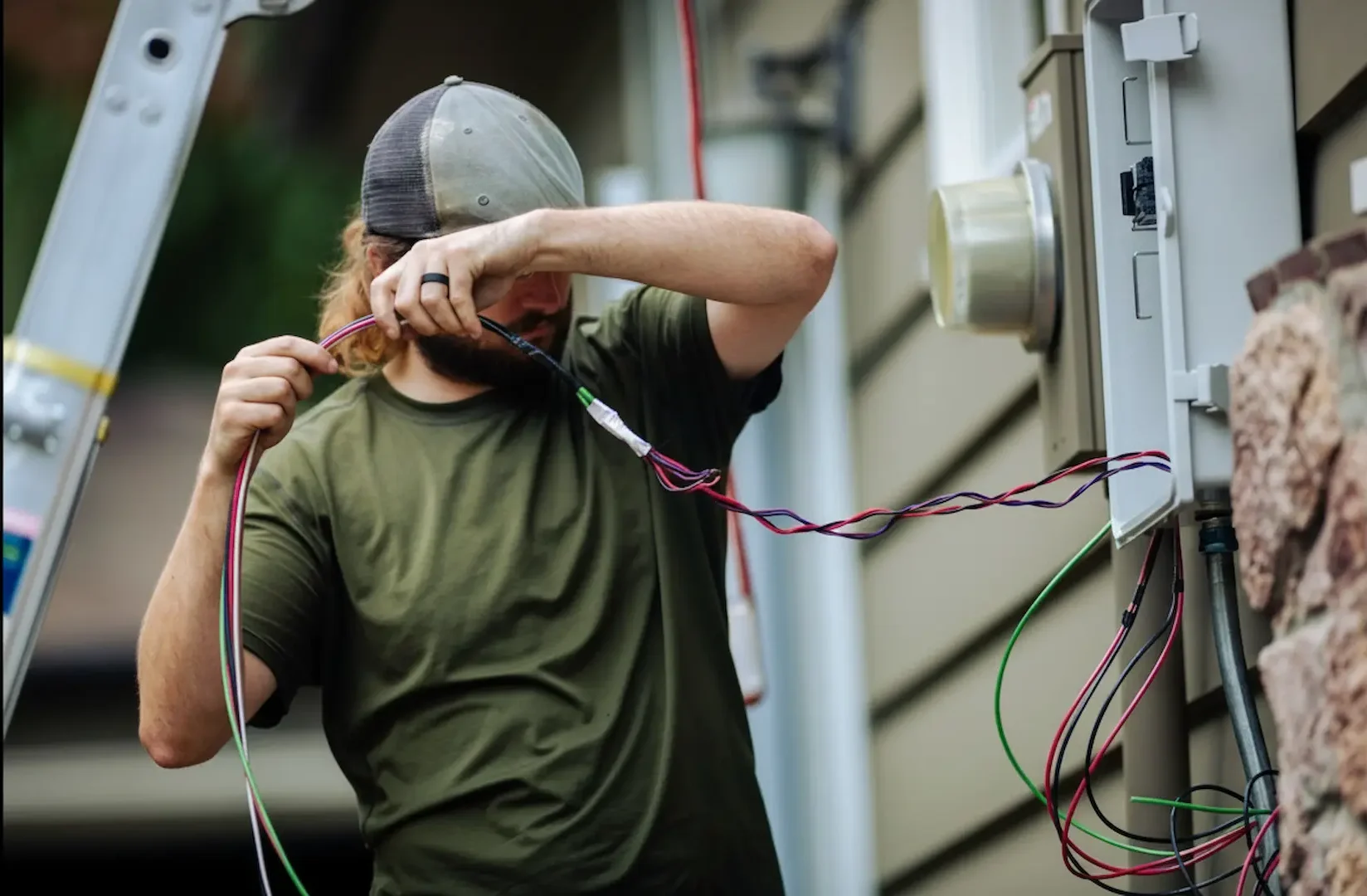
Electrical repair pricing can change significantly when a project involves service equipment, panel work, or a larger electrical scope instead of a focused device repair.
How Do Materials Affect Electrical Repair Costs?
Materials are another part of the total project.
Depending on the job, electrical materials can include:
- Outlets and switches.
- Circuit breakers.
- Electrical boxes.
- Wire and cable.
- Connectors and fittings.
- Lighting equipment.
- Panel equipment.
- Surge protective equipment.
- EV charging equipment.
- Generator transfer equipment.
Material cost can vary based on the actual equipment required, its specifications, compatibility with the existing system, quantity, and availability.
It is not useful to assume every contractor applies the same material markup or that online retail prices represent the total material cost of a professionally installed electrical project.
Does an Older Home Automatically Cost More to Repair?
Not automatically.
The age of a home can affect a project when the existing wiring, construction, equipment, or previous modifications make access or troubleshooting more involved.
But two homes of the same age can have completely different electrical systems because one may have undergone several renovations while the other has not.
Cost should therefore follow the actual condition and scope of work rather than a blanket assumption that an older Suffolk County house is always more expensive to repair.
How Accessibility Changes Electrical Repair Cost
Access can make a major difference in the amount of work involved.
Consider the difference between:
- A damaged switch in an easily accessible wall box.
- Wiring that must be traced through a finished ceiling.
- An electrical problem inside an attic or crawlspace.
- A circuit running to a detached garage.
- Outdoor wiring exposed to weather.
- Electrical work inside a finished renovation.
The electrical symptom might sound similar, but the physical work needed to reach and correct the problem may be very different.
Do Electrical Repairs Always Need Permits?
No single permit rule applies to every electrical repair in Suffolk County.
Requirements depend on the municipality and the scope of the work.
A focused repair can have different requirements from:
- A major renovation.
- New fixed wiring.
- An electrical service change.
- A substantial panel project.
- An addition or other construction project.
When permit or inspection requirements apply, they can affect the total project cost and schedule.
Useful New York Consumer Guidance
The New York State Department of State recommends that consumers ask whether a home-improvement project requires a permit and who will be responsible for obtaining it. For larger projects, the Department also recommends getting multiple written estimates and comparing the specific scope and materials rather than choosing a contractor based only on price.
Review New York State consumer guidance for hiring contractors
Panel Repair, Panel Replacement and Service Upgrade Have Different Costs
These terms are sometimes used interchangeably online, but they can describe very different electrical projects.
| Type of Work | General Scope |
|---|---|
| Panel-related repair | Correct a specific panel or breaker-related problem when focused repair is appropriate. |
| Panel replacement | Replace the electrical distribution panel when its condition, configuration, or project requirements justify replacement. |
| Subpanel | Add circuit distribution where appropriate without automatically increasing utility service capacity. |
| Service upgrade | Change the electrical service when evaluated electrical demand or project requirements justify additional capacity or other service work. |
The cost difference between these scopes can be substantial, which is why an online statement that a “panel upgrade costs X” can be misleading without defining what work is actually included.
For more detail, see:
Does 100-Amp Service Automatically Mean a More Expensive Upgrade Is Needed?
No.
A home with 100-amp service does not automatically require 200-amp service.
Electrical service capacity should be considered based on the actual loads the property needs to support.
Likewise:
- An EV charger does not automatically require 200-amp service.
- A panel with limited breaker space does not automatically require a utility service upgrade.
- A subpanel can provide additional circuit distribution but does not create additional utility capacity.
Separating those concepts helps homeowners understand why two apparently similar panel projects can have very different scopes and prices.
How EV Charger Installation Costs Can Vary
An EV charger installation is a good example of why a flat internet price can be misleading.
Project cost can be affected by:
- The charger being installed.
- The intended charging output.
- The home's existing electrical loads.
- Available panel space.
- Existing service capacity.
- The distance from the panel to the charger.
- The wiring route.
- Indoor vs. outdoor installation conditions.
- Whether additional electrical work is required.
A charger mounted close to a suitable electrical panel can be a very different project from one installed a significant distance away or at a property requiring additional electrical work.
Why Rewiring Costs Vary So Much
Rewiring can describe anything from replacing a limited damaged section of wiring to electrical work for a renovation or a much broader rewiring project.
Pricing can depend on:
- How much wiring is being replaced.
- Access behind finished walls and ceilings.
- The number of circuits involved.
- The condition of the existing electrical system.
- Whether the property is occupied.
- Renovation scope.
- Other electrical work being completed at the same time.
This is why the original article's fixed labor-hour estimates for “partial rewires” are not useful enough to publish as Suffolk County benchmarks.
Lighting Installation Cost Depends on More Than the Fixture
Even a lighting project can vary significantly.
Replacing an existing fixture with compatible equipment is different from:
- Adding new recessed lighting.
- Running new wiring.
- Adding switches or dimmers.
- Installing under-cabinet lighting.
- Adding outdoor or landscape lighting.
- Installing fixtures where no electrical box currently exists.
Learn more about lighting installation in Suffolk County.
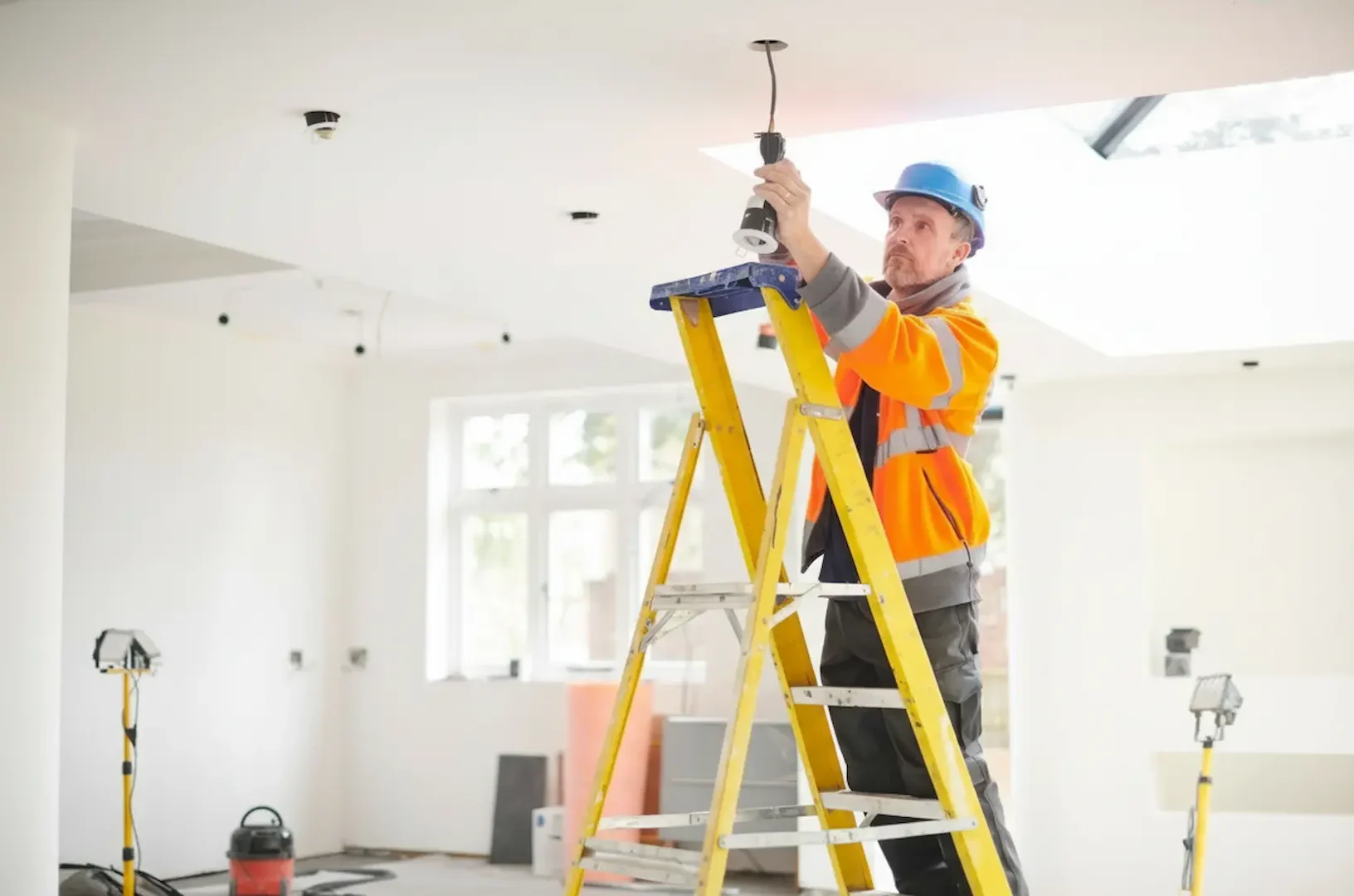
Lighting project pricing changes when new wiring, fixture locations, controls, ceiling access, or other electrical work becomes part of the scope.
Why Emergency Electrical Service Can Cost Differently
After-hours or emergency electrical service can be priced differently from normally scheduled work.
However, this article should not claim that RJ & Son Electric uses a universal call-out fee, hourly surcharge, weekend multiplier, holiday rate, or minimum billing period.
Emergency pricing can depend on:
- The electrical problem.
- The amount of troubleshooting required.
- The time service is needed.
- Parts and materials.
- Accessibility.
- Existing electrical conditions.
- Whether additional work is required.
We already have a dedicated article for this topic: Emergency Electrician Cost in Suffolk County.
Should You Delay an Electrical Problem to Avoid Emergency Pricing?
Only when the electrical condition is genuinely appropriate for normal scheduling.
Price should not be the deciding factor when the problem involves an active or potentially serious electrical hazard.
Call promptly for conditions such as:
- Visible sparking or arcing.
- Smoke.
- A persistent burning odor.
- Significant unexplained heat.
- Electrical shock.
- Exposed or visibly damaged wiring.
- Water affecting electrical equipment.
- Major unexplained power problems accompanied by other warning signs.
If there is active fire, heavy smoke, serious electrical injury, or another immediate threat to life or property, leave the area and call 911.
RJ & Son Electric provides 24/7 emergency electrical service throughout Suffolk County.
How to Compare Electrical Repair Estimates
The most useful comparison is not simply “Which number is lowest?”
First make sure the contractors are pricing the same work.
New York's Department of State similarly recommends getting multiple written estimates for significant home-improvement work and making sure the description of the work and materials is specific enough to compare. :contentReference[oaicite:2]{index=2}
Is the Lowest Electrical Quote Always the Best Deal?
Not necessarily.
A lower number can be legitimate, but it can also reflect a different scope.
Before comparing prices, ask:
- Is the same electrical problem being addressed?
- Are the same parts or equipment included?
- Does one proposal include additional electrical work?
- Is diagnosis included or still required?
- Does one project require more access or restoration work?
- Are permit or inspection requirements different?
Two numbers are only comparable when the work behind those numbers is reasonably similar.
Should Every Quote Show an Hourly Labor Rate?
No.
Contractors can structure pricing differently.
An hourly estimate can be appropriate for some work, while another contractor may price a defined repair or installation as a complete project.
What matters to the homeowner is understanding:
- What work is proposed.
- What is included.
- What the price covers.
- What conditions could change the scope.
- Whether additional work requires a separate discussion.
Should a Quote List Every Part at Retail Cost?
Not necessarily.
Contractors may structure materials differently, and a professional installation price can include more than the shelf price of one outlet, breaker, fixture, or other component.
For larger projects, it can still be useful to understand which major equipment or material selections are included so competing proposals are based on similar specifications.
Can an Electrician Give an Accurate Price Over the Phone?
Sometimes a contractor can discuss a general project or gather useful information by phone, but many electrical problems cannot be priced accurately from a symptom alone.
For example, “my breaker keeps tripping” does not reveal whether the cause is:
- A connected appliance.
- An overloaded circuit.
- A wiring fault.
- A breaker problem.
- A panel condition.
- Another electrical issue.
Diagnosis may be necessary before the repair scope and price are clear.
Describe the Symptom, Not Your Diagnosis
When calling for electrical repair, explain what you are seeing, hearing, smelling, or experiencing. “The breaker trips when the equipment runs” is more useful than assuming “I need a new breaker.”
What Can Make an Electrical Estimate Change?
A project can change when previously hidden conditions become apparent.
Examples can include:
- Damaged wiring behind finished surfaces.
- Previous electrical work that affects the planned repair.
- Additional failed equipment.
- Unexpected access limitations.
- Equipment compatibility issues.
- A utility-side condition.
- A broader electrical problem than the original symptom suggested.
That does not mean every electrical project should have unexpected charges. It means concealed electrical conditions can change the actual work needed.
How Local Labor Costs Fit Into the Bigger Picture
Suffolk County is part of the Long Island market, so local wages, insurance, vehicles, licensing requirements, business overhead, travel, equipment, and regional demand can influence what electrical contractors charge.
But homeowners do not need to calculate those expenses individually.
The more useful questions are:
- What electrical problem is being corrected?
- What work is included?
- What materials or equipment are part of the project?
- What could change the scope?
- Is the contractor properly licensed and insured?
That produces a much more meaningful comparison than trying to reverse-engineer a contractor's hourly labor cost.
Why Licensing and Insurance Matter When Comparing Price
Price should not be separated from the qualifications of the person doing the electrical work.
RJ & Son Electric is licensed and insured, and Richard Gruttola is the Master Electrician behind the company, License ME-72156.
When comparing contractors, homeowners should consider:
- Licensing appropriate to the work and location.
- Insurance.
- Experience with the type of electrical project.
- Whether the contractor can explain the proposed scope clearly.
- Whether the proposed repair actually addresses the diagnosed problem.
The New York Department of State also advises consumers to ask about contractor experience and training, verify licensing where locally required, ask about permits, and obtain detailed estimates for larger home-improvement projects. :contentReference[oaicite:3]{index=3}
How RJ & Son Electric Approaches Electrical Repair Pricing
RJ & Son Electric's brand promise is straightforward pricing and clear communication about the electrical work.
That does not require this website to invent a universal billing formula.
The better approach is:
- Understand the electrical problem.
- Determine the appropriate scope of work.
- Explain what is being recommended.
- Discuss the price for that actual project.
A dead outlet, panel replacement, EV charger, rewiring project, lighting installation, and emergency repair are different jobs and should not be forced into one generic hourly-rate formula.
Frequently Asked Questions About Electrical Repair Costs
What affects the cost of an electrical repair in Suffolk County?
Cost can depend on diagnosis, repair scope, materials, accessibility, existing electrical conditions, project requirements, timing, and whether additional work is discovered. Local labor costs are one factor, but they do not determine the entire project price.
Does RJ & Son Electric charge by the hour?
This article does not publish a universal RJ & Son Electric hourly billing policy. Pricing should be discussed based on the actual electrical problem and project scope rather than assuming every repair uses the same billing method.
Does RJ & Son Electric charge a diagnostic or call-out fee?
This article does not assume a universal diagnostic or call-out fee. Contact RJ & Son Electric for pricing information related to the specific service you need.
Why can two electricians give different prices for the same problem?
The proposals may include different scopes, materials, equipment, assumptions, access conditions, or repair approaches. Compare what each contractor is actually proposing rather than comparing the final numbers alone.
Can I get an exact electrical repair price over the phone?
Some projects can be discussed in advance, but a symptom alone may not reveal the actual repair required. Problems such as repeated breaker trips, flickering lights, partial power loss, or dead outlets can have several possible causes and may require diagnosis before the scope is clear.
Does every electrical quote need to show an hourly rate?
No. Contractors can use different pricing structures. The important information is the work being proposed, what is included, the total price or pricing method, and any conditions that could change the scope.
Does every electrical repair require a permit?
No single permit requirement applies to every project. Requirements depend on the municipality and scope of work. Focused repairs, renovations, service changes, panel projects, and new installations can have different requirements.
Is the lowest electrician quote always the best choice?
Not necessarily. Make sure the contractors are pricing the same scope and comparable materials or equipment. Licensing, insurance, experience, communication, and confidence in the proposed repair also matter.
Do emergency electrical repairs cost more?
Emergency or after-hours electrical work can be priced differently from normally scheduled service, but pricing structures vary by contractor and situation. Contact RJ & Son Electric for current pricing related to your specific emergency.
Does an older home automatically mean a more expensive electrical repair?
No. Home age can affect a project when wiring, construction, access, or previous modifications make the work more involved, but the actual condition and scope of the electrical system matter more than age alone.
Related Electrical Cost & Repair Resources
Electrical Repairs
Professional troubleshooting and repair for outlets, switches, circuits, breakers, wiring, power problems, and other electrical issues.
Electrical Diagnosis Process
Understand how an electrician goes from an electrical symptom to the actual repair.
Emergency Electrical Repair Cost
Learn which factors can affect emergency and after-hours electrical repair pricing.
Panel Upgrade Cost Guide
Understand the difference between panel replacement, service changes, subpanels, and the factors that affect project cost.
Need an Electrical Repair Quote in Suffolk County?
RJ & Son Electric provides electrical troubleshooting and repair throughout Suffolk County. Richard Gruttola is a licensed and insured Master Electrician who can evaluate the electrical problem, explain the recommended work, and discuss pricing based on the actual project.
Licensed & Insured Master Electrician serving Suffolk County, NY
Master Electrician License ME-72156
(631) 833-7663 · RichG@rjandsonelectric.com