
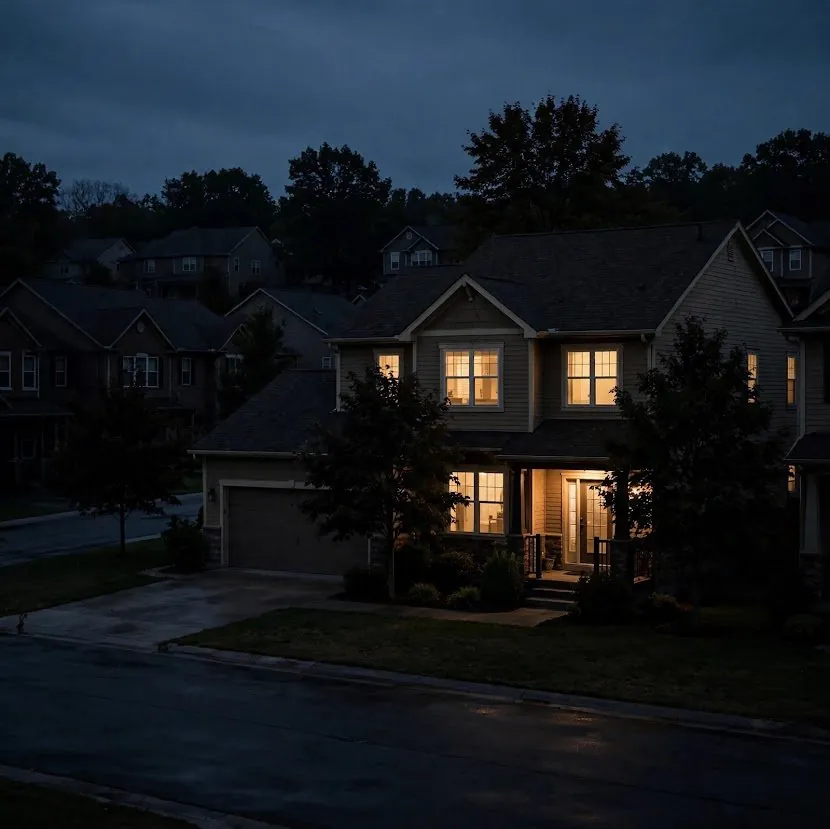
Long Island winters bring nor’easters, heavy wet snow, and wind that takes down limbs and lines. When the power goes out in Suffolk County, it can be out for hours or, after a big storm, for days. A little preparation before the first storm makes those hours safer, warmer, and a lot less stressful.
This checklist covers what we recommend to homeowners across Suffolk County, from Rocky Point to Smithtown to the East End. It focuses on safety first. Anything that involves your electrical panel, wiring, or connecting a generator to your house should be handled by a licensed electrician.
Before the Storm: What to Do This Week
1. Put together a real outage kit
- Flashlights or LED lanterns for every bedroom, plus fresh batteries
- A battery or crank radio so you can follow storm updates
- Charged power banks for phones
- Bottled water, easy food, and any medications your household needs
- Extra blankets and warm layers
Skip candles where you can. Battery lighting is safer, especially with kids or pets in the house.
2. Test your smoke and carbon monoxide alarms
Outages are when people use generators, fireplaces, and space heaters they don’t use the rest of the year. Press the test button on every alarm and replace batteries now. If your alarms are hardwired and chirping, sounding at random, or more than about ten years old, have them checked or replaced.
3. Know where your main breaker is
Everyone in the house who is old enough should know where the electrical panel is and which switch is the main. You don’t need to touch anything inside the panel. Just knowing where it is helps if you ever need to shut power off in an emergency or describe the panel to an electrician over the phone.
4. Protect your electronics
When power comes back after an outage, the restore can come with surges. Plug TVs, computers, and other expensive electronics into quality surge protectors, and consider whole-home surge protection at the panel, which helps protect appliances that can’t plug into a power strip, like your furnace controls, refrigerator, and washer.
5. Decide on your backup power plan
If you own a portable generator, or plan to buy one, now is the time to set it up correctly, not in the dark during a storm. The safe way to power household circuits from a portable generator is through a generator transfer switch installed by a licensed electrician. It lets you choose which circuits to run, like the furnace, refrigerator, a few lights, and the well pump if you have one, and it keeps generator power from flowing back onto the utility lines.
During the Outage: Staying Safe
Never plug a generator into a wall outlet
Running a cord from a generator into a dryer outlet or any other receptacle is sometimes called backfeeding. It is extremely dangerous. It can energize the utility lines outside your house and seriously injure line workers trying to restore power to your street. It can also damage your generator and your home’s wiring. If you don’t have a transfer switch, run individual appliances directly from the generator with heavy-duty outdoor extension cords sized for the load.
Keep generators outside and away from the house
Carbon monoxide from a generator can build up quickly. Never run a generator in a garage, basement, or shed, even with the door open. Place it outside, well away from windows, doors, and vents, and keep your CO alarms working.
Turn off or unplug what was running
When the power drops, turn off or unplug major appliances and electronics that were on. Leave one light switched on so you know when power is back. This helps avoid a big surge of demand the moment service is restored.
Be careful with space heaters
If you’re running a space heater from generator power or once power returns, plug it directly into a wall outlet, not a power strip or light extension cord, and keep it at least three feet from anything that can burn. Never leave it running while you sleep or leave the room.
Stay away from downed wires
Treat every downed line as live. Keep kids and pets away, don’t drive over wires, and report them to PSEG Long Island right away. If a line is touching your house or a tree branch is resting on your service drop, stay clear and call for help.
After the Power Comes Back
Most homes come back without any issues. But storms can damage the parts of your electrical system you are responsible for, like the mast and meter on the outside of the house. Call a licensed electrician if you notice any of these after an outage:
- Lights that flicker, dim, or seem brighter than normal
- A burning smell, buzzing, or crackling from outlets, switches, or the panel
- Breakers that won’t reset or trip again right away
- Part of the house has power and part does not
- Visible damage to the service mast, meter, or the wires running to your house
- Any outlet or panel that got wet from flooding
Partial power and flickering after a storm can point to a damaged service connection, which is a safety issue. Our electrical power restoration service handles storm-related problems on the homeowner side of the meter, and if you smell burning or see sparks, treat it as an electrical emergency.
A Quick Pre-Storm Checklist
- Outage kit stocked: lights, batteries, radio, power banks, water, food, medications
- Smoke and CO alarms tested
- Everyone knows where the electrical panel is
- Surge protection in place for electronics
- Generator plan set up safely, with a transfer switch if you’ll power house circuits
- Generator stored where you can reach it, with fuel stored safely outside the living space
- Phone number for a 24/7 licensed electrician saved: (631) 833-7663
Frequently Asked Questions
Is it safe to run my portable generator with a cord through a window?
Running individual appliances with properly rated outdoor extension cords is a common short-term approach, as long as the generator stays outside and away from the house. What you should never do is connect the generator to your home’s wiring through an outlet. To power household circuits, have a licensed electrician install a transfer switch.
How do I know if storm damage is my responsibility or the utility’s?
Generally, the utility handles the lines up to your service connection, and the homeowner is responsible for the mast, meter enclosure, and wiring on the house side. If you’re unsure, call us and describe what you see. We’ll tell you whether it’s something we should look at or something to report to PSEG Long Island.
Can you set up a transfer switch before the next storm?
Yes. We install generator transfer switches for portable generators throughout Suffolk County. Call or text early in the season, since demand picks up quickly once a storm is in the forecast.
Get Ready Before the Next Nor’easter
RJ & Son Electric is a licensed and insured master electrician serving all of Suffolk County, NY License # ME-72156. We’re available Monday through Saturday, 7am to 7pm, and we take emergency calls 24/7. If you want a transfer switch installed, surge protection added, or storm damage checked, call or text (631) 833-7663 or request a free estimate.