Warning Signs You Should Not Ignore
Breakers trip frequently
An occasional trip is the breaker doing its job. Breakers that trip again and again, especially when you run normal appliances, point to an overloaded panel or a failing breaker. Resetting the same breaker weekly is not a routine. It is a message.Burning smell near the panel
A burning or acrid smell around the panel or outlets is a stop-what-you-are-doing signal. Turn off what you can safely reach, do not touch the panel interior, and call a licensed electrician right away. Our electrical panel safety guide explains which warning signs need immediate attention.The panel feels warm or looks damaged
Warmth on the panel cover, scorch marks, melted insulation, or visible rust and corrosion all indicate the panel is deteriorating. Corrosion is common in Long Island homes near the water, and it degrades connections over time.Lights flicker or dim when appliances run
If the lights dip every time the air conditioner, dryer, or microwave kicks on, the panel may be struggling to distribute power. Some flicker has other causes, but persistent dimming under load deserves an evaluation.You still have a fuse box
Fuse boxes were standard decades ago, but they were not designed for modern electrical loads. If your home still uses screw-in fuses, an upgrade to a breaker panel is overdue. Read why your home needs an electrical panel upgrade for the full picture.Your panel is decades old
Panels do not last forever. Certain older panels are also known in the trade for higher failure rates. If your panel is 25 to 40 years old and has never been serviced, have it inspected even if nothing seems wrong.Safety First, Always
Never open a panel cover or poke around inside to investigate. Panel interiors carry lethal voltage even with the main breaker off. If you notice a burning smell, scorching, or sparking, call (631) 833-7663. Emergency service is available 24/7.
How to Spot Symptoms That Point to a Panel Replacement
Noticing problems early lets you fix them before they become dangerous. Watch for these common warning signs:
- Frequent circuit breaker trips: Breakers that trip repeatedly across multiple circuits usually mean the panel's capacity or internal parts are struggling, not simply one heavy appliance.
- Flickering or dimming lights: Lights that dip when other appliances start can indicate voltage drops from overloaded circuits, a loose neutral, or a worn panel.
- Buzzing sounds or burning smells: Any buzzing or electrical odor often points to loose connections or arcing, a hazard that needs immediate attention.
- Warm or hot panel surface: A panel that feels warm to the touch can signal overloads, poor ventilation, or failing components, and raises the risk of fire.
- Visible damage or outdated hardware: Corrosion, rust, or an old fuse box are clear signs it is time to modernize the panel.
- Power strips and extension cords everywhere: Depending on power strips and extension cords because there are not enough outlets or circuits is a sign the panel and distribution need attention.
If you notice any of these issues, book a professional inspection right away.
Why Do Repeated Breaker Trips Mean You May Need a Panel Replacement?
When breakers keep tripping on different circuits, it is a sign the panel may be overloaded or that internal components are failing. A single trip can happen, but recurring or widespread trips suggest limited service capacity, worn breakers, or loose connections. Those conditions increase safety risks and indicate the system may not meet modern electrical demands.
If trips continue after unplugging appliances, schedule a professional load analysis. A licensed electrician can determine whether you need a breaker replacement, better load balancing, or a full panel replacement to stabilize power and bring your system up to code. Taking action early prevents further damage and keeps your home safer.
How Do Flickering or Dimming Lights Reveal Panel Problems?
Flickering or dimming lights often point to voltage fluctuations caused by sudden load changes, a loose neutral, or overloaded circuits. If lights dip when appliances start, or the whole house dims, your main connections may be strained. Note which circuits are affected and arrange a professional inspection for connection testing and a load calculation. Persistent, system-wide voltage drops frequently mean a panel replacement is needed to restore stable, reliable power.
What Safety Hazards Come from an Outdated Electrical Panel?
Older panels can lack modern safety features and may have worn parts that raise the chance of failure. Heat buildup, arcing, and limited capacity can cause fires, shocks, or damage to appliances.
- Electrical fire risk: Loose bus connections or aged breakers can overheat and ignite nearby materials.
- Electric shock: Deteriorated insulation, exposed conductors, or improper grounding increase shock risk.
- Appliance damage: Voltage instability and repeated trips shorten appliance life and can cause failures.
- Lack of modern protection: Older panels may not accept required AFCI/GFCI devices for bedrooms, kitchens, and outdoor circuits, leaving you without arc-fault and ground-fault protection.
If you spot any of these hazards, take immediate safety steps: stop using suspect circuits, keep flammable items away from the panel, and call a licensed electrician to evaluate and prioritize repairs or panel replacements that reduce risk for your household.
When Is It Time to Replace a Fuse Box or Low-Amperage Panel?
Replace a fuse box or low-amperage panel when it cannot handle today's loads, will not accept modern safety devices, or shows physical deterioration. Older 60-amp services and fuse panels were common decades ago but usually cannot support modern kitchens, central HVAC, or EV charging. Switching to a modern breaker panel improves safety (AFCI/GFCI compatibility), makes resets simple, and frees space for future needs. The decision to replace generally follows a professional load calculation, visible wear, repeated blown fuses, or ongoing voltage problems that show the system cannot meet current demands.
| Panel Type | Max Safe Load (Approx.) | Practical Limitations for Homes |
|---|---|---|
| 60-Amp Panel | ~7,200 watts continuous | Cannot support central HVAC, a modern kitchen, or EV charging at the same time |
| 100-Amp Panel | ~12,000 watts continuous | Works for smaller modern homes but is limited for multiple high-power appliances |
| Old Fuse Box | Varies (often 30-60A) | No breaker reset convenience and limited AFCI/GFCI compatibility; notable safety concerns |
| 200-Amp Panel | ~24,000 watts continuous | Standard for contemporary homes with EV charging and several high-load appliances |
Why Are 60-Amp Panels Often Not Enough Today?
A 60-amp service has limited continuous capacity and usually cannot handle central air, electric ranges, dryers, and EV chargers running together. A single electric range or a Level 2 EV charger can draw 30-50 amps, quickly using much of a 60-amp service. While load calculations factor in diversity, most modern homes with central HVAC or full electric kitchens benefit from upgrading to 100A or 200A. A panel replacement reduces nuisance trips, prevents overloads, and prepares the house for future systems like EV chargers or heat pumps.
Upgrading from 60A often requires a service change, including meter work and utility coordination, so plan for a professional assessment and a permit-based installation to meet code and long-term needs.
Benefits of Replacing an Old Fuse Box with a Modern Breaker Panel
Replacing an old fuse box with a modern breaker panel delivers clear, practical benefits:
- Enhanced safety: Modern panels accept resettable breakers and AFCI/GFCI protection, reducing fire and shock risk.
- Increased capacity: Newer panels support today's appliances and future additions like EV charging.
- Improved reliability and convenience: More stable power, easier troubleshooting, and simple resets make daily life smoother.
- Higher home value: Meets current codes, satisfies insurance expectations, and boosts resale appeal.
Pairing a panel replacement with a service amperage increase gives the best long-term safety and capacity results.
How Growing Electrical Demand Affects the Need for a Panel Replacement
Rising household demand, from EV chargers to induction ranges, heat pumps, and more connected devices, changes your home's load profile and can push an older service past its limit. A formal load calculation using appliance nameplate ratings, diversity factors, and likely simultaneous use will show whether a dedicated circuit is sufficient or a service increase is required. Homeowners often add dedicated breakers for new appliances, but when overall demand nears service capacity, a panel replacement or service change is usually the safer, longer-term choice.
| New Home Load | Additional Amperage Required | Typical Panel Replacement Recommendation |
|---|---|---|
| EV Level 1 (120V) | 12-16A | Usually fits on an existing panel with a dedicated circuit |
| EV Level 2 (240V) | 30-50A | May need a dedicated breaker; consider a panel replacement if your service is near capacity |
| Induction Range | 30-60A | Dedicated circuit required; often leads homeowners to a 200A service for full-electric kitchens |
| Heat Pump / Mini-Split | 20-50A | Dedicated circuit; may require a service increase for whole-home electrification |
How Does Installing an EV Charger Affect Panel Capacity?
Installing an EV charger impacts panel capacity because Level 2 chargers commonly draw 30-40 amps while charging, adding a sustained load. A dedicated 40A breaker can work if your panel and service have headroom, but many older panels lack spare spaces or sufficient main capacity. In those cases, a panel replacement or service change is the better long-term solution. A professional load study will review your charging habits, other high-demand appliances, and overall usage to recommend whether a dedicated breaker is enough or a service upgrade is needed. Proper permitting and correct breaker sizing keep the installation safe and code-compliant.
Why Do High-Power Appliances Often Mean You Need a Panel Upgrade?
High-power appliances like electric ranges, dryers, heat pumps, and central air draw sustained currents that change your home's load profile. When several high-draw devices run at once, their combined load can exceed a panel's safe continuous rating, causing repeated trips, overheating, and stress on wiring. While diversity rules help with planning, homes adding major electric loads or undergoing renovations should expect potential service increases. A licensed electrician will calculate demand, check conductor and meter capacity, and advise whether a dedicated circuit or a full service increase is the safest choice.
Planning for these appliances in advance reduces the chance of temporary fixes and emergency panel replacements by matching your electrical system to intended use and current code.
Panel Replacement Questions, Answered
What should I do if I notice panel problems in my home?
If you see frequent breaker trips, flickering lights, or burning smells, take immediate precautions: turn off and unplug devices on the affected circuits if it is safe, avoid using suspect circuits, and call a licensed electrician for an inspection. A professional can diagnose the problem and recommend whether a panel replacement or repair is needed to keep your home safe and code-compliant.
How can I prepare for a panel replacement at my home?
Start by listing your current electrical needs and any symptoms you have seen. Note high-demand appliances and how often they run. Then schedule an inspection with a licensed electrician for a load calculation. Clear the area around the panel to provide easy access on the day of the work.
What Does a Buzzing or Warm Panel Mean?
Unusual buzzing, crackling, burning odors, or significant heat around an electrical panel deserve prompt professional attention.
Those symptoms can have several possible causes, and it is not safe to diagnose them by opening the panel or touching internal components.
Do not remove the panel cover or attempt to tighten electrical connections yourself. Electrical service equipment can contain hazardous energized components.
Does an Older Electrical Panel Automatically Need Replacement?
No. Age alone should not be used as the only reason to replace an electrical panel.
A professional evaluation should consider:
- The physical condition of the panel and service equipment.
- Whether there is visible damage, corrosion, or deterioration.
- The condition of breakers and electrical connections.
- The available electrical capacity.
- Available circuit space.
- Recurring electrical problems.
- Previous electrical modifications.
- The electrical loads the homeowner plans to add.
An older electrical system may be completely different from another system of similar age. The decision should be based on what is actually found at the property.
When Can a Panel Upgrade Improve Electrical Safety?
A panel replacement or service upgrade can be appropriate when existing electrical equipment is damaged, deteriorated, unsuitable for the property, or cannot appropriately support planned electrical needs.
Damaged Equipment
Significant damage, corrosion, overheating, or deterioration can affect whether the existing panel should remain in service.
Additional Electrical Capacity
New electrical loads may require an evaluation of whether the existing service has sufficient capacity.
Additional Circuit Needs
Renovations, additions, equipment, and other projects may require additional circuits or changes to electrical distribution.
Recurring Panel Problems
Repeated problems can be a reason to evaluate whether continued repair or replacement is the more appropriate solution.
Does a New Electrical Panel Automatically Make a Home Safer?
A properly planned replacement can address specific problems with old, damaged, inadequate, or unsuitable equipment, but replacing the panel alone does not automatically correct every electrical issue in the home.
Wiring problems, overloaded circuits, damaged devices, previous modifications, and other electrical conditions can exist outside the panel.
The goal should be to identify the actual electrical problem and complete the work the property needs rather than treating a panel replacement as a universal solution.
What About AFCI and GFCI Protection?
AFCI and GFCI protection address different electrical hazards. GFCI protection is designed primarily to reduce electrical shock risk from ground-fault conditions. AFCI protection detects certain hazardous arcing conditions associated with electrical fire risk.
Where particular protection is required depends on the installation and work being performed. Homeowners should not rely on a generalized internet checklist to determine exactly what their property requires.
100-Amp vs. 200-Amp Service: Which Is Safer?
Neither service size should automatically be labeled safe or unsafe based only on the amperage rating.
A properly functioning 100-amp service may be appropriate for one home, while another home may require additional capacity because of its electrical demand.
The right service size depends on the loads the electrical system needs to support.
A subpanel does not create additional utility service capacity. It can provide additional circuit distribution in appropriate situations, but the existing electrical service still needs sufficient capacity for the loads being supplied.
Panel Safety Questions, Answered
Does a 100-amp electrical service mean my home is unsafe?
No. A 100-amp service is not automatically unsafe. Whether it is appropriate depends on the electrical demand of the property, the condition of the system, and the equipment being served.
Are flickering lights a sign that my electrical panel needs replacement?
Not necessarily. Flickering lights can result from a fixture, wiring connection, circuit, electrical load, panel, service, or another electrical condition. Recurring or widespread flickering should be professionally diagnosed before deciding what needs repair or replacement.
What should I do if my electrical panel smells like it is burning?
Keep people and pets away from the electrical equipment and call a licensed electrician promptly. Do not open the panel or attempt to diagnose internal components yourself. If there is active fire, heavy smoke, or another immediate life-safety emergency, leave the area and call 911.
How often should my electrical panel be inspected?
There is no single inspection interval that is right for every property. Professional evaluation may be appropriate when there are recurring electrical problems, visible deterioration, major renovations, storm damage, a recent home purchase, or plans to add significant new electrical loads.
Your Home Is Asking for More Power
Sometimes the panel is fine for the house it was built for, but the house has changed. These are the most common capacity triggers Richard sees:Electric vehicle charger
A Level 2 EV charger is one of the largest single loads you can add to a home. Many 100-amp services cannot absorb it without an upgrade. If an EV is in your near future, plan the panel and the charger together. See our EV charger installation service.Home addition or finished basement
More square footage means more circuits: lighting, receptacles, HVAC zones. Additions routinely push older panels past their comfortable capacity.Kitchen or laundry remodel
Modern kitchens concentrate heavy loads: induction ranges, double ovens, warming drawers. If the remodel adds circuits and the panel is already full, a subpanel or full upgrade enters the conversation.Heat pump or mini-split system
Electrification is great for efficiency, but heat pumps draw real power. A load calculation tells you whether the existing service can carry the new equipment plus everything else.Pool, hot tub, or workshop
These are sustained high-draw loads. A panel that was adequate for a quiet household can be maxed out by a hot tub heater running through a Long Island winter.Home office or workshop equipment
Remote work setups, 3D printers, welders, and woodworking tools add up. If the breaker for the office trips every afternoon, that is the panel telling you the math no longer works.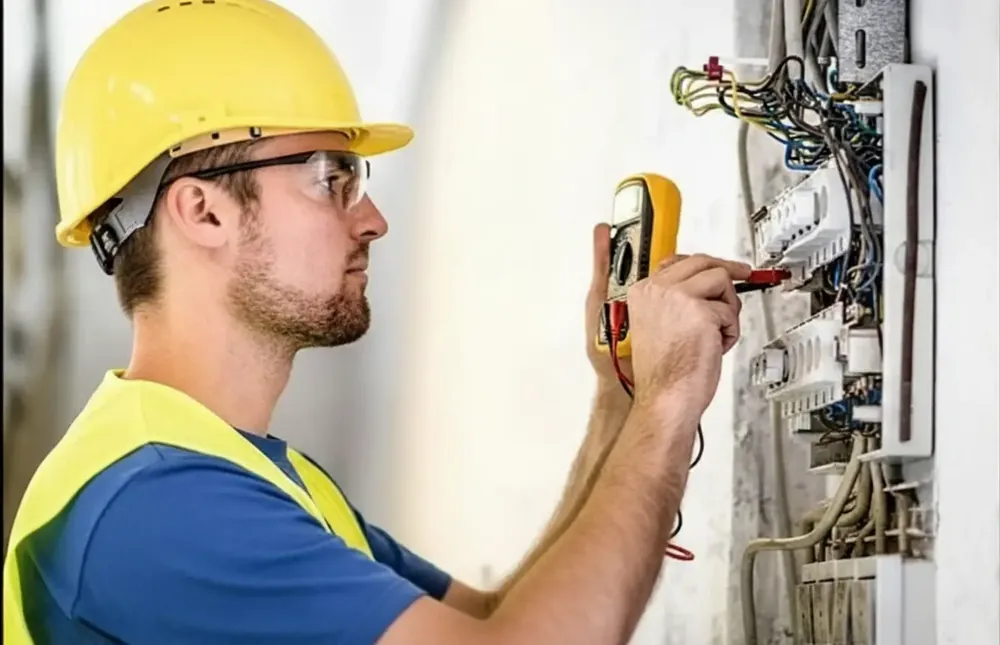
What Happens During a Panel Evaluation
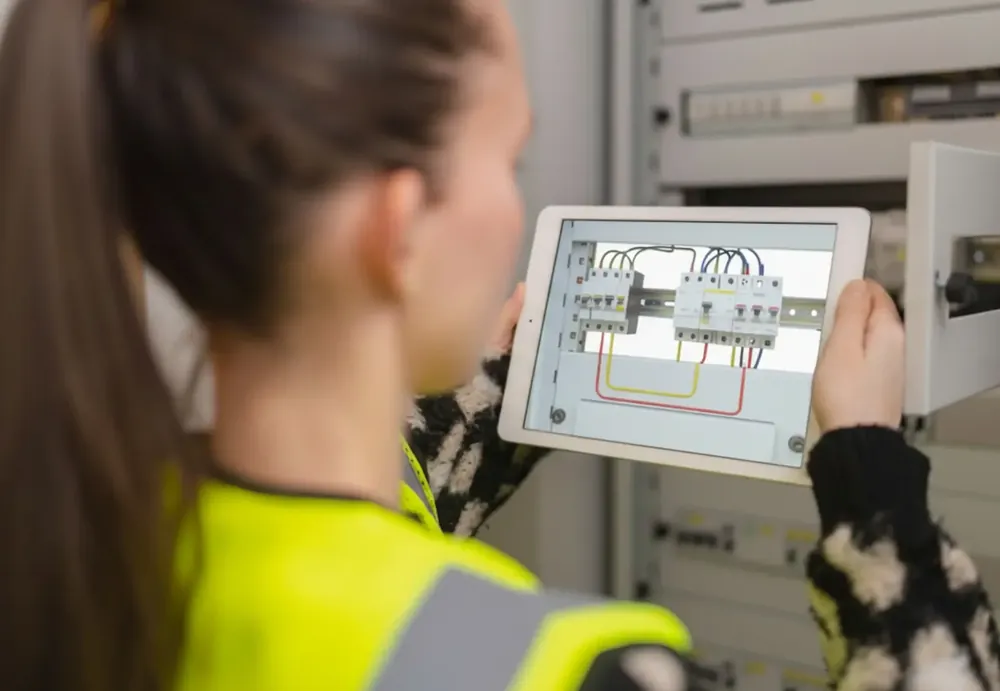
When Richard evaluates a panel, here is what actually happens:- Visual inspection. Panel age, brand, condition of breakers, signs of heat damage, corrosion, or water intrusion.
- Load review. What the home draws today and what is planned next. EV, addition, remodel, and new appliances all go into the math.
- Service size check. Is the incoming service 60, 100, 150, or 200 amps, and is it enough for the load with headroom?
- Wiring and grounding check. The panel does not live alone. Grounding, bonding, and the condition of branch wiring factor into the recommendation.
- Straight recommendation. Repair, subpanel, like-for-like replacement, or full service upgrade, with the reasoning explained in plain language. If the panel is fine, you will hear that too.
Keep Researching Your Panel Project
Electrical Panel Safety
The warning signs that make a panel a safety issue, and what to do about each one.
Signs You Need Panel Replacement
More indicators your panel has reached the end of its reliable life.
Panel Upgrades Service
How RJ & Son Electric handles panel upgrades and service changes.
What Your Electrical Panel Actually Does
The panel, sometimes called the breaker box or service panel, takes the power coming in from PSEG Long Island and splits it into the individual circuits that feed your home. Each breaker is matched to the wire on its circuit. If that circuit ever tries to pull more current than the wire can safely carry, the breaker trips and cuts the power.
That is the panel doing its single most important job: protecting your wiring, and your family, from overheating and fire. An older or undersized panel cannot keep up with the demand of a modern home full of electronics, central air, and now EV chargers and heat pumps, so it ends up working at the edge of its capacity all the time.
Older Panels We See Across Long Island
Many older Suffolk County homes still have panels that licensed electricians and home inspectors routinely flag, including Federal Pacific Stab-Lok, Zinsco, and Pushmatic panels. These brands have a documented history of breakers that do not always trip the way they should, which defeats the panel's main safety purpose.
If you have one of these brands, planning an electrical panel upgrade is highly recommended. Do not try to judge the safety of your own panel from a photo. If you have one of these panels, the right move is to have a licensed electrician inspect it and tell you whether it should be replaced.
Is a Federal Pacific or Zinsco panel really a concern?
These older panels have a documented history of breakers that do not always trip reliably, which is why many electricians and inspectors recommend evaluating them. The right step is to have a licensed electrician inspect your specific panel rather than guess.
100-Amp vs. 200-Amp Service
Most modern homes are built around 200-amp service. If you are still on 100-amp service and you are adding an EV charger, a heat pump, or a large addition, there is a strong chance you will hit the ceiling of what your panel can handle. A service change to 200 amps does two things: it brings your home up to a modern standard, and it leaves you headroom so you are not living at the edge of your capacity every summer. For households planning to electrify over the next few years, investing in an electrical panel upgrade once is almost always cheaper than upgrading twice.
What an Electrical Panel Upgrade Involves, Step by Step
An electrical panel upgrade, also called a service change, follows a clear process. First, the electrician assesses your current service, your loads, and your goals. Next, the job is permitted and scheduled with coordination from PSEG Long Island, since the utility has to disconnect and reconnect power.
On the day of work, power is shut off, the old panel (and the meter and service entrance if needed) is removed, and the new properly sized panel is installed and every circuit is reconnected and labeled. Finally, the work is inspected. When it is done, you have a clean, modern panel, a labeled directory of what feeds what, and a documented, inspected job rather than a guessing game the next time something trips.
Panel Upgrade Signs: Common Questions
How do I know if my electrical panel needs to be replaced?
Is a warm electrical panel dangerous?
Do I need a panel upgrade for an EV charger?
How long does an electrical panel last?
Can I just add a subpanel instead of replacing the main panel?
Not Sure About Your Panel?
Get a straight answer from a licensed Master Electrician. Richard Gruttola will inspect your panel and tell you plainly whether it needs attention. NY license ME-72156.
Call (631) 833-7663Request an evaluation online | 24/7 emergency service available