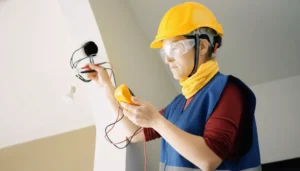

When an outlet stops working, a breaker keeps tripping, lights begin flickering, or part of a home loses power, the symptom is usually only the starting point. A professional electrical repair begins by finding out what is actually causing the problem.
That distinction matters because replacing the first outlet, breaker, switch, or other component that appears suspicious may not correct the underlying electrical condition.
RJ & Son Electric provides electrical repairs and troubleshooting throughout Suffolk County. The company is led by Richard Gruttola, a licensed and insured Master Electrician serving residential, commercial, and light industrial properties.
Need an electrical problem diagnosed?
Call RJ & Son Electric at
(631) 833-7663
or
request electrical service.
What Happens During an Electrical Repair Service Call?
The exact repair process depends on the electrical problem, but a good diagnostic visit generally moves from understanding the symptom to narrowing down the cause and then determining the appropriate repair.
Some problems are straightforward. Others can be intermittent or involve several parts of the electrical system, which can make diagnosis more involved.
What Should You Tell the Electrician Before the Visit?
You do not need to diagnose the electrical system yourself. Clear observations are more useful than guessing what part is broken. Read what to know before booking an electrical repair appointment.
Helpful information can include:
- Which room, outlet, fixture, appliance, or area is affected.
- Whether the problem is constant or intermittent.
- When you first noticed it.
- Whether breakers have tripped.
- Whether lights flicker or dim.
- Whether you hear buzzing, sizzling, or crackling.
- Whether you smell anything burning or unusually hot.
- Whether any electrical equipment feels unusually warm.
- Whether part of the property has lost power.
- Whether a new appliance or electrical load was recently added.
- Whether the problem began after renovation, storm damage, water exposure, or other electrical work.
You do not need to open electrical equipment to provide useful information. If a photo can be taken safely from a normal viewing position, it may provide context. Do not remove a panel cover, outlet, switch, or other electrical component simply to take a picture.
How Can You Prepare the Area for an Electrician?
Simple access can make a service visit easier.
Depending on the problem, it may help to:
- Clear ordinary household items away from the affected outlet, switch, fixture, or work area.
- Make sure the electrical panel is reasonably accessible.
- Secure pets if necessary.
- Be ready to explain any recent renovations or electrical work.
- Have information about the affected appliance or equipment available if the problem appears connected to it.
Do not move damaged electrical equipment, handle exposed wiring, or create access by interacting with something that appears unsafe.
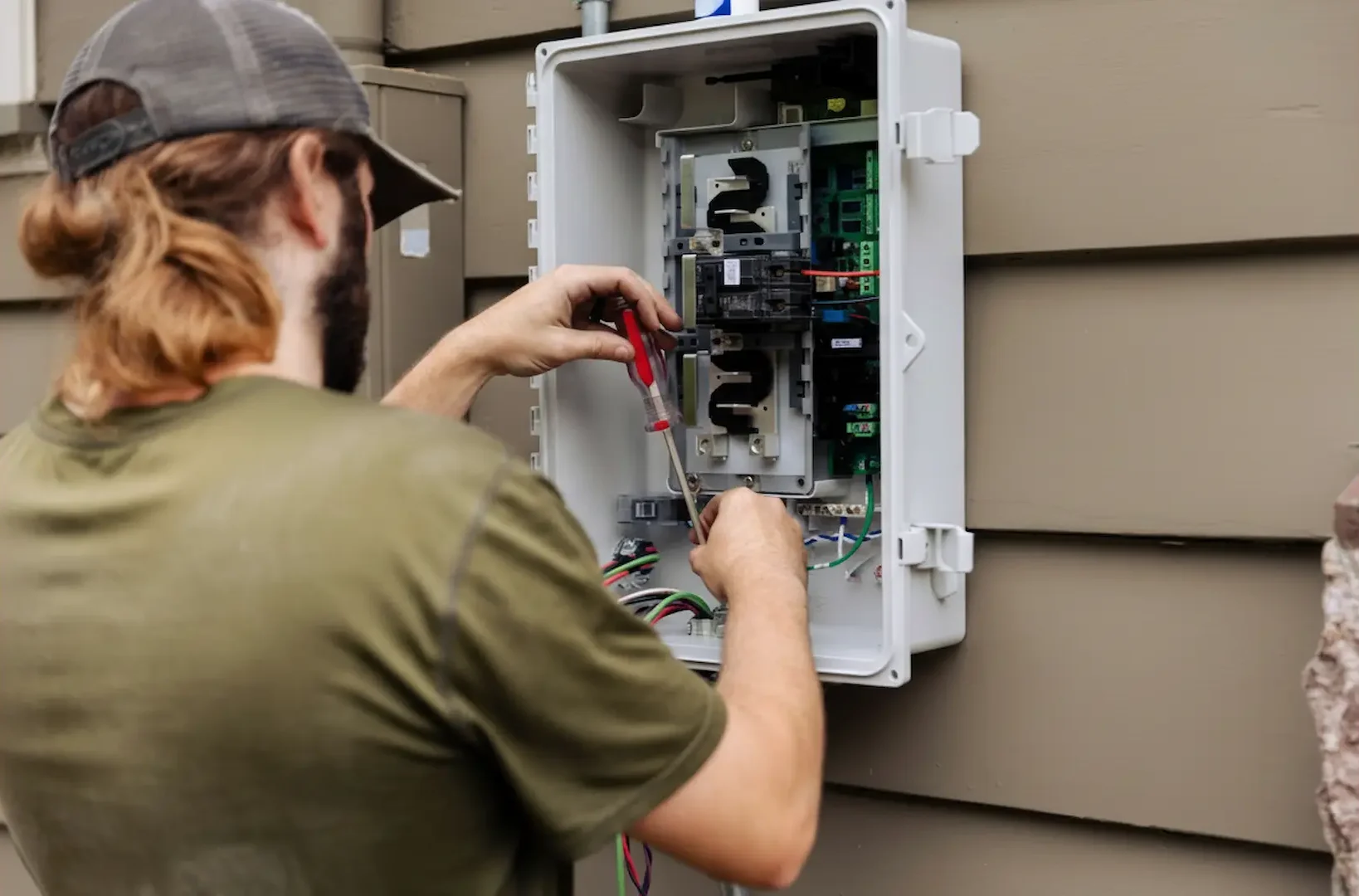
Electrical troubleshooting may involve the panel when the symptoms or affected circuits point in that direction, but not every repair begins or ends with panel replacement.
Why Diagnosis Comes Before Repair
Many electrical symptoms have more than one possible cause.
A dead outlet, for example, does not prove the outlet itself has failed. The problem could involve the device, an upstream connection, circuit wiring, another protective device, or another condition.
The same is true for breakers and lighting problems.
| Symptom | Possible Areas to Evaluate |
|---|---|
| Dead outlet | Receptacle, wiring, connections, protective devices, circuit conditions |
| Breaker repeatedly trips | Connected loads, equipment, circuit wiring, fault conditions, breaker, panel |
| Flickering lights | Lamp, fixture, control, connections, circuit, electrical load, panel, service, utility |
| Partial power loss | Branch circuits, panel equipment, service equipment, utility supply |
| Burning odor | Device, connection, wiring, equipment, breaker, panel, connected load |
| Buzzing or crackling | Fixture, device, connection, electrical equipment, wiring, other fault condition |
The table shows why replacing a part before diagnosing the system can lead to the wrong repair.
How Does an Electrician Diagnose an Electrical Problem?
Electrical diagnostics are guided by the symptoms and the system involved.
The electrician may need to evaluate:
- Devices and fixtures.
- Connections.
- Branch circuits.
- Breakers.
- Electrical panel equipment.
- Service equipment.
- Connected appliances or other electrical loads.
- Previous repairs or modifications.
Appropriate electrical testing depends on the problem being investigated.
There is no reason for a homeowner-facing article to promise that every service call will include the same meter, thermal camera, insulation test, circuit tracer, load test, or other diagnostic procedure. The electrician selects the appropriate method based on the electrical condition being evaluated.
Does Better Diagnosis Mean More Equipment?
Not necessarily.
Professional troubleshooting is about using the information and testing appropriate to the problem. A simple device issue may require a different approach from an intermittent circuit problem, partial outage, panel concern, or damaged service equipment.
The objective is to locate the problem efficiently without assuming that every repair needs the same diagnostic sequence.
Why a Breaker Trip Is a Symptom, Not a Diagnosis
A circuit breaker is a protective device.
If a breaker repeatedly trips, possible causes can include:
- The electrical load on the circuit.
- A connected appliance or piece of equipment.
- A short circuit.
- A ground fault.
- Damaged wiring.
- An electrical connection problem.
- The breaker itself.
- Another electrical condition.
Replacing the breaker without understanding why it continues to trip may not solve the problem.
Read our circuit breaker troubleshooting and replacement guide for more detail.
Does Flickering Mean There Is a Wiring Problem?
Sometimes, but not always.
Flickering can involve a lamp, fixture, switch, dimmer, connection, circuit, changing electrical load, service equipment, or a utility-related condition.
One intermittent fixture is different from widespread flickering throughout several parts of a home.
Recurring or widespread flickering becomes more concerning when it is accompanied by:
- Burning odors.
- Buzzing or crackling.
- Visible sparking.
- Significant unexplained heat.
- Repeated breaker trips.
- Partial power loss.
Flickering alone should not automatically be used as proof that an electrical panel needs replacement.
What About a Dead Outlet?
A dead outlet is another example of why diagnosis matters.
The issue could involve the receptacle, circuit wiring, an upstream electrical connection, another protective device, or another circuit condition.
A professional repair should address the cause rather than simply replacing the visible receptacle and assuming the problem is solved.
RJ & Son Electric provides outlet, switch, circuit, breaker, wiring, and electrical troubleshooting throughout Suffolk County.
What Happens When the Electrical Panel Is Part of the Problem?
Some electrical problems do involve the panel, but a panel replacement should not be the automatic answer to every breaker trip, outage, flicker, or old electrical system.
Panel-related work may deserve consideration when there is:
- Visible damage or deterioration.
- Overheating or other concerning panel symptoms.
- Electrical equipment that is part of the diagnosed fault.
- Limited usable circuit space for planned electrical work.
- A major renovation or significant new electrical load.
- A question about whether the existing service can support future demand.
Age alone does not automatically determine whether an electrical panel needs replacement.
Likewise, a 100-amp service does not automatically need to become 200 amps.
If the panel is part of the concern, see our electrical panel repair vs. upgrade guide.
Electrical Repair vs. Panel Replacement vs. Service Upgrade
These are different scopes of electrical work.
| Type of Work | What It Generally Addresses |
|---|---|
| Electrical repair | A specific problem involving a device, connection, circuit, breaker, wiring, or other electrical condition |
| Panel repair | A panel-related condition that can appropriately be corrected without replacing the entire panel |
| Panel replacement | Replacement of the electrical distribution panel when its condition, configuration, or project requirements justify it |
| Subpanel | Additional circuit distribution where appropriate without automatically increasing utility service capacity |
| Service upgrade | A change in electrical service capacity when the evaluated loads or project requirements justify it |
A subpanel can add distribution space for circuits, but it does not create additional electrical capacity from the utility.
How Are Repair Options Explained?
Once the electrical problem has been identified well enough to recommend a repair, the next step is explaining what work is appropriate.
Depending on the situation, that conversation may include:
- What was found.
- Which part of the electrical system is affected.
- The recommended repair.
- Whether there is more than one reasonable option.
- Whether additional electrical work is advisable.
- Whether the project involves equipment or work beyond the original service call.
- What the proposed work will cost.
Richard's goal is to explain the electrical problem in straightforward terms so the homeowner or business owner understands why the repair is being recommended.
Is Every Electrical Repair Quoted the Same Way?
No.
A simple repair and a project involving extensive troubleshooting, damaged wiring, panel equipment, a service change, or utility coordination are different scopes of work.
Repair pricing can depend on:
- The electrical problem.
- The amount of troubleshooting required.
- The repair itself.
- Parts and materials.
- Accessibility.
- The condition of the existing electrical system.
- Whether additional problems are found.
- Whether permits, inspections, or utility involvement apply to the specific project.
A general article should therefore explain how electrical repair pricing works without promising the same estimate format, authorization process, payment structure, or documentation for every service call.
Do Electrical Repairs Always Require a Permit?
No single answer applies to every electrical repair.
Permit and inspection requirements depend on the location and scope of the work.
A small electrical repair can be very different from:
- A service change.
- A major panel project.
- A renovation.
- New fixed wiring.
- A significant electrical installation.
When permitting, inspection, or utility coordination applies, those requirements should be discussed based on the actual project rather than promised as part of every general repair visit.
How Long Does Electrical Diagnosis Take?
There is no useful universal diagnostic time.
Some electrical problems are present continuously and can be reproduced easily. Others happen only occasionally or under specific electrical loads.
Timing can depend on:
- Whether the symptom is happening when the electrician arrives.
- How many circuits or areas are affected.
- Accessibility.
- The condition and complexity of the existing wiring.
- Whether previous electrical work has changed the original system.
- Whether a connected appliance or piece of equipment is involved.
- Whether utility service could be part of the problem.
Intermittent problems can take longer to isolate than a clearly failed component.
How Long Does an Electrical Repair Take?
Repair time depends on what the diagnosis reveals.
A focused device repair can be different from:
- Tracing damaged wiring.
- Repairing several affected connections.
- Correcting problems from previous electrical work.
- Replacing damaged panel equipment.
- Performing more extensive rewiring.
- Handling a service problem that requires utility involvement.
It is more useful to discuss the expected schedule after the electrical problem and repair scope are understood than to publish a generic 15-minute, 30-minute, 90-minute, or multi-hour repair promise.
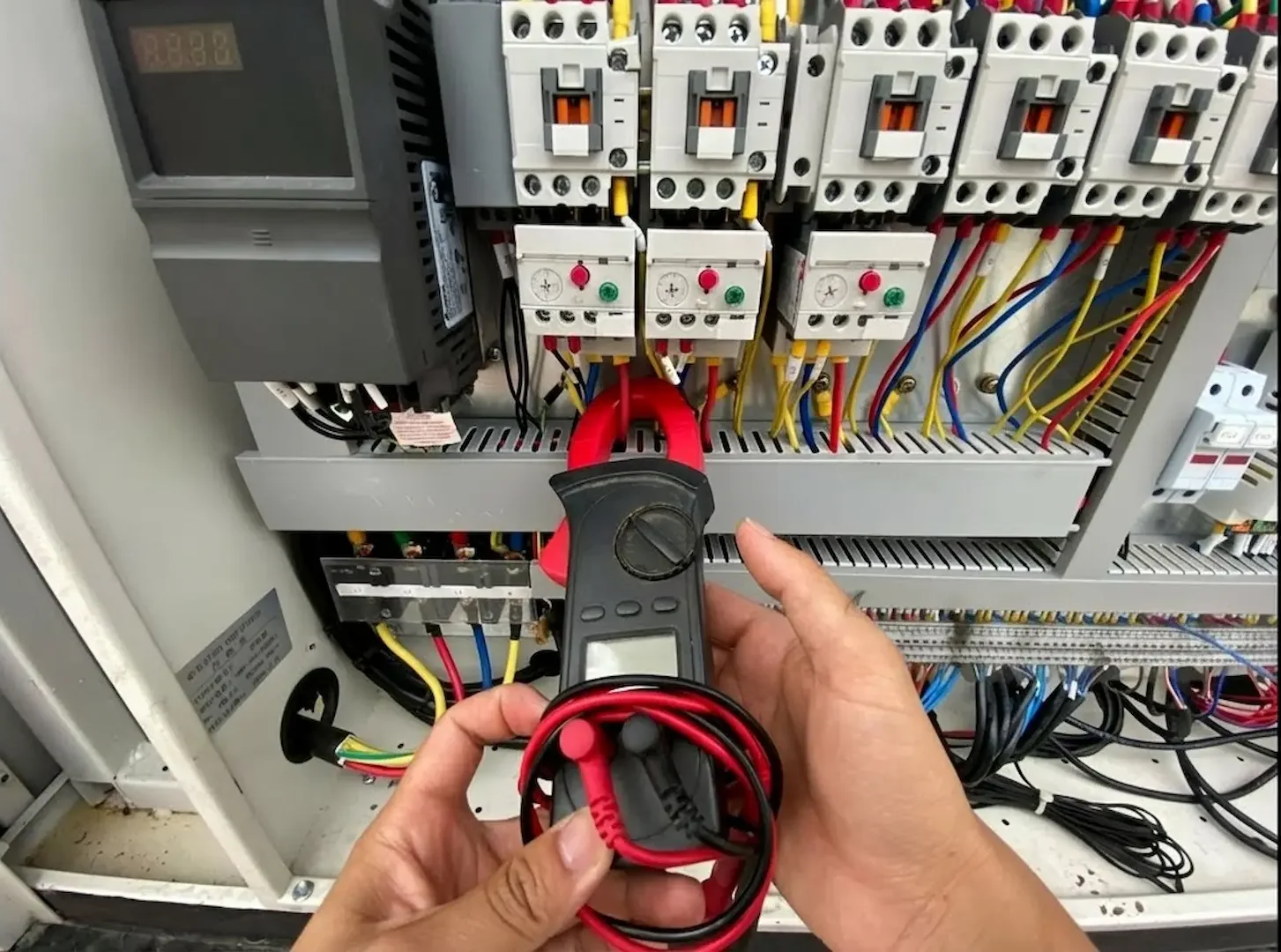
The testing appropriate to an electrical repair depends on the symptoms, affected circuits, equipment, and conditions found during troubleshooting.
What Happens After the Repair?
After repair work is completed, the affected electrical system should be checked in a manner appropriate to the work performed.
What that involves depends on the repair.
A repaired outlet, lighting circuit, breaker problem, wiring repair, panel project, or service-related repair may each require different verification.
The important point is that the work should not be represented as complete simply because a part was replaced.
Richard can also explain what was repaired and whether there are any additional electrical conditions that should be considered separately.
Does Every Repair Include Thermal Imaging or Insulation Testing?
No.
Different electrical problems call for different diagnostic methods.
Specialized testing can be appropriate in certain situations, but a homeowner should not assume that every outlet repair, breaker call, flickering-light complaint, or other service visit requires the same testing equipment.
What matters is selecting an appropriate diagnostic approach for the electrical problem being investigated.
Does an Electrician Need to Replace Everything That Is Old?
No.
Electrical equipment should be evaluated based on its condition, configuration, performance, and the work the property needs.
Age can be relevant, but it should not be the only reason for recommending:
- Complete rewiring.
- Panel replacement.
- A 200-amp service upgrade.
- A new circuit.
- Other major electrical work.
For older wiring and renovation projects, learn more about rewiring services.
When Does an Electrical Problem Become an Emergency?
Some electrical problems should not wait for a normal repair appointment.
Warning signs that deserve prompt attention include:
- Visible sparking or arcing.
- Smoke from electrical equipment.
- A persistent burning odor.
- Significant unexplained heat around electrical equipment.
- Electrical shock or tingling.
- Exposed or visibly damaged wiring.
- Water affecting electrical equipment.
- Major unexplained partial power loss.
The Electrical Safety Foundation International identifies frequent breaker trips, flickering lights, sparks, buzzing, overheating, burning odors, electrical shocks, and damaged wiring insulation among warning signs that should be evaluated by a qualified electrician.
Review ESFI home wiring safety guidance .
Fire, Heavy Smoke or Serious Electrical Injury?
Leave the affected area and call 911. Do not open an electrical panel, touch exposed wiring, enter standing water to reach electrical equipment, or attempt an emergency wiring repair yourself.
RJ & Son Electric provides 24/7 emergency electrical service throughout Suffolk County.
What Should You Do While Waiting for Emergency Electrical Help?
Keep the response simple and safety-focused.
- Keep people and pets away from the affected area.
- Do not touch exposed or damaged wiring.
- Do not open electrical panels or other damaged equipment.
- Do not repeatedly reset a breaker that continues to trip.
- Stay away from wet electrical equipment.
- Stay away from downed utility wires.
- Call 911 for active fire, heavy smoke, serious injury, or another immediate life-safety threat.
For a step-by-step explanation of what information is useful during an urgent call, see our emergency electrical help guide.
Residential Electrical Repair vs. Commercial Electrical Repair
The basic principle of diagnosis before repair applies to both homes and businesses, but the electrical systems and operational needs can differ.
Residential Repairs
Common calls can involve outlets, switches, lighting, breakers, wiring, panel concerns, partial power loss, and other household electrical problems.
Commercial Repairs
Businesses may need troubleshooting for lighting, circuits, electrical panels, connected equipment, renovations, and other commercial electrical systems.
RJ & Son Electric provides commercial electrical services as well as residential electrical repairs throughout Suffolk County.
How Should You Choose an Electrician for Repairs?
Electrical diagnosis often matters as much as the physical repair.
Useful things to look for include:
- Proper licensing for the work and location.
- Insurance.
- Experience with electrical troubleshooting.
- A willingness to explain what was found.
- Repair recommendations tied to the actual electrical problem.
- Clear communication about the proposed work.
- A professional approach to electrical safety.
Licensed & Insured
RJ & Son Electric is licensed and insured. Richard Gruttola is the Master Electrician behind the company, License ME-72156.
Diagnosis Before Replacement
A dead outlet, breaker trip, flickering light, or older panel should be evaluated before assuming which component needs replacement.
Owner-Led Electrical Service
Richard is the licensed Master Electrician behind RJ & Son Electric and is directly involved in the electrical work and customer communication.
Suffolk County Service
RJ & Son Electric provides residential, commercial, and light industrial electrical service throughout Suffolk County.
Frequently Asked Questions About Electrical Repair and Diagnostics
What information should I give an electrician before a repair visit?
Describe the symptom, affected area, when it happens, whether breakers trip, and whether you have noticed flickering, unusual sounds, burning odors, heat, power loss, water exposure, or recent changes to the property. You do not need to diagnose the cause yourself.
How does an electrician diagnose an electrical problem?
The diagnostic approach depends on the symptom and the electrical system involved. The electrician may evaluate devices, fixtures, circuits, connections, breakers, wiring, panel equipment, service equipment, connected loads, or other relevant parts of the system and use testing appropriate to the problem.
Does every electrical diagnostic visit use thermal imaging?
No. Different electrical problems require different diagnostic approaches. Specialized tools can be useful in certain situations, but they are not automatically necessary for every electrical repair.
How long does electrical troubleshooting take?
There is no universal diagnostic time. A continuously present problem may be easier to isolate than an intermittent fault. Timing also depends on how many areas are affected, accessibility, existing wiring, previous work, connected equipment, and whether the utility system may be involved.
Does a repeatedly tripping breaker automatically need replacement?
No. Repeated trips can involve the electrical load, connected equipment, wiring, a circuit fault, the breaker itself, the panel, or another electrical condition. The cause should be diagnosed before deciding what needs replacement.
Does flickering mean I need a new electrical panel?
Not automatically. Flickering can involve a lamp, fixture, control, connection, circuit, changing electrical load, panel, service equipment, or utility issue. Widespread or recurring flickering should be evaluated before a major repair is recommended.
Does every electrical repair require a permit?
No single requirement applies to every repair. Permit and inspection requirements depend on the location and scope of work. Major alterations, service work, renovations, and new installations can have different requirements from a focused electrical repair.
Will I receive the same testing and documentation after every repair?
The appropriate testing and project documentation depend on the work performed. A focused outlet repair, circuit repair, panel project, and service change do not necessarily require the same testing or paperwork.
Does an older electrical system automatically need to be replaced?
No. Age is one factor, but electrical recommendations should also consider condition, configuration, recurring problems, current electrical demand, and the work being planned.
Does RJ & Son Electric provide emergency electrical repairs?
Yes. RJ & Son Electric provides 24/7 emergency electrical service throughout Suffolk County. Call (631) 833-7663 for current availability.
Related Electrical Repair Resources
Electrical Repairs & Troubleshooting
Go directly to the main RJ & Son Electric repair service page for electrical troubleshooting and repair.
Circuit Breaker Problems
Learn why recurring breaker trips should be diagnosed before the breaker or panel is automatically replaced.
Panel Repair vs. Upgrade
Understand when a panel problem may call for repair, replacement, a subpanel, or a service evaluation.
24/7 Emergency Electrician
Emergency electrical service for urgent electrical hazards and unexpected power problems in Suffolk County.
Need an Electrical Problem Diagnosed in Suffolk County?
RJ & Son Electric provides electrical troubleshooting and repair for outlets, switches, circuits, breakers, wiring, lighting, panel concerns, partial power problems, and other electrical issues. Richard Gruttola is a licensed and insured Master Electrician serving Suffolk County.
Licensed & Insured Master Electrician serving Suffolk County, NY
Master Electrician License ME-72156
(631) 833-7663 · RichG@rjandsonelectric.com