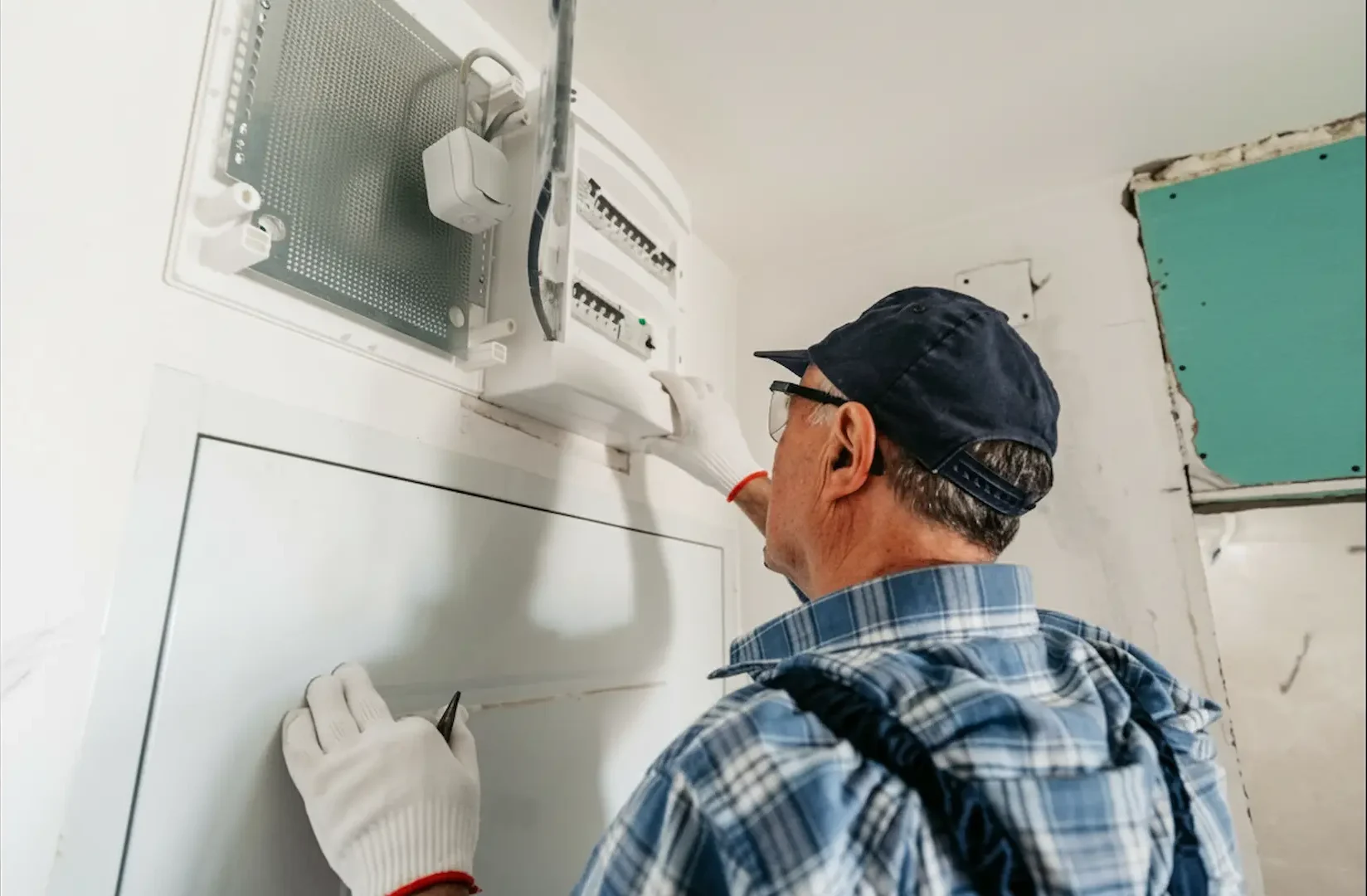
An electrical panel and a circuit breaker are not the same thing. The panel is part of the electrical distribution system. Circuit breakers are protective devices associated with the circuits supplied through that system.
That distinction becomes important when something goes wrong. A breaker that trips does not automatically mean the breaker has failed. It also does not automatically mean the electrical panel needs replacement or the home needs a larger electrical service.
The right repair depends on what is actually causing the electrical problem.
Breaker keeps tripping or concerned about your electrical panel?
Call RJ & Son Electric at
(631) 833-7663
or
request electrical service.
What Is an Electrical Panel?
The electrical panel, sometimes called a breaker panel or breaker box, is distribution equipment that supplies the home's branch circuits.
Depending on the electrical system, the panel can contain:
- Bus bars that distribute electrical power.
- Branch-circuit breakers.
- Neutral and grounding connections.
- Labels identifying circuits.
- A main breaker in some configurations.
Not every electrical system is configured exactly the same way. In some installations, the main service disconnect may be part of the panel. In others, the service disconnect can be located separately.
The electrical panel and the electrical service are related, but they are not identical. The panel distributes power. The electrical service is the broader system supplying power and available capacity to the property.
What Is a Circuit Breaker?
A circuit breaker is an electrical protective device.
A typical branch-circuit breaker provides overcurrent protection for a circuit. It is designed to open the circuit when electrical conditions exceed what the breaker and circuit are intended to carry.
That helps protect wiring and electrical equipment from conditions such as overloads and short circuits.
Other breaker types can provide additional protection. For example, GFCI and AFCI protection address different electrical hazards.
The Electrical Safety Foundation International explains that a breaker box protects against electrical hazards by interrupting circuits when unsafe conditions occur.
Review ESFI's breaker box safety information .
Electrical Panel vs. Circuit Breaker vs. Electrical Service
These three terms are often mixed together in homeowner conversations.
| Electrical Component | Primary Job | What a Problem Might Affect |
|---|---|---|
| Electrical panel | Distributes power to branch circuits and houses electrical distribution equipment | One or several circuits, breaker connections, distribution equipment, or planned circuit capacity |
| Circuit breaker | Provides protection for a circuit or electrical equipment depending on the breaker type | A specific circuit or the equipment supplied through it |
| Electrical service | Supplies utility power and establishes the electrical service available to the property | Overall available electrical capacity and service-related equipment |
| Subpanel | Provides additional circuit distribution from the existing electrical system | Additional branch-circuit space or distribution in another area |
One Important Distinction
Adding a subpanel can provide more circuit distribution space, but it does not create additional electrical capacity from the utility. Service capacity and breaker space are different questions.
What Does It Mean When a Circuit Breaker Trips?
A tripped breaker is a symptom.
It tells you that the breaker operated. It does not, by itself, tell you exactly why.
Possible reasons can include:
- Too much electrical load on the circuit.
- A connected appliance or piece of equipment.
- A short circuit.
- A ground fault.
- Damaged wiring.
- An electrical connection problem.
- The breaker itself.
- Another electrical condition requiring troubleshooting.
ESFI specifically notes that a breaker that frequently trips can be doing its protective job while signaling that an electrical problem needs to be identified.
Repeated trips should therefore lead to diagnosis rather than automatic breaker replacement. For help deciding, see our guide to choosing panel upgrade or repair.
Does a Tripping Breaker Mean the Breaker Is Bad?
Not necessarily.
The breaker may be operating because of a problem elsewhere on the circuit.
For example, the electrical condition may involve:
- A circuit carrying more load than intended.
- A problem with connected equipment.
- Damaged wiring.
- A short circuit or other fault.
- An electrical connection.
- The breaker itself.
That is why circuit breaker replacement should follow troubleshooting when the cause of recurring trips is not already clear.
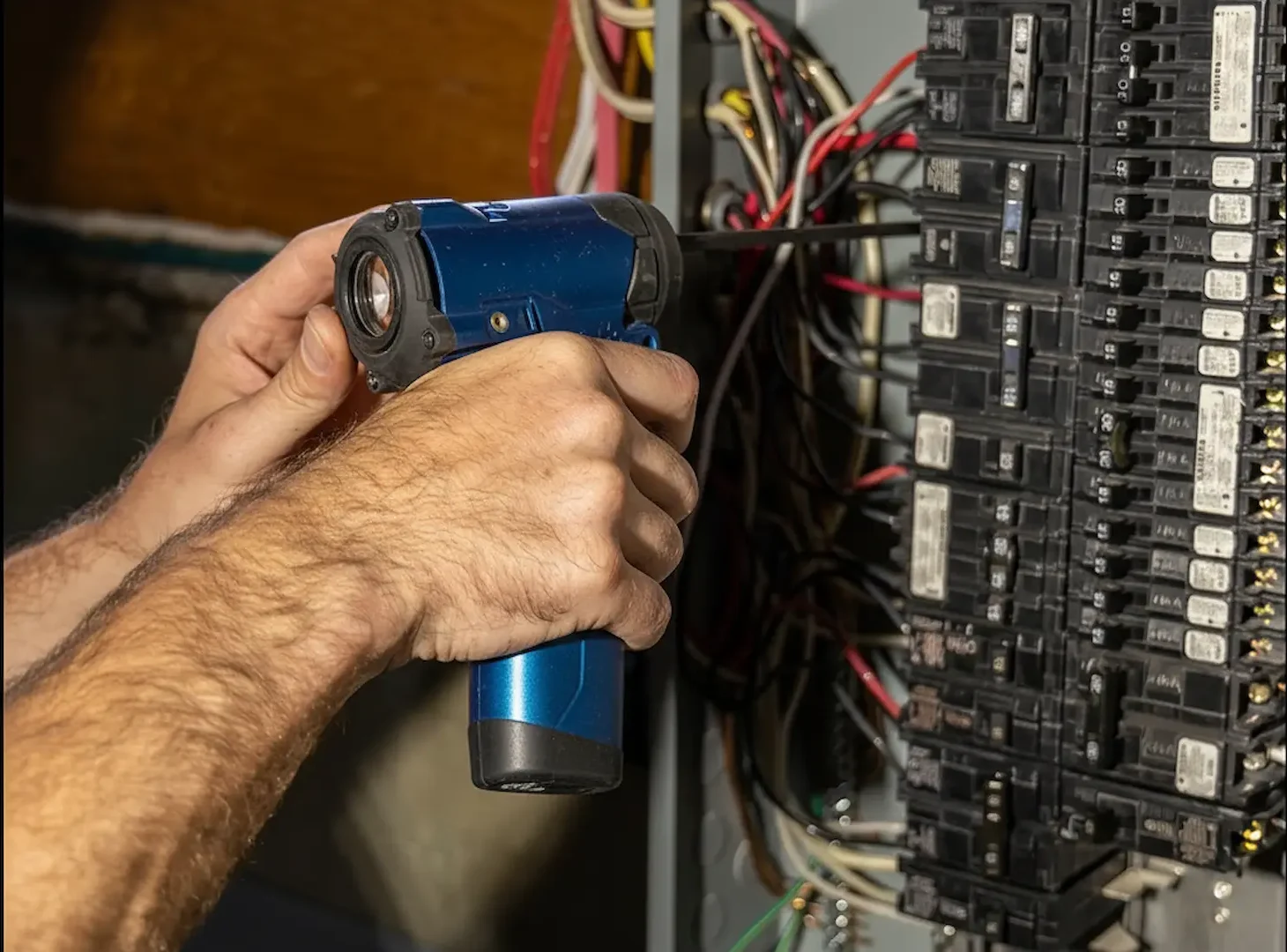
A recurring breaker problem can involve the breaker, circuit, wiring, connected equipment, or panel. Diagnosis should come before replacement.
Does a Tripping Breaker Mean the Electrical Panel Is Bad?
No.
One recurring breaker problem does not automatically mean the entire panel needs replacement.
A panel may become part of the diagnosis when there are panel-related conditions such as:
- Visible deterioration or damage.
- Unusual heat around panel equipment.
- Burning odors.
- Evidence of arcing or electrical damage.
- Problems involving breaker connections or other panel equipment.
- A configuration that does not appropriately support planned electrical work.
But a breaker trip alone is not proof of panel failure.
Does a Breaker Trip Mean the Home Needs More Electrical Capacity?
Not automatically.
There is an important difference between:
- The load on one branch circuit.
- The available electrical capacity of the entire property.
A single circuit can have a problem even when the property's overall electrical service has adequate capacity.
Increasing service capacity does not automatically correct:
- A short circuit.
- A ground fault.
- Damaged branch wiring.
- A defective appliance.
- A poor electrical connection.
- A problem isolated to one breaker or circuit.
The actual cause should be identified first.
What Is the Difference Between a Standard Breaker, GFCI and AFCI?
These protective devices serve different purposes.
| Protection Type | Primary Purpose | What It Is Designed to Address |
|---|---|---|
| Standard circuit breaker | Overcurrent protection | Conditions such as overloads and short circuits |
| GFCI protection | Shock protection | Ground-fault conditions where current takes an unintended path |
| AFCI protection | Electrical fire protection | Hazardous arcing conditions in electrical wiring or circuits |
GFCI protection can be provided through certain receptacles or circuit breakers. ESFI describes GFCIs as devices that automatically interrupt power when a ground fault occurs.
Learn more about GFCI protection from ESFI .
AFCI protection is designed to detect hazardous arcing conditions and interrupt the circuit to help reduce electrical fire risk.
Learn more about AFCI protection from ESFI .
Which circuits require GFCI, AFCI, combination protection, or another protective device depends on the property, project, equipment, and applicable requirements. A general website article cannot determine the correct protection for every circuit in every home.
When Might a Circuit Breaker Need Replacement?
Breaker replacement can be appropriate when the breaker itself is identified as the component requiring replacement.
The important point is that a breaker should not be replaced simply because it tripped.
A professional evaluation can consider:
- What caused the breaker to operate.
- The circuit and connected loads.
- Whether wiring or another component is involved.
- Breaker compatibility with the panel.
- The condition of the breaker and related electrical equipment.
If the problem is on the circuit rather than in the breaker, replacing the breaker alone may leave the actual electrical issue unresolved.
When Might the Electrical Panel Need Repair?
A panel-related problem does not always require replacement of the entire panel.
Depending on the condition found, panel work may involve:
- A breaker-related repair.
- A connection or other panel-related electrical repair.
- Replacement of damaged equipment.
- Correction of another specific electrical condition.
- Panel replacement when the condition of the equipment or project scope justifies it.
The correct scope depends on what is actually wrong.
Read our Electrical Panel Repair vs. Upgrade guide for a deeper comparison.
When Might the Entire Electrical Panel Need Replacement?
Panel replacement may be appropriate when the panel itself has a condition that cannot reasonably be addressed with focused repair or when the electrical project requires different distribution equipment.
Reasons to evaluate replacement can include:
- Significant physical deterioration.
- Electrical damage to panel equipment.
- Recurring panel-related problems confirmed through diagnosis.
- Equipment configuration that does not support planned electrical work.
- A broader electrical project in which panel replacement is part of the appropriate scope.
Panel age can be useful context, but age alone does not automatically require replacement.
Does an Old Electrical Panel Automatically Need Replacement?
No.
Electrical equipment should be evaluated based on more than its age.
Relevant factors can include:
- Physical condition.
- Signs of heat or electrical damage.
- Recurring electrical problems.
- Available circuit distribution.
- Existing electrical loads.
- Planned future loads.
- Previous electrical modifications.
- The equipment involved.
An older panel that has a legitimate electrical problem is different from a panel being replaced solely because someone considers it old.
Does a Fuse Box Automatically Need to Be Replaced?
Not simply because it uses fuses.
Fuses and circuit breakers both provide overcurrent protection, but they operate differently. A fuse is replaced after it opens, while a circuit breaker is a resettable protective device.
A fuse-based electrical system should be evaluated based on:
- The condition of the equipment.
- The condition of the wiring.
- Existing configuration.
- Previous modifications.
- The property's electrical needs.
- Any recurring electrical problems.
There can be good reasons to convert older equipment to a modern breaker panel, but it would be too broad to label every fuse box unsafe simply because it contains fuses.
RJ & Son Electric also provides fuse replacement and fuse box service.
Does a Circuit Breaker Panel Automatically Make a Home Safer?
Safety depends on the condition and configuration of the entire electrical system, not simply whether overcurrent protection is provided by breakers instead of fuses.
Modern panel equipment can make it practical to use current breaker technologies and provide convenient resettable protection, but a new panel does not automatically correct:
- Damaged wiring elsewhere in the home.
- Loose electrical connections outside the panel.
- Improper modifications.
- Failed outlets or switches.
- Problems inside appliances.
- Every branch-circuit problem.
The electrical system still needs to be considered as a whole.
What If There Are No Empty Breaker Spaces?
Limited breaker space is not automatically the same thing as insufficient electrical service capacity.
If a new circuit is being planned, an electrician may need to evaluate:
- Available panel space.
- Existing circuit configuration.
- The new electrical load.
- The existing electrical service capacity.
- Whether additional distribution is appropriate.
- Whether a broader panel or service project is justified.
Depending on the property, the solution could involve a new circuit, different distribution equipment, a subpanel, panel replacement, a service evaluation, or another appropriate approach.
Does a Subpanel Increase Electrical Capacity?
No.
A subpanel can provide additional locations for branch-circuit breakers and can distribute circuits to another part of the property.
It does not create additional electrical capacity from the utility.
If the property needs more electrical capacity overall, the electrical service must be evaluated separately.
Does an EV Charger Require a New Panel?
Not automatically.
An EV charger installation requires evaluation of the electrical system, but the charger itself does not predetermine the solution.
Factors can include:
- The charger being installed.
- The planned charging output.
- Existing household electrical loads.
- Available circuit and panel space.
- Existing electrical service capacity.
- The wiring route.
- Installation conditions.
Possible outcomes can range from a dedicated circuit to panel-related work or a broader service-capacity project, depending on the actual property.
Does an EV Charger Automatically Require 200-Amp Service?
No.
A 100-amp service does not automatically become inadequate simply because an EV charger is being considered.
The decision should be based on the home's existing electrical loads, charger requirements, available capacity, and the other electrical equipment the service supports.
If the existing service can support the planned charging load, a service upgrade may not be necessary.
Breaker Problem vs. Panel Problem vs. Service-Capacity Problem
The symptom alone does not always tell you which part of the electrical system is involved.
| What You Notice | Possible Areas to Evaluate | What Not to Assume |
|---|---|---|
| One breaker repeatedly trips | Load, connected equipment, wiring, circuit fault, breaker, panel connection | Do not automatically assume the breaker or entire panel is bad |
| Several lights flicker | Fixtures, connections, circuits, loads, panel, service equipment, utility | Do not automatically assume the home needs 200-amp service |
| No room for another breaker | Distribution space, proposed new circuit, existing loads, service capacity | Do not assume more breaker space equals more utility capacity |
| Panel is unusually hot or smells burnt | Panel equipment and related electrical conditions | Do not open the panel or attempt to identify the damaged component yourself |
| Planning a major new electrical load | New equipment, circuits, panel distribution, existing service capacity | Do not automatically assume a service upgrade is required |
What About Flickering Lights?
Flickering lights can have several possible causes.
Depending on the situation, the problem can involve:
- A lamp or fixture.
- A switch or dimmer.
- An electrical connection.
- A branch circuit.
- Changes in electrical load.
- Panel equipment.
- Service equipment.
- The utility system.
Recurring or widespread flickering deserves professional evaluation, particularly when accompanied by burning odors, unusual heat, buzzing, sparking, or partial power loss.
But flickering alone does not prove the breaker, panel, or service is defective.
What If the Panel Feels Warm?
Significant unexplained heat around electrical equipment deserves professional attention.
The cause cannot be reliably diagnosed from the symptom alone.
Heat can be associated with an electrical connection, breaker, wiring, panel equipment, load condition, or another electrical problem.
Do not remove the panel cover or touch internal equipment in an attempt to locate the source.
What If You Smell Burning Near the Panel?
A persistent burning or hot-electrical odor near the panel is a reason to keep clear and call a licensed electrician promptly.
If there is active fire, heavy smoke, serious electrical injury, or another immediate threat to people or property, leave the area and call 911.
Electrical Emergency?
Keep people away from smoking, sparking, damaged, unusually hot, or wet electrical equipment. Do not open the electrical panel or attempt an emergency repair yourself.
RJ & Son Electric provides 24/7 emergency electrical service throughout Suffolk County.
Should You Keep Resetting a Breaker That Trips?
Repeatedly operating a breaker is not a substitute for determining why it keeps tripping.
If the breaker continues to operate, especially when the condition is accompanied by:
- Burning odors.
- Buzzing or crackling.
- Visible sparking.
- Significant unexplained heat.
- Electrical shock.
- Visible damage.
stop repeatedly interacting with the electrical equipment and have the problem professionally evaluated.
The Electrical Safety Foundation International specifically recommends professional evaluation when breakers frequently trip. ESFI explains that frequent tripping can indicate that the protective device is responding to an electrical problem that needs attention.
How Does an Electrician Determine Whether the Breaker or Panel Needs Repair?
The diagnostic process depends on the symptoms and the electrical system involved.
This is the same diagnosis-first approach explained in our electrical repair and diagnostics guide .
Does Every Breaker Replacement Require a Panel Upgrade?
No.
A properly diagnosed breaker issue can be a focused electrical repair when the panel itself and the rest of the electrical system do not require broader work.
Breaker replacement and panel replacement are different scopes.
Does Every Panel Replacement Require a Service Upgrade?
No.
Replacing the distribution panel does not automatically mean the property's utility service capacity needs to increase.
The electrical service should change when the actual service or electrical demand justifies that work.
For a detailed explanation, read: Panel Replacement vs. Electrical Service Upgrade .
When Does PSEG Long Island Become Involved?
Utility involvement becomes especially relevant when the electrical service itself is being upgraded or changed.
PSEG Long Island currently requires an electrical inspection certificate for all new services and service changes.
For service sizes of 300 amps or less, the required service information is entered through PSEG Long Island's online request. For services of 400 amps or more and all commercial service changes, PSEG Long Island requires a load letter completed by the electrician.
Review PSEG Long Island's Upgrade or Change Service requirements .
Breaker Repair Is Not a Utility Service Change
PSEG Long Island's service-change process should not be applied automatically to a routine circuit breaker repair, panel-related repair, or every subpanel project. Utility involvement depends on the actual electrical scope.
How Much Does Circuit Breaker Repair or Replacement Cost?
Cost depends on the electrical problem and the work required.
A breaker-related service call may involve:
- Troubleshooting the circuit.
- Evaluating connected equipment.
- Repairing a wiring or connection problem.
- Replacing a breaker when appropriate.
- Addressing panel-related electrical conditions.
- Additional electrical work discovered during diagnosis.
This is why the cost cannot be determined simply by looking up the retail price of a circuit breaker.
For broader repair-cost information, see: Electrical Repair Costs in Suffolk County .
How Much Does Electrical Panel Work Cost?
Panel cost depends on whether the project involves a focused repair, panel replacement, service equipment, additional distribution, wiring work, utility involvement, or a true electrical service upgrade.
We keep the detailed planning ranges on one dedicated page:
Electrical Panel Upgrade Cost in Suffolk County: 2026 Guide .
Planning ranges are not property-specific quotes. The actual price depends on the electrical system and the work required.
How Often Should an Electrical Panel Be Inspected?
There is no single inspection interval that is right for every Suffolk County home.
An electrical evaluation may make sense because of:
- Recurring breaker trips.
- Burning odors.
- Unusual heat.
- Buzzing or crackling.
- Visible deterioration.
- Electrical shock.
- Storm or water damage.
- A major renovation.
- A substantial new electrical load.
- Questions about the condition or capacity of the existing system.
A rigid every-three-to-five-year schedule is not necessary for every property.
Can a New Circuit Breaker Fix an Overloaded Circuit?
Not simply by installing a different breaker.
The breaker and wiring are part of a designed circuit. A circuit that cannot appropriately support the connected electrical load needs to be evaluated to determine why.
The appropriate solution may involve:
- How equipment is being used.
- A dedicated circuit.
- Repair of a wiring problem.
- Correction of another electrical condition.
The correct solution depends on the circuit and electrical load rather than simply substituting a breaker.
Can a Larger Breaker Give Me More Power?
A homeowner should not treat a higher-rated breaker as a way to create additional electrical capacity.
Circuit protection has to be appropriate for the wiring, equipment, and electrical system involved.
If a circuit does not support the intended load, the proper solution should be determined from the electrical system rather than changing breaker size as a shortcut.
Why Choose RJ & Son Electric for Breaker and Panel Problems?
The important part of a breaker or panel problem is determining what actually needs repair.
RJ & Son Electric provides electrical troubleshooting, circuit breaker work, panel repairs, panel replacement, subpanels, service changes, and related electrical services throughout Suffolk County.
Licensed & Insured
RJ & Son Electric is licensed and insured. Richard Gruttola is the Master Electrician behind the company, License ME-72156.
Diagnosis Before Replacement
A breaker trip does not automatically mean the breaker, panel, or electrical service needs replacement.
Breaker & Panel Work
RJ & Son Electric handles electrical repairs, breaker problems, panel work, additional circuits, subpanels, and service-related electrical projects.
24/7 Emergency Service
Emergency electrical service is available throughout Suffolk County for urgent electrical problems. Call for current availability.
Frequently Asked Questions About Electrical Panels and Circuit Breakers
What is the difference between an electrical panel and a circuit breaker?
The electrical panel is distribution equipment that supplies the home's branch circuits. Circuit breakers are protective devices associated with those circuits. The panel can contain many breakers, while an individual branch breaker generally protects a particular circuit.
Does a tripped circuit breaker mean the breaker is bad?
No. The breaker may be responding to an overload, connected equipment, wiring fault, short circuit, ground fault, or another electrical condition. Repeated trips should be diagnosed before assuming the breaker needs replacement.
Does a breaker that keeps tripping mean I need a new electrical panel?
No. Repeated trips can involve the circuit, load, wiring, connected equipment, breaker, panel, or another electrical condition. Panel replacement should be based on the actual condition of the panel and electrical system.
Does a full breaker panel mean my home needs more electrical capacity?
Not automatically. Available breaker space is a distribution issue, while electrical service capacity depends on the electrical demand the property needs to support. Additional distribution, panel work, and service upgrades are different solutions.
Does a subpanel increase the amount of power coming into my home?
No. A subpanel provides additional circuit distribution space but does not increase the electrical capacity supplied by the utility.
Does an EV charger automatically require a new panel or 200-amp service?
No. The charger, planned charging output, existing electrical loads, available circuit space, service capacity, and installation conditions should be evaluated before deciding whether additional panel or service work is necessary.
What is the difference between GFCI and AFCI protection?
GFCI protection is designed to reduce electrical shock risk from ground-fault conditions. AFCI protection is designed to detect hazardous electrical arcing and help reduce electrical fire risk. The appropriate protection depends on the circuit, property, equipment, and applicable requirements.
Does an old fuse box automatically need to be replaced?
Not solely because it uses fuses. The condition of the equipment, wiring, configuration, previous modifications, electrical demand, and planned work should be evaluated before replacement is recommended.
How often should my electrical panel be inspected?
There is no single inspection interval that fits every property. An evaluation may be appropriate because of recurring electrical problems, visible deterioration, burning odors, unusual heat, storm or water damage, major renovations, or significant new electrical loads.
What should I do if I smell burning near the electrical panel?
Keep clear of the panel and contact a licensed electrician promptly. Do not remove the panel cover or attempt to locate the damaged component yourself. If there is active fire, heavy smoke, serious electrical injury, or another immediate life-safety threat, leave the area and call 911.
Related Breaker, Panel & Electrical Service Resources
Circuit Breaker Problems
Learn why recurring breaker trips should be diagnosed before a breaker or panel is automatically replaced.
Panel Repair vs. Upgrade
Understand when panel repair, panel replacement, additional distribution, or service evaluation may be appropriate.
Panel vs. Service Upgrade
Understand the difference between replacing the electrical distribution panel and changing the electrical service supplying the property.
Panel Upgrades
Visit the main RJ & Son Electric panel service page for panel and electrical service project information.
Breaker or Electrical Panel Problem?
RJ & Son Electric provides circuit breaker troubleshooting, electrical repairs, panel work, subpanels, service changes, and related electrical services throughout Suffolk County. Richard Gruttola is a licensed and insured Master Electrician who can evaluate the electrical problem before recommending what actually needs repair or replacement.
Licensed & Insured Master Electrician serving Suffolk County, NY
Master Electrician License ME-72156
(631) 833-7663 · RichG@rjandsonelectric.com
Nor’easter Power Outage Checklist for Long Island Homes
A safety-first checklist for Suffolk County homeowners: what to do before a nor’easter, how to use a portable generator safely during an outage, and the warning signs to watch for when the power comes back.
How to Choose Your Next Electrician in Long Island
Choosing an electrician is different from choosing most home services. The work is hidden inside your walls, the stakes include fire safety, and you cannot
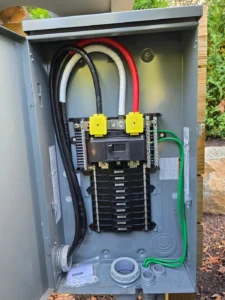
Signs Your Home Needs an Electrical Panel Upgrade
Your electrical panel rarely fails without warning. It usually sends signals for months or years first: breakers that trip, lights that flicker, a panel that

LED Lighting Upgrades in Suffolk County: Energy Savings, Color & Dimmers
LED lighting can reduce the electricity used for lighting while giving Suffolk County homeowners more choices in brightness, color temperature, fixture style, dimming, and lighting
Whole-Home Surge Protection on Long Island: Is It Worth It?
Long Island sees its share of nor’easters, summer thunderstorms, heavy grid demand in July and August, and the occasional lightning strike. Every one of those
Ceiling Fan Installation: 5 Vital Reasons It Pays You Back All Year on Long Island
A professional ceiling fan installation is one of the simplest home upgrades that pays you back all year long. It keeps your family remarkably comfortable